Key Takeaways
- Brazil established its first legal framework for domestic medical cannabis cultivation on August 4, 2026, marking a significant change from its reliance on imports.
- Anvisa’s RDC 1.013/2026 allows cultivation of Cannabis sativa L. with ≤0.3% THC for medical and research purposes, imposing strict documentation and operational requirements.
- To cultivate cannabis, operators must obtain a Special Authorization and maintain rigorous traceability and quality controls.
- The 0.3% THC limit reflects a cautious approach, but the framework supports a CBD-centric product market, allowing for a local supply chain for cannabis medicine.
- This shift promises to reduce patient costs, shorten supply chains, and enhance access to medical cannabis in Brazil, marking a foundational moment for the sector.
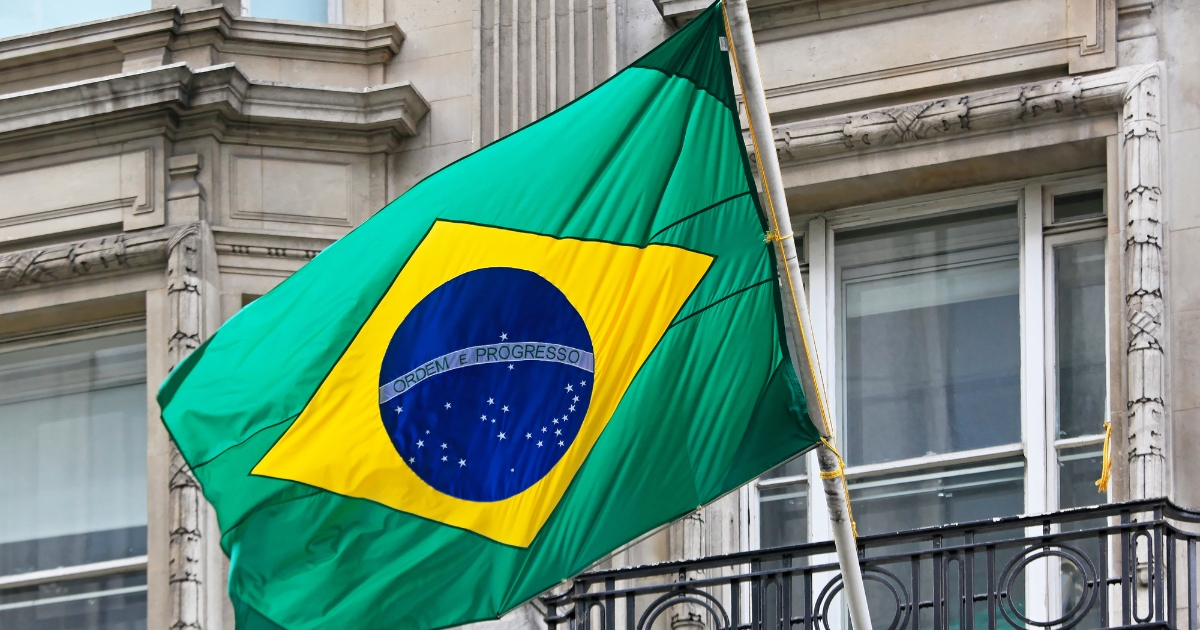
Brazil has officially flipped the switch. As of August 4th the country’s first formal framework for domestic medical cannabis cultivation was enabled. For a market that has relied heavily on imports and court-ordered exceptions to access cannabis-based treatments, this is a genuine structural shift.
The rule didn’t arrive out of nowhere. In November 2024, Brazil’s Superior Court of Justice (STJ) ruled that cannabis cultivation by legal entities for exclusively medical and pharmaceutical purposes was legal, and ordered the National Health Surveillance Agency (Anvisa) to regulate it within six months. Anvisa delivered. RDC 1.013/2026 was published in the Official Gazette on February 3rd, and went into force exactly six months later.
What Anvisa built is not a blanket green light for cultivation. It’s a pharmaceutical-grade entry gate. The operators who thrive in Brazil’s emerging domestic cannabis production market won’t be the ones who move fastest. they’ll be the ones who move most precisely.
What Is Anvisa’s RDC 1.013/2026?
RDC 1.013/2026 is Brazil’s first dedicated regulatory framework for the domestic cultivation of Cannabis sativa L. for medical and research purposes. Published by the National Health Surveillance Agency (Anvisa) on February 3, 2026, it establishes who can grow cannabis in Brazil, under what conditions, and what happens if they get it wrong.
The scope is deliberate and narrow. The rule applies specifically to cannabis containing no more than 0.3% total THC, measured as a weight-by-weight ratio in the dried inflorescences. That’s the ceiling. Anything above it falls under separate research-specific rules or is outright prohibited under existing Brazilian law.
RDC 1.013/2026 sits inside a larger four-resolution package that Anvisa approved at its first public board meeting of 2026:
- RDC 1.012/2026 – Cultivation for research with no THC cap, restricted to universities, public research institutions, and pharmaceutical companies (effective August 4, 2026)
- RDC 1.013/2026 – Cultivation of ≤0.3% THC cannabis for medical and research purposes (effective August 4, 2026)
- RDC 1.014/2026 – Regulatory Sandbox for non-profit patient associations, allowing small-scale experimental cultivation under Anvisa supervision (effective from publication, February 3, 2026)
- RDC 1.015/2026 – Updated marketing authorization framework for cannabis-based products, replacing the previous RDC 327/2019 (effective May 4, 2026)
Together, these four resolutions represent the most comprehensive overhaul of Brazil’s medical cannabis regulatory framework to date.
What Are the Exact Requirements Under Brazil’s Cannabis Cultivation Framework?
This is where the pharmaceutical-grade gate becomes clear. RDC 1.013/2026 doesn’t just say “apply and we’ll sort it out.” It spells out exactly what operators must build, document, and maintain before a single plant goes in the ground.
To obtain a Special Authorization (AE) for cultivation, applicants must submit:
- Georeferenced coordinates of the cultivation area
- Photographic documentation with measurements of all activity areas
- An estimated cultivation quantity per hectare and square meter, consistent with medical or research purposes
- Proof of the origin and method of access to propagation material
- An organizational chart outlining responsibilities at each cultivation stage
- A control and monitoring plan prepared in accordance with Anvisa’s published technical guidelines
That’s the application. The operational obligations are equally rigorous.
Once authorized, operators must:
- Use only propagation material with a documented genetic origin proving the plants will produce ≤0.3% THC
- Maintain complete, traceable records of every cultivation activity
- Submit every batch of harvested plant material to laboratory THC analysis by an Anvisa-authorized lab or a qualified member of Brazil’s National Analytical Laboratory Network (Reblas)
- Implement a traceability system that tracks each lot by cultivation stage, start date, variety, and plant count
- File quarterly and annual production balance reports (BSPO) with health authorities
- Submit production estimates before activities start — and quarterly and annually thereafter — signed by the establishment’s Technical Manager
- If any plant tests above 0.3% THC, report it to local health authorities within 48 hours, secure the material, and arrange for destruction
- Comply with GMP complementary standards for herbal medicines and WHO Good Herbal Processing Practices
Transportation of cannabis sativa L. under this framework is restricted to AE-holding establishments and must use sealed, numbered packaging with full identification, lot numbers, quantities, and sender/recipient names.
Non-compliance isn’t just a slap on the wrist. Anvisa has the authority to immediately suspend operations, and violations constitute sanitary infractions under Brazilian law.
What Does the 0.3% THC Limit Actually Mean for Brazil’s Cannabis Sector?
Let’s be real here, the 0.3% THC ceiling is restrictive. For context, it mirrors the threshold used in the U.S. and EU to distinguish hemp from cannabis, a threshold designed for industrial and agricultural classification, not necessarily for optimizing pharmaceutical cannabinoid profiles.
For Brazil’s current medical cannabis framework, though, the limitation is somewhat less of a bottleneck than it might appear. RDC 1.015/2026 the companion rule governing cannabis-based products focuses heavily on CBD-dominant formulations. The majority of Brazil’s approximately 50 Anvisa-authorized cannabis products as of early 2026 are CBD-based oils and extracts. Domestic cultivation under RDC 1.013 can supply the pharmaceutical API supply chain that these products depend on.
Does that mean the 0.3% cap is ideal? No. Higher-THC cultivars have demonstrated therapeutic value across a range of conditions, and Brazil’s patient population, an estimated 873,000 people using cannabis-based therapies by 2025, according to industry data increasingly reflects that clinical diversity. RDC 1.015/2026 does now permit products with THC above 0.2% for patients with serious debilitating diseases, but the domestic cultivation pathway doesn’t yet support production of those higher-THC inputs locally.
It’s a step forward. A real one. But the THC cap signals that Brazil is still calibrating its comfort level with the plant prioritizing regulatory control over clinical flexibility, at least for now. That may shift as the domestic production chain matures and as post-market data accumulates under the new framework.
Why Brazil’s Shift Toward Domestic Medical Cannabis Production Is a Big Deal
For years, the pathway to medical cannabis in Brazil ran almost entirely through imports. Patients needed ANVISA authorization to bring in foreign-made cannabis products. Operators without court orders had no legal mechanism to grow domestically. The result: a market heavily dependent on international supply chains, with pricing and access implications that hit patients hard.
Brazil’s medical cannabis market generated approximately R$852 million (roughly USD $170 million) in revenue in 2024, according to industry estimates and crossed R$1 billion in 2025. By 2034, market analysts project that figure could reach USD $1.54 billion. That’s a market that, until now, has been largely supplied from Canada and Europe.
RDC 1.013/2026 changes the math. By creating a legal domestic cultivation pathway, Anvisa has opened the door for Brazilian pharmaceutical manufacturers and licensed cultivators to vertically integrate. RDC 1.015/2026 explicitly permits the use of domestically produced plant-based APIs and botanical APIs for cannabis-based medical products, a provision that didn’t exist under the old RDC 327/2019.
Brazil has structural advantages here. The country’s tropical and subtropical climate supports year-round outdoor cultivation. Its agricultural sector is globally competitive. Its pharmaceutical manufacturing base is significant. Domestic production, done right, could reduce patient costs, shorten supply chains, and ultimately support a larger and more accessible medical cannabis program.
The Bottom Line on Brazil’s Medical Cannabis Cultivation Framework
Brazil didn’t legalize cannabis cultivation. It built a carefully constructed regulatory infrastructure for pharmaceutical-grade cannabis production, and then opened the door to operators who can meet the standard.
The 0.3% THC limit is a real constraint, and one worth pushing back on as the framework evolves. But the existence of a formal, legal, domestic cultivation pathway for medical cannabis in Latin America’s largest country is genuinely significant. For patients, it promises the long-term prospect of more affordable, locally produced medicines. For operators, it creates a legitimate supply chain opportunity for those willing to do the work.
This is a foundational moment for Brazil’s cannabis sector. How operators, investors, and policymakers respond over the next 12 to 24 months will define whether that foundation holds or gets built on too fast.
Frequently Asked Questions
Anvisa’s RDC 1.013/2026 is Brazil’s regulatory framework for the domestic cultivation of Cannabis sativa L. with a maximum of 0.3% total THC, intended exclusively for medical and research purposes. Published on February 3, 2026, and effective August 4, 2026, it requires cultivators to obtain a Special Authorization (AE), maintain full traceability, submit to inspections, and comply with pharmaceutical-grade quality standards.
RDC 1.013/2026 and RDC 1.012/2026 both took effect on August 4, 2026 — exactly six months after their publication in Brazil’s Official Gazette on February 3, 2026.
Only legal entities holding a Special Authorization (AE) from Anvisa may cultivate cannabis under RDC 1.013/2026. Individual persons and unlicensed organizations are not eligible. Operators must meet documentation, traceability, security, and GMP requirements before and during cultivation.
- The Regulatory Architect: Why Brazil’s Cannabis Success Rests on Life Sciences, Not Just Legislation.
- Brazil Decriminalizes Cannabis Possession For Personal Use
- Brazil Government Approves Cannabis-Based Products for Animals
- Brazil Cannabis Fair: A New Era for Latin America’s Top Event
- LatAm Cann.BIZ Brings Cannabis Conference to Panama