Key Takeaways
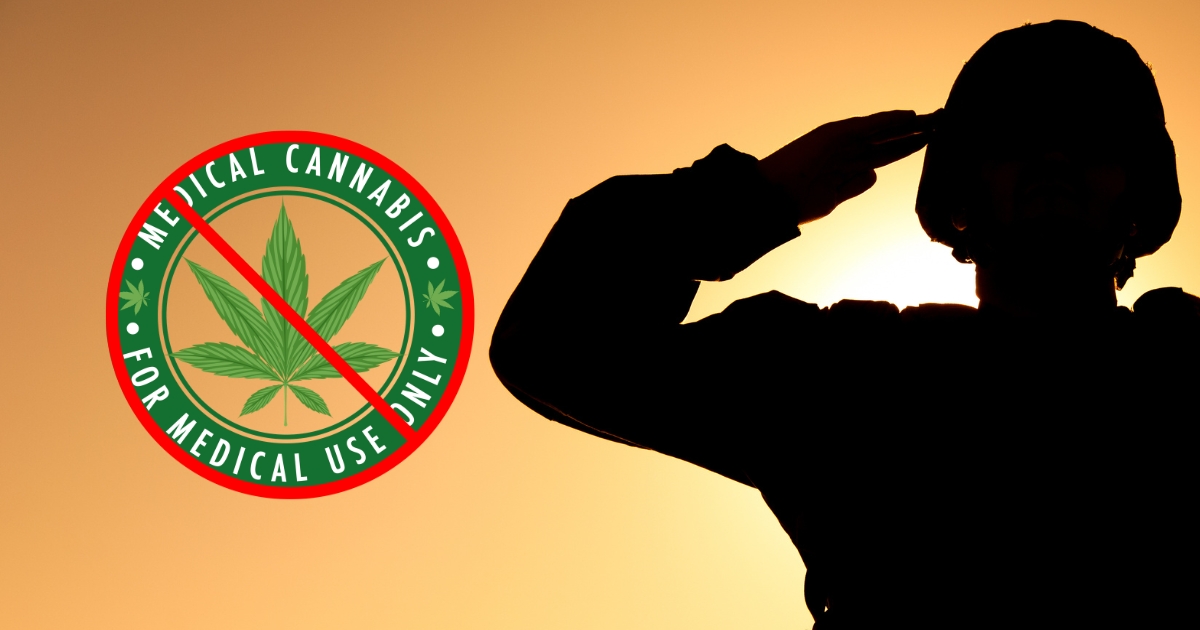
- The DOW marijuana memo reaffirms a complete marijuana ban for military members, despite recent federal rescheduling of medical cannabis to Schedule III.
- The memo outlines that marijuana remains prohibited regardless of state laws and that punishments can include disciplinary actions under the UCMJ.
- An exception exists only for FDA-approved cannabis products with a valid prescription, leaving state-licensed medical products unprotected under DOW rules.
- This situation reflects a longstanding contradiction in the military’s approach to cannabis amidst changing federal policies.
- Service members with state medical cards still face UCMJ penalties for cannabis use, demonstrating a gap between federal protections and military regulations.
North America – The Department of War issued a memo on July 9,th, obtained by and first reported by Marijuana Moment, reaffirming a full marijuana prohibition for all military service members and civilian employees. The memo appears to treat federal rescheduling as a future possibility, even though Acting Attorney General Todd Blanche’s April order already moved state-licensed medical cannabis to Schedule III.
There is a paper trail here, and it does not add up.
The one-page memo signed by Anthony J. Tata, the under secretary of war for personnel and readiness, landed on the desks of senior Pentagon leadership. according to Marijuana Moment, tells every service member and civilian employee of the Department of War (DOW) the same thing: marijuana remains prohibited, full stop, regardless of what federal or state law says.
That would be a straightforward policy reminder if the law had not already shifted. But it has. Months before this memo was dated, Acting Attorney General Todd Blanche signed an order in April moving marijuana products regulated by a state medical cannabis license from Schedule I to Schedule III of the Controlled Substances Act. FDA-approved cannabis products made the same jump simultaneously. The Congressional Research Service confirmed the practical result: certified patients who possess medical marijuana from state-licensed dispensaries now hold certain legal protections under Schedule III.
The DOW memo does not appear to acknowledge any of that. It refers to rescheduling as something that, “if implemented,” would still not decriminalize marijuana under federal law. That framing is worth pausing on. Rescheduling at the state-medical-license level has already been implemented.
What Does the DOW Marijuana Memo Say?
The reported memo is direct and brief. DOW “maintains a drug-free workplace to protect national security, public safety, and operational readiness,” Tata wrote. Service members are reminded that the Uniform Code of Military Justice (UCMJ) prohibits the wrongful use, possession, manufacture, or distribution of marijuana. Those offenses remain punishable under the UCMJ even when a state legalizes recreational use or authorizes sales at medical dispensaries.
Punishments can include judicial, nonjudicial, or administrative action. Civilian DOW employees fall under Department of Defense Instruction 1010.09, the “DoD Civilian Employee Drug-Free Workplace Program,” dating to June 22, 2012.
There is one carve-out. Tata noted that these prohibitions do not apply to “formulations approved as drugs by the FDA with a valid prescription for a legitimate medical purpose.” That narrow exception effectively means only pharmaceutical-grade, FDA-approved drugs with a valid prescription pass the test. State-dispensary products, even those now operating under Schedule III federal protections, do not appear to qualify under the DOW’s reading.
Lynn Wagner, executive director of DOW’s Office of Drug Demand Reduction, was listed as the point of contact. Neither Wagner nor the Pentagon press office responded to Marijuana Moment’s request to verify the document at time of publication.
How Does This Memo Fit Into the Military’s Cannabis History?
The DOW memo is the latest chapter in a long pattern of military branch communications on cannabis, and it lands at a particularly contradictory moment in federal drug policy.
In May 2026, the Army published a post reminding soldiers of its zero-tolerance policy for all forms of cannabis, including hemp-derived products like CBD-infused lotions and hair care items. That came despite President Trump simultaneously pushing Congress to keep full-spectrum CBD legal for civilians.
The Navy banned CBD and hemp products for sailors as far back as 2018. The Coast Guard followed in 2019, barring sailors from visiting state-licensed dispensaries entirely.
This is not a new institutional posture. But the timing of the DOW memo, issued after rescheduling has already taken effect at the federal level, raises a reasonable question: is the military working from an outdated legal map?
What the Rescheduling Gap Means for Service Members Seeking Medical Cannabis
This is where the real stakes sit. The DOW marijuana memo’s exception for FDA-approved products with a valid prescription sounds reasonable until you consider that very few cannabis products meet that standard.
The Congressional Research Service report on the rescheduling order stated plainly that the order “appears to authorize end users to possess marijuana for medical use without a CSA-compliant prescription.” That is the protection now available to certified patients at the federal level. The DOW memo, however, draws the line at FDA-approved formulations, which excludes the overwhelming majority of what a state-licensed medical cannabis patient would actually use.
For a service member with a state-issued medical recommendation, that gap is not an abstraction. It is the difference between being protected under current federal law and being subject to UCMJ action.
The Army, to its credit, did update its recruiting policy in April to allow applicants with a single marijuana possession conviction to enlist without a waiver. That signals some recognition that cannabis history should not function as an automatic disqualifier at the front door. But active-duty policy tells a different story at every turn.
Regulating Behavior, Not a Metabolite
Our take on this is straightforward: the question the military has consistently refused to ask is whether it is actually regulating impairment or whether it is punishing a biomarker.
THC metabolites can remain detectable in urine for weeks after any psychoactive effect has worn off. A service member who legally used cannabis two weeks ago, in a state where it is permitted and on their own time, poses no operational risk in the present moment. The memo does not draw that distinction. Neither does the UCMJ as currently enforced.
The argument for a drug-free workplace in a national security context is legitimate. Nobody is suggesting that impaired soldiers are acceptable. But the policy as written treats a positive metabolite or a state medical recommendation the same as active intoxication on duty. The distinction matters, and it matters more now that federal law has started to catch up with medical reality.
Dangerous behavior should be regulated. A residual chemical trace should not carry the same weight as conduct that actually compromises readiness.
Frequently Asked Questions
Yes, according to the July 9, 2026 memo obtained by Marijuana Moment. The DOW reaffirmed its full marijuana prohibition for service members and civilian employees in a recent memo, stating that rescheduling would not decriminalize marijuana under federal law. Notably, the memo was issued after Acting AG Todd Blanche’s April order already moved state-licensed medical cannabis to Schedule III.
No. Under the DOW marijuana memo and the UCMJ, state laws and medical authorizations do not override the military’s prohibition. The only exception cited in the memo is for FDA-approved drug formulations used with a valid prescription for a legitimate medical purpose. Products from state-licensed dispensaries, even those now protected under Schedule III at the federal level, do not appear to qualify.
Service members violating UCMJ marijuana rules face disciplinary or administrative action, while civilian employees are subject to the DoD’s drug-free workplace program.
All military branches, including the Army, Air Force, Navy, and Coast Guard, prohibit all forms of cannabis and its derivatives, including hemp and CBD products. This applies regardless of how they are marketed or their commercial legality.
- A New Cole Memo? How Corruption in Maine Could Shape Federal Law
- Cash Transfers In The Marijuana Industry Are Not Automatically Considered Suspicious, Says IRS In A New Memo
- Bipartisan House Group Pens “Joint Memo” On Marijuana Legalization
- The Current State of Cannabis Policy and the Cole Memorandum
- NYFD, NYPD Update Policies on Drug Testing Based on Legalization