Key Takeaways
- South Dakota voters approved Measure 26 in 2020, allowing medical cannabis patients to grow their own medicine at home.
- Home cultivation licenses surged by 1,072% from 61 in 2022 to 715 in 2026, with home growers representing about 3.7% of registered patients.
- The law allows patients to grow up to two flowering and two non-flowering plants, but there’s ongoing discussion about possible regulatory tightening.
- Increasing numbers of patients are opting for homegrow due to rising patient populations and the desire for cost-effective, reliable medicine.
- The growth in home cultivation does not indicate a broken system, but rather reflects a maturing medical cannabis program in South Dakota.
South Dakota voters passed Initiated Measure 26 in November 2020, legalizing medical marijuana with nearly 70% of the vote. That wasn’t a close call. It was a landslide. And buried inside that voter mandate was something meaningful: the right for patients to grow their own medicine at home.
Now, five years into the program, that right is being used at a rate nobody initially predicted. Home cultivation licenses have increased by 1,072% since fiscal year 2022. State officials have taken notice, and some lawmakers want to look closer. Before that conversation turns into a crackdown, it’s worth slowing down and asking a straightforward question: is rising participation in a legal program actually a problem?
Logic and data suggests the answer is no.
What Does a 1,072% Increase in South Dakota Homegrow Licenses Actually Mean?
Numbers like 1,072% tend to make people nervous. The figure sounds dramatic, and when presented to a legislative committee, it can easily read as a warning sign. But context matters here.
According to Whitney Brunner, administrator of South Dakota’s medical cannabis program, the number of licensed home cultivators grew from 61 in fiscal year 2022 to 715 in fiscal year 2026. That was reported to the legislative Medical Marijuana Oversight Committee during an August 2026 meeting at the Capitol in Pierre, as first covered by South Dakota Searchlight.
Seven hundred fifteen people. In a state with 19,375 registered medical marijuana cardholders as of late June 2026, that means home cultivators represent roughly 3.7% of the patient population. The other 96% are buying their medicine from licensed dispensaries. That framing changes this story considerably.
Brunner herself was careful not to characterize home growers as bad actors. “I don’t want to assume home cultivators are abusing the licenses,” she told lawmakers. What she flagged instead was an administrative concern: the application requirements are minimal, diagrams of grow locations are often hand-drawn, and the department has limited visibility into what’s actually happening in those rooms.
That’s a fair point. But minimal paperwork is not the same as misconduct.
What Are South Dakota’s Rules for Home Cultivation?
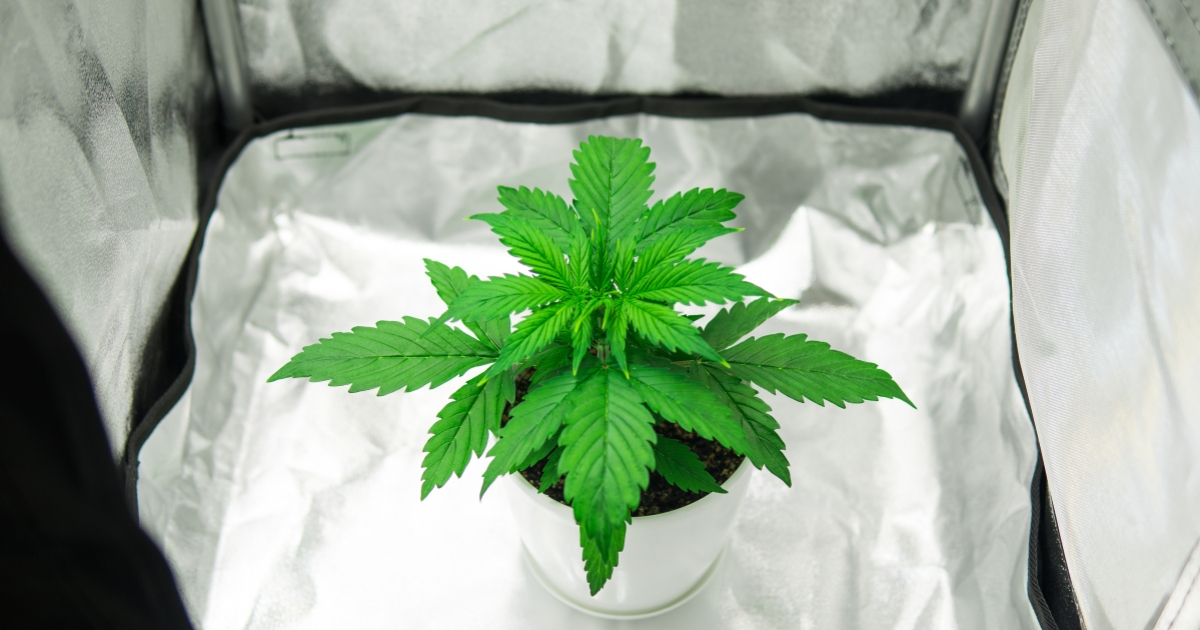
The legal framework for home cultivation in South Dakota is actually quite restrictive. Under state law, licensed patients may grow no more than two flowering cannabis plants and two non-flowering cannabis plants at any given time. That’s a hard cap, not a guideline.
Getting a home cultivation license costs $20, added onto a patient’s existing medical marijuana card. Applicants have to submit a photo of the grow room, a photo of the lock on the door, and a diagram of the grow space. The low cost and relatively light documentation have been cited as concerns by Brunner, who told lawmakers the application process may need tightening.
What the current rules do accomplish, though, is real: they require patients to be registered cardholders, to have a physical grow space with a locked door, and to document where they’re growing. That’s not nothing. Patients who obtain a home cultivation license in South Dakota are not operating outside the system. They’re working within it, paying for access to a right that voters approved.
Why Are South Dakota Medical Cannabis Patients Choosing to Grow at Home?
There’s no single answer, but a few factors are worth considering. The overall medical cannabis patient population in South Dakota grew 30.5% in fiscal year 2026 alone, reaching 19,375 cardholders, up from 14,843 the prior year. More patients means more people learning about their options, including homegrow.
Word travels. When patients discover that a $20 add-on to their card lets them produce their own medicine at home, some will try it. That’s especially true for patients managing chronic conditions where cost and consistency matter. More than 70% of South Dakota cardholders report severe debilitating pain as a primary reason for their cannabis use, according to South Dakota Health Department data. For someone managing pain daily, controlling their own supply has real practical appeal.
Home cultivation also offers something dispensaries can’t always match: continuity. South Dakota’s medical program has faced ongoing political friction, including legislative attempts to dissolve the Medical Marijuana Oversight Committee and proposals that would have tied the program’s survival to federal rescheduling decisions. In that environment, a patient who grows two plants at home is hedging against uncertainty. That’s a rational response to an unstable policy landscape, not evidence of abuse.
Is There a Regulatory Crackdown Coming for South Dakota Homegrowers?
Possibly, though nothing is certain yet. Brunner told the oversight committee that the department has been examining whether tighter regulation is feasible, but she acknowledged there are “legal and safety considerations” involved in going further. She did not say whether new rules would require legislation.
Sen. John Carley, R-Rapid City, told South Dakota Searchlight after the August meeting that lawmakers “will come back to that concern next meeting.” That’s language that signals interest, not urgency. The committee is gathering information, not drafting bills.
Still, the political context around South Dakota’s medical cannabis program is not exactly warm. The state House passed a bill earlier in 2026 to dissolve the Medical Marijuana Oversight Committee entirely. A separate proposal would have automatically repealed the medical program if marijuana were rescheduled federally. Both efforts reflected a segment of the legislature that has been consistently looking for ways to constrain the program voters approved.
If homegrow becomes the next target, the argument against additional restrictions writes itself: patients are following the rules, paying for licenses, and growing within the legal plant count. The program is working as designed.
Patients Are Using a Right Voters Gave Them. That’s Not a Red Flag.
ere’s the part of this story that tends to get lost when health officials present growth statistics to lawmakers: a 1,072% increase in home cultivation participation is not inherently evidence of a broken system. It may simply be evidence of a maturing one.
Programs take time to gain public trust. In fiscal year 2022, South Dakota’s medical cannabis program was only one year old. Patients were still learning what was available to them. Many didn’t know homegrow was an option. Others were probably waiting to see if the program would survive legislative challenges before investing in a grow setup.
By fiscal year 2026, the program is established enough that patients feel confident pursuing all the options within it. That confidence is a sign the program has taken root, not a sign something has gone wrong.
South Dakota voters did not approve medical marijuana on narrow terms. They approved it by a wide margin, and they approved it with homegrow included. The patients now holding home cultivation licenses are not circumventing the law. They’re reading it carefully and doing what it permits.
Frequently Asked Questions
Yes. South Dakota law allows registered medical marijuana cardholders to add a home cultivation license to their existing card for $20. Licensed patients may grow up to two flowering cannabis plants and two non-flowering cannabis plants at one time. Recreational marijuana cultivation remains illegal in the state.
As of fiscal year 2026, 715 patients hold home cultivation licenses, according to the South Dakota Health Department. That figure is up from 61 in fiscal year 2022, an increase of 1,072%. Home cultivators represent approximately 3.7% of the state’s 19,375 registered medical cannabis cardholders.
The South Dakota Health Department has indicated it is examining the issue. Whitney Brunner, program administrator, told the Medical Marijuana Oversight Committee in August 2026 that the department is weighing whether additional oversight is feasible, noting there are “legal and safety considerations” involved. No specific legislation has been proposed as of this writing.
South Dakota law covers patients with debilitating medical conditions. More than 70% of current cardholders report severe debilitating pain as a qualifying reason, according to state health department data. Other qualifying conditions include cancer, PTSD, and other serious diagnoses outlined in Initiated Measure 26.
- South Dakota’s Entire Medical Cannabis Program at Risk With Newly Proposed Bill
- South Dakota to Legalize Synthetic Psilocybin, Only If The Federal Government Does First
- North Dakota Cannabis Market Expands with Edibles Launch on August 1st
- North Dakota Cannabis Market Expands with Edibles Launch on August 1st
- North Dakota Voters to Decide on Cannabis Legalization in November