Key Takeaways
- MJBizCon gathers cannabis professionals to discuss industry trends, but media access and representation remain challenging.
- Independent cannabis media plays a vital role but faces financial pressures and must differentiate between journalism and advertising.
- MJBizCon x Beard Bros Media Day 2026 offers opportunities for journalists and cannabis companies to build meaningful relationships.
- For cannabis brands, genuine engagement with journalists requires providing access and avoiding mere promotional tactics.
- Supporting independent media is crucial for the industry’s credibility, as it helps document the evolution of cannabis practices and policies.
Every December, thousands of cannabis industry professionals descend on Las Vegas for MJBizCon, bringing with them new products, business announcements, emerging technologies, and plenty of opinions about where the industry is headed. For a few days, the Las Vegas Convention Center becomes one of the most concentrated gatherings of cannabis executives, entrepreneurs, investors, advocates, and industry professionals anywhere in the world.
For journalists covering cannabis, the annual conference represents an opportunity to connect directly with the people shaping the industry. Those conversations can produce meaningful reporting on everything from regulatory developments and market conditions to advances in cultivation, manufacturing, retail, and consumer behavior.
Yet despite the industry’s continued evolution, the relationship between cannabis businesses and the
independent media organizations responsible for covering them remains more complicated than it should be.
Cannabis companies frequently express frustration about their inability to secure meaningful media exposure. Independent publishers face increasing pressure to sustain their operations, while journalists struggle to gain access to credible sources willing to discuss more than the latest product launch or corporate announcement. Meanwhile, some of the industry’s most compelling stories remain largely untold because the people involved lack the resources, relationships, or visibility needed to bring them to a wider audience.
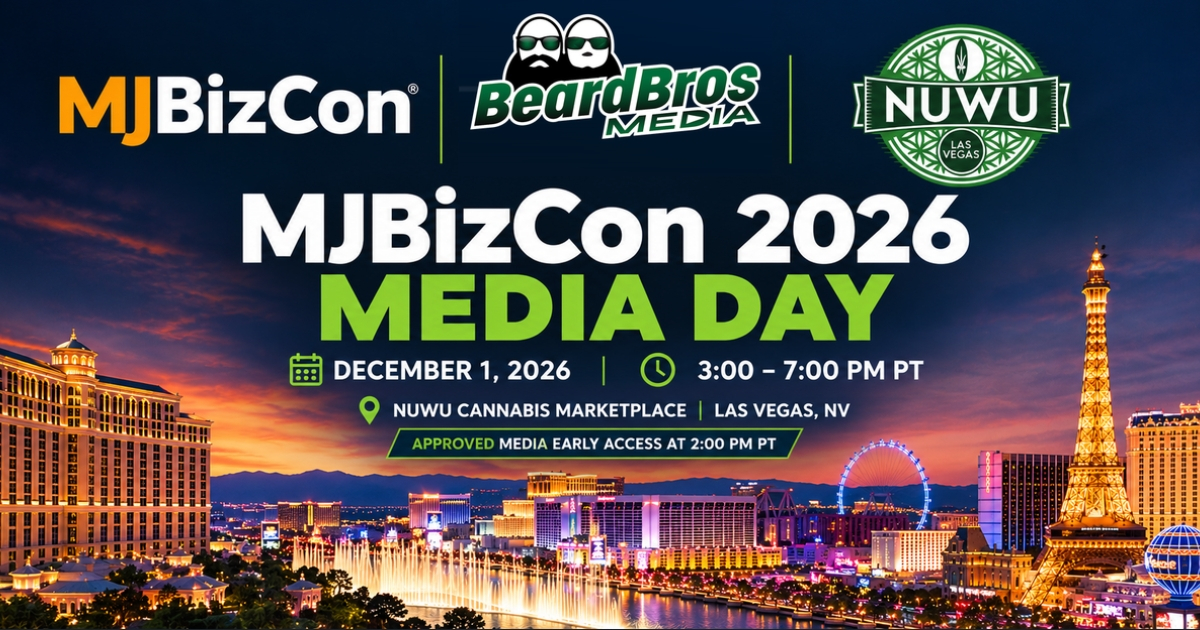
Those challenges are part of the conversation surrounding MJBizCon x Beard Bros Media Day 2026, returning to NuWu Cannabis Marketplace in Las Vegas on December 1. The event, hosted in collaboration by MJBizCon and Beard Bros Media, brings together journalists, publishers, podcasters, content creators, cannabis brands, and industry leaders ahead of the busiest days of the conference.
While Media Day creates opportunities for interviews and professional networking, its broader significance extends beyond a single gathering. The event raises an important question for an industry that increasingly relies on effective communication to navigate complicated regulations, changing consumer expectations, and economic uncertainty: What does cannabis media actually need from the businesses and organizations it covers?
Independent Cannabis Media Has Helped Build the Industry It Covers
Long before recreational legalization became a political debate or cannabis companies began competing for market share across multiple states, independent cannabis publications were documenting a culture that much of mainstream media either misunderstood or largely ignored.
Journalists covered medical cannabis patients fighting for access, advocates challenging prohibition, and cultivators developing techniques that would eventually become standard practices in commercial production. They documented enforcement actions, legislative battles, and the emergence of businesses operating within an uncertain legal environment. Publications also helped preserve the stories of breeders, extraction artists, caregivers, and entrepreneurs whose contributions might otherwise have remained largely unknown outside their immediate communities.
That historical role remains relevant today, even as the cannabis industry has evolved into a much larger commercial marketplace. Independent media continues to examine the consequences of state regulations, document industry consolidation, investigate questionable business practices, and report on the experiences of operators whose perspectives may differ considerably from those of larger corporations.
The difficulty is that the economics of producing independent cannabis journalism have not necessarily improved alongside the industry’s commercial growth.
Cannabis publishers operate within an advertising environment that can be considerably more restrictive than those serving conventional industries. Search engines and social media platforms can play an outsized role in determining whether audiences discover their reporting, while changes to distribution algorithms can significantly affect traffic and revenue. Independent publications must also compete with larger media companies, corporate communications teams, and content creators working with substantially different financial resources.
Original reporting requires time and money, regardless of the subject being covered. Journalists need opportunities to conduct interviews, review public records, verify claims, and develop the relationships necessary to understand complicated industry developments. Covering conferences, legislative hearings, regulatory meetings, and local cannabis communities creates additional expenses.
Those costs are particularly challenging for smaller publications that do not have access to substantial outside investment or established national advertising relationships.
The industry has benefited from independent cannabis media for decades. Ensuring that knowledgeable, credible voices can continue producing that coverage requires a more serious examination of how those organizations are supported.
What Cannabis Journalists Need Is Access, Not Another Generic Press Release
One of the most valuable resources cannabis businesses can provide journalists is access to knowledgeable people who are willing to discuss what is happening within their companies and across the industry.
Unfortunately, meaningful access is not always easy to obtain.
Cannabis public relations frequently revolves around product launches, executive appointments, expansion announcements, and carefully prepared statements intended to present companies in the most favorable light. Those developments may be newsworthy, but they rarely provide enough information to explain the broader conditions affecting the marketplace.
A journalist examining declining wholesale flower prices, for example, may need to speak directly with cultivators who can describe how changing market conditions influence production decisions and financial sustainability. Reporting on retail consolidation may require conversations with independent dispensary owners navigating competition from larger operators. An investigation into compliance costs may benefit from manufacturers who can explain how regulatory requirements affect product development and profitability.
These perspectives are difficult to replace with a press release.
The most useful interviews often involve people willing to discuss challenges alongside accomplishments. An executive explaining why an expansion strategy failed may provide more valuable industry insight than another announcement celebrating a new market entry. An operator describing the consequences of changing regulations can help readers understand policy decisions that might otherwise appear disconnected from everyday business operations.
For cannabis brands preparing to attend MJBizCon, providing that kind of access can create genuine opportunities for coverage. Companies do not need to manufacture controversy or disclose confidential business information, but they should recognize that journalists are looking for more than promotional talking points.
Credible reporting becomes possible when knowledgeable sources are willing to answer substantive questions, provide context, and participate in conversations that extend beyond a prepared marketing message.
The Difference Between Media Coverage and Advertising Still Matters
The relationship between cannabis companies and media organizations also requires a clearer understanding of how advertising, sponsored content, and independent journalism serve different purposes.
Businesses understandably want to know what they will receive in exchange for allocating money toward marketing and media relationships. Advertising provides companies with an opportunity to communicate their message to specific audiences, while sponsored editorial projects can offer more detailed storytelling opportunities when the commercial relationship is appropriately disclosed.
Independent journalism operates under a different set of expectations.
Journalists must retain the ability to determine which developments deserve coverage, examine competing claims, and publish conclusions that may not always reflect a company’s preferred narrative. That independence helps distinguish credible reporting from promotional content and provides audiences with information they can evaluate on its own merits.
Problems arise when companies approach every interaction with a publication as an opportunity to secure guaranteed editorial exposure. The expectation that an introduction, sponsorship, or advertising relationship should automatically result in favorable coverage undermines the very credibility that makes independent journalism valuable.
The strongest media relationships are often built gradually. A company becomes a reliable source of information, makes knowledgeable employees available for interviews, and responds professionally when questions arise. Journalists develop a clearer understanding of the business and its role within the industry, while companies gain insight into the types of stories that publications consider relevant to their audiences.
Those relationships may eventually produce articles, interviews, podcasts, or other forms of coverage, but their value does not depend entirely on an immediate publication.
For cannabis companies seeking more effective media engagement, understanding that distinction is an important starting point.
The Industry Cannot Expect Independent Media to Survive on Goodwill
The cannabis industry has developed a complicated relationship with the publications responsible for covering it.
Businesses regularly acknowledge the importance of independent media, particularly when they are seeking visibility for product launches, policy initiatives, community programs, or significant company developments. At the same time, many publishers continue to operate with limited resources and uncertain advertising revenue.
Part of that disconnect reflects the broader financial pressures affecting cannabis businesses. Companies facing high taxes, difficult capital markets, regulatory expenses, and competitive pricing understandably scrutinize their marketing investments.
However, independent journalism cannot survive indefinitely on the assumption that the people producing it will continue working simply because they believe in the industry.
Producing credible content requires professional expertise, editorial judgment, research, and distribution. Publications must invest in writers, editors, production resources, and the infrastructure necessary to reach audiences. Those costs remain whether an article receives a thousand readers or a hundred thousand.
The industry has an opportunity to support independent media through more consistent commercial relationships that recognize the value of those services without compromising editorial integrity.
Advertising campaigns can help sustain publications serving relevant audiences. Clearly disclosed sponsorships can support educational programming, podcasts, newsletters, and industry events. Businesses can collaborate with publishers on projects that provide useful information to consumers and industry professionals while maintaining transparent boundaries between commercial messaging and independent reporting.
Supporting journalism does not require businesses to agree with everything a publication writes. In fact, the ability to challenge industry assumptions, question regulatory decisions, and investigate difficult subjects is part of what makes independent media worth supporting.
An industry represented exclusively through corporate communications would offer audiences a considerably narrower understanding of the forces shaping its development.
Independent publications provide a perspective that company-controlled messaging cannot fully replace.
Cannabis Media Organizations Have Responsibilities of Their Own
The need for greater industry support does not eliminate the responsibilities of media organizations themselves.
Publishers seeking meaningful commercial relationships must demonstrate why their work deserves investment. Audience engagement, credible reporting, editorial consistency, and transparent business practices all contribute to that value.
Cannabis media companies must also acknowledge the difference between serving the industry and simply promoting it. Readers depend on publications to provide accurate information, examine competing perspectives, and identify issues that deserve greater scrutiny.
Maintaining that credibility becomes especially important when publications also offer advertising, branded content, event sponsorships, or other commercial services.
Transparency about those relationships protects the audience and the publisher.
There is also a compelling argument for greater collaboration among independent cannabis media organizations.
Publishers often compete for advertising revenue, industry access, and audience attention. That competition can encourage better journalism, but it should not prevent organizations from working together when they share common interests.
Collaborative programming, shared event opportunities, cross-publication interviews, and partnerships involving journalists, podcasters, and independent creators can expand the reach of worthwhile stories. Established publications can also help introduce audiences to emerging voices who may lack access to larger distribution platforms.
The cannabis industry is too geographically diverse and politically complicated for any single publication to adequately document every issue affecting it.
A healthy media ecosystem requires multiple perspectives, different areas of expertise, and enough professional cooperation to ensure important stories are not overlooked simply because they fall outside one organization’s immediate audience.
Why MJBizCon Media Day Creates a Different Opportunity
Major cannabis conferences bring industry professionals together on a scale that can be difficult to replicate elsewhere. MJBizCon has become particularly valuable because it concentrates businesses, executives, advocates, service providers, and media organizations in Las Vegas during the same week.
That concentration creates opportunities, but it also creates challenges for journalists and the companies hoping to connect with them.
A reporter may arrive with a schedule already filled with interviews, panels, and editorial assignments. A podcaster may need to coordinate guests around competing conference obligations. Brands and exhibitors may have limited opportunities to speak with journalists beyond hurried introductions on a crowded trade show floor.
MJBizCon x Beard Bros Media Day is designed to give those conversations additional room to develop.
Returning to NuWu Cannabis Marketplace on Tuesday, December 1, 2026, the event will run from 3:00 to 7:00 PM Pacific Time, with approved media receiving early access beginning at 2:00 PM.
That earlier access gives journalists, podcasters, videographers, and other qualified media professionals an opportunity to prepare equipment, coordinate interviews, and begin establishing connections before the broader activation opens.
The event brings together media professionals with cannabis brands, executives, exhibitors, and operators in an environment intended to encourage meaningful conversations and content development.
Its value is supported by the results of the inaugural 2025 Media Day.
Last year’s event generated 133 media applications representing more than 100 organizations, included 37 exhibiting brands, and attracted an estimated 250 to 350-plus attendees during the activation. Beard Bros Media also documented at least 15 original post-event content assets, demonstrating how interviews and professional introductions can continue producing value after participants return home.
Those figures illustrate the interest in a dedicated space for industry media engagement, but the long-term value of the event is more difficult to measure through attendance alone.
A journalist discovering a new source may develop several stories from that relationship over the following year. An independent publication meeting a potential advertiser may establish a commercial relationship that supports future reporting. A podcaster connecting with an industry advocate may introduce important policy discussions to an audience that would otherwise never encounter them.
Media Day creates the conditions for those relationships to begin.
What participants do with them afterward determines their lasting value.
What Cannabis Companies Should Understand Before Arriving
For cannabis brands, executives, and exhibitors attending Media Day, preparation should involve more than deciding which products or announcements to promote.
The journalists and creators participating in the event will have different audiences, editorial interests, and methods of producing content. Understanding those differences can make conversations more productive.
A publication covering cannabis policy may be interested in an operator’s experience navigating regulatory changes. A business-focused outlet may want to discuss market conditions, financial challenges, or expansion strategies. A podcast focused on cannabis culture may be more interested in the personal experiences behind a brand or the community that helped establish it.
Companies that understand their own stories beyond a marketing perspective are better positioned to engage with those audiences.
That means bringing representatives who can answer substantive questions, providing reliable information when appropriate, and being willing to discuss subjects that may not fit neatly into an existing promotional campaign.
Media professionals also benefit when businesses respect their time and editorial independence. An introduction should not come with an expectation of guaranteed coverage, and an interview should not be treated as an advertising transaction.
The goal is to begin a professional relationship that may create opportunities for both sides over time.
For companies seeking meaningful visibility during MJBizCon Week, that approach is considerably more valuable than attempting to deliver the same prepared pitch to every journalist in attendance.
The Future of Cannabis Media Deserves a Place in the Industry Conversation
Since launching Beard Bros Media in 2018, we have watched the cannabis industry undergo enormous changes in how businesses operate, how regulations are written, and how information reaches consumers.
We have also watched independent publications disappear, media organizations change ownership, and content creators build new platforms for reaching audiences. The technology used to distribute information has evolved considerably, but the need for reliable cannabis reporting has remained.
The industry continues to face questions that demand informed coverage.
Regulatory uncertainty, taxation, access to capital, market consolidation, patient rights, and the long-term consequences of prohibition all remain important subjects. So do the experiences of small operators, the preservation of cannabis culture, and the contributions of people whose work helped establish the industry long before commercial legalization.
Those stories deserve more than occasional attention when a major news organization decides cannabis is worth covering.
They require journalists and media organizations with the knowledge, relationships, and resources necessary to follow developments over time.
Independent cannabis media also needs to maintain the trust of its audiences by separating reporting from promotion, correcting mistakes, and remaining willing to challenge assumptions within the industry itself.
Those responsibilities are not optional. They are what distinguish journalism from marketing.
For cannabis businesses, supporting a credible and sustainable independent media environment should be viewed as an investment in the industry’s ability to communicate accurately with consumers, policymakers, and the broader public.
For publishers and creators, the responsibility is to demonstrate that such support contributes to work that provides genuine value.
MJBizCon Media Day creates an opportunity for both sides to examine that relationship more closely.
Building Relationships That Extend Beyond Las Vegas
When MJBizCon 2026 begins, much of the industry’s attention will naturally focus on new business opportunities, emerging technologies, regulatory developments, and the companies preparing for the coming year.
Media Day offers an opportunity to examine another part of that future: the relationship between cannabis businesses and the people responsible for documenting their work.
The event is not intended to replace the larger MJBizCon experience. It complements the conference by providing a dedicated setting where journalists and industry professionals can establish connections before the week’s schedule becomes overwhelming.
Its significance, however, should extend beyond the conversations that take place on December 1.
Cannabis companies have an opportunity to develop more thoughtful, consistent relationships with independent publishers. Media organizations have an opportunity to demonstrate the value of their work, build sustainable commercial relationships, and collaborate with other professionals who share an interest in accurate industry coverage.
There will undoubtedly be product announcements, interviews, introductions, and plenty of business cards exchanged throughout the afternoon.
But the most valuable outcome may be a greater understanding of what each side needs from the other.
Independent cannabis journalism will continue to play an important role in documenting the industry’s development, questioning its decisions, and preserving the stories of the people who built it.
Whether those publications have the resources to continue that work will depend in part on how seriously the broader industry values their contributions.
MJBizCon x Beard Bros Media Day 2026 provides an opportunity to turn that conversation into relationships that last well beyond Las Vegas.
Attend MJBizCon x Beard Bros Media Day 2026
MJBizCon x Beard Bros Media Day returns to NuWu Cannabis Marketplace in Las Vegas on Tuesday, December 1, 2026.
Event details
- Date: Tuesday, December 1, 2026
- Venue: NuWu Cannabis Marketplace, 1235 Paiute Circle, Las Vegas, Nevada
- Approved media early access: 2:00 PM PT
- General Media Day hours: 3:00–7:00 PM PT
Journalists, editors, podcasters, videographers, photographers, and qualified content creators interested in attending can apply for Media Day 2026.
Cannabis brands, exhibitors, sponsors, and strategic partners interested in participation opportunities can contact Beard Bros Media.
Additional conference information is available through the official MJBizCon website.
Frequently Asked Questions
MJBizCon x Beard Bros Media Day is a dedicated cannabis media and industry gathering hosted in collaboration by MJBizCon and Beard Bros Media. It connects journalists, publishers, podcasters, creators, cannabis brands, executives, and operators for interviews, content creation, professional networking, and relationship building ahead of the main conference activities.
Media Day takes place on Tuesday, December 1, 2026, at NuWu Cannabis Marketplace in Las Vegas. Approved media may arrive beginning at 2:00 PM Pacific Time, and the broader Media Day activation runs from 3:00 to 7:00 PM Pacific Time.
Independent cannabis journalism helps document industry developments, examine regulations, investigate business practices, explain policy decisions, and preserve cannabis culture. Credible reporting provides consumers, businesses, and policymakers with perspectives that extend beyond corporate announcements and promotional messaging.
Cannabis businesses can support independent publications through advertising relationships, appropriately disclosed sponsorships, educational collaborations, and greater access to credible industry sources. These relationships are most valuable when publishers maintain editorial independence and audiences can distinguish reporting from commercial content.
Journalists, editors, independent publishers, podcasters, photographers, videographers, and other qualified media professionals can apply through the official Media Day registration process. Applications are reviewed before approval.