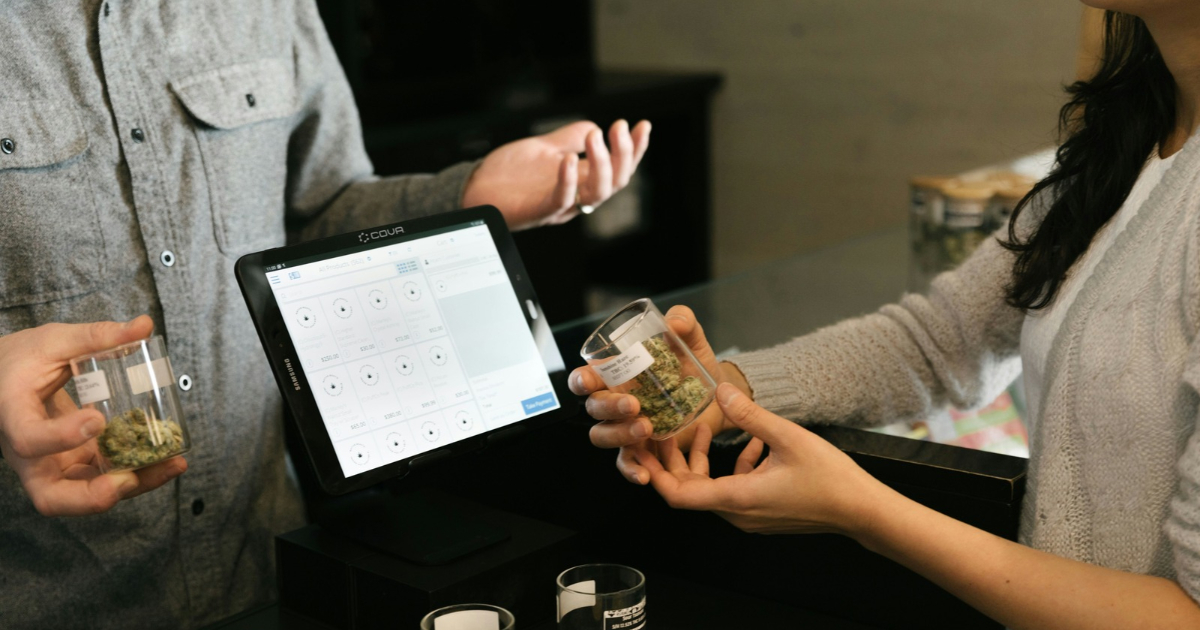
A practical starting point for your first purchase, medical card appointment, or dispensary visit.
Someone can walk into a dispensary, browse dozens of products, and leave with something in hand without ever having a meaningful conversation about why they are considering cannabis, how it may interact with their existing medications, or what to do if the first product they try does not meet their expectations.
For more than a decade, Realm of Caring has helped people work through precisely these questions. And one thing has become increasingly clear: getting cannabis into someone’s hands is only one part of the equation. Helping them make informed decisions is another.
Before your next purchase, medical cannabis appointment, or conversation with a healthcare provider, here are five questions worth asking.
1. What is in this product, and how can I check its quality?
Start with the label. Look for the amount of each listed cannabinoid per serving and in the full container, along with the other ingredients. A large number on the front of a package is not enough to explain what you would actually be taking.
Then ask for the certificate of analysis, often called a COA. In its buyer’s guide, Realm of Caring explains why third-party testing matters: a report can help you examine cannabinoid content and the contaminants tested. Ask the seller to show you which report applies to the product and batch in front of you.
A useful question at the counter is: “Can you walk me through this label and its lab report?” You should come away understanding what was tested and what the results mean. If the explanation remains unclear, take time to get help before purchasing.
Testing also has limits. A report about product contents cannot establish whether that item is appropriate for your health circumstances. That requires a different conversation.
2. How does cannabis fit with the medications I already take?
Bring this question to a clinician or pharmacist who can review your medication list. Include nonprescription medicines and supplements, and be specific about the cannabis or CBD product you are considering.
The FDA warns that CBD can change how other drugs work and can cause adverse effects. It also identifies increased sedation risk when CBD is combined with alcohol or medicines that slow brain activity. A product’s plant origin does not answer those concerns.
Try asking: “Here is what I take, and here is the product I am considering. Are there interactions or other reasons I should avoid it?” A photo of the packaging can help make that discussion concrete.
Keep prescribed care in place while you seek advice. Realm of Caring can help with education and preparing questions; medication changes belong with the professional managing your treatment.
3. What am I expecting, and what evidence supports that expectation?
Before choosing a product, put your reason for considering it into plain language. “I want to feel better” is understandable, but it gives you very little to discuss or evaluate. Describe the problem you hope to address and how it affects an ordinary day.
Then ask what is known about the specific use you have in mind. A friend’s experience can prompt a useful conversation. It cannot tell you what will happen in your case, and a testimonial is different from research on a particular product or condition.
Discuss how you would recognize a meaningful benefit, which unwanted effects matter, and when you would reassess the decision. For example, you may want to understand whether a change you notice is consistent enough to discuss at your next appointment.
This is also the time to ask about the proposed format and what to expect from it. You do not need to arrive knowing the terminology. The goal is to leave with an explanation you understand, including the limits of the available evidence.
4. What should I discuss with my healthcare provider before I begin?
Increasingly, the question is not simply whether someone can access cannabis, but whether the healthcare system is prepared to support informed conversations about its use. Realm of Caring is working to help bridge that gap by connecting its established educational and patient-navigation resources more closely with healthcare professionals and care delivery.
A medical card appointment can be an opportunity to ask about more than access. Bring your goals and relevant health history. Ask who will help you evaluate the decision afterward, and whether that person will coordinate with your existing clinician.
You can open the discussion simply: “I am considering cannabis for this reason. What concerns do you have, and what would you want to monitor?” Being direct makes room for a more useful conversation than hoping the subject never comes up.
If your provider does not have the expertise to address a particular question, ask where they would refer you. Realm of Caring publishes educational resources for consumers and healthcare professionals, including questions people can bring to its care specialists.
Keep practical access questions on the list, too. Before paying for an appointment, confirm the current requirements and costs with your state’s medical cannabis program or the relevant provider. Ask the appropriate authority about any employment or benefits concerns that affect you. General educational support cannot settle every legal or eligibility question.
5. Who will help me reassess if the first approach falls short?
For many consumers, the purchasing experience is the beginning of a much longer journey. Questions about product composition, changes in personal health circumstances, affordability, and conversations with healthcare providers do not necessarily have simple answers.
Make a follow-up plan before you need one. Ask who you should contact if the experience is uncomfortable, confusing, or simply different from what you expected. A conversation that ends with the sale leaves this part unresolved.
If you and your clinician decide to proceed, agree on what information would be useful to record. That may include the exact product, when it was used, and what you noticed afterward. A clear account gives the people helping you something more useful than “I tried cannabis once.”
An unsatisfactory experience is a reason to ask questions. It does not automatically establish that a stronger product, a larger amount, or another purchase is the right next step. Discuss changes with an appropriate healthcare professional, particularly when medications or an existing condition are involved.
This is where Realm of Caring’s model is particularly valuable. Its free, individualized educational support is available regardless of whether someone has a medical cannabis card, what product they purchased, or where they are in their experience with cannabinoid therapies.
“One of the things we have learned through more than a decade of supporting individuals and families is that the questions rarely end with the first purchase. People want to understand what they are using, what they should be paying attention to, and who they can turn to when something does not go as expected. Access is important, but education and ongoing support are what help people make informed decisions.”
— Sasha Kalcheff-Korn, Executive Director, Realm of Caring
At Beard Bros, we want cannabis education to help people make decisions they understand. That includes giving them room to pause, seek a second explanation, or decide that a particular approach is not right for them.
Realm of Caring’s care team offers free one-on-one educational support by phone, email, and scheduled appointment. You can arrive with a product question, uncertainty about where to begin, or notes from an earlier experience. You do not need a polished explanation before reaching out.
Connect with Realm of Caring’s care team to discuss your questions. Call 719-347-5400, option 1, or use the contact page to send a message or request an appointment. This article provides general education, not medical advice. Realm of Caring’s support does not replace care from a licensed healthcare professional.
Connect with the Realm of Caring care team