Key Takeaways
- Lionheart Cannabis activates the Dutchie round up program across 11 Montana dispensaries to support people incarcerated for cannabis offenses.
- Customers can round up their purchase total, with the extra cents donated to Freedom Grow, a nonprofit helping affected families.
- The program highlights the ongoing impact of cannabis prohibition and encourages other retailers to adopt similar initiatives.
- Lionheart’s commitment reflects its identity as a compassionate community leader in Montana’s cannabis market.
- Small, consistent donations can create significant support for those harmed by previous cannabis laws.
Buying cannabis legally in Montana can now help someone still sitting in prison for cannabis.
Lionheart Cannabis is activating the Dutchie Round Up program for Freedom Grow across its 11 Montana dispensaries. At checkout, customers will be able to round their purchase total up to the next dollar and direct that small difference toward an organization supporting people incarcerated for nonviolent cannabis offenses and the families carrying the consequences alongside them.
The action is simple. The meaning is not.
Montana consumers can walk into a regulated dispensary, choose from legal cannabis products, pay taxes and leave with a receipt. Meanwhile, people around the country remain behind bars under laws created before much of today’s legal market existed. Their children still grow up without them. Their parents still age without them. Their families still pay for phone calls, travel, commissary and the thousand other costs that never appear on a prison sentence.
Lionheart is using a routine retail interaction to put that contradiction directly in front of the legal cannabis community. More importantly, it is giving customers an immediate way to respond.
That deserves credit. It should also make every cannabis retailer with access to the same kind of technology ask an uncomfortable question: If Lionheart can do this across 11 stores, what exactly is stopping everyone else?
How the Dutchie Round Up System Works
Dutchie’s Round Up the Change program allows participating cannabis retailers to invite customers to round a transaction total to the nearest whole dollar and donate the difference to an approved organization. The donation is voluntary and can be presented during an in-store transaction. Dutchie also supports the feature in e-commerce checkout, where enabled.
The math is intentionally modest. A purchase totaling $48.37 could become $49.00, producing a $0.63 donation. No gala ticket. No complicated form. No demand for a customer to add another item to the cart. Just a small contribution attached to a purchase the customer was already making.
Dutchie says its technology processes more than one million transactions every day. At that scale, spare change stops being spare. It becomes a repeatable funding stream for organizations working on cannabis justice, reentry, clemency, reform and direct support.
For dispensaries, the operational lift is also manageable. Dutchie provides a fees-and-donations function, register-level application and donation reporting. Retailers can track money collected through the Fee/Donation Summary report. Lionheart’s rollout includes manager education, a point-of-sale walkthrough and staff messaging so the program does not become a forgotten button buried inside the register.
That training matters. Technology does not ask the customer a question. People do.
A budtender who understands Freedom Grow’s mission can explain the option in a sentence: Would you like to round up your purchase to help people still incarcerated for cannabis and their families?
Even when the customer declines, the question plants a seed. It reminds another legal-market consumer that legalization did not automatically repair the damage caused by prohibition.
Why Lionheart Cannabis Is a Natural Montana Leader for the Program
Lionheart Cannabis was founded in Bozeman in 2007, years before Montana began adult-use cannabis sales. Founder and owner Chris Fanuzzi built the company in Montana’s medical cannabis era and spent years advocating for legalization while developing a business centered on cultivation, patient care and cannabis education.
The company’s roots include the original Montana Silvertip, a cultivar associated with Fanuzzi’s early breeding and phenotype work. Lionheart grew from those Bozeman beginnings into a statewide operator with 11 retail locations serving communities including Billings, Bozeman, Butte, Four Corners, Great Falls, Helena, Kalispell, Missoula and Paradise Valley.
Lionheart has publicly described compassion and community well-being as central to its identity. The Freedom Grow rollout gives that language weight. Plenty of companies can place the word “community” in a mission statement. It means more when a retailer trains its managers, equips its staff and puts a justice initiative at the point of sale.
In an email following the August 21 rollout meeting, Lionheart’s David Liberman told Freedom Grow and Beard Bros that the organization had Lionheart’s support “100%.” That commitment followed a manager meeting in which Lionheart leadership introduced Freedom Grow, distributed instructions for the register process and encouraged staff to bring the program to customers.
This is what corporate values look like when they leave the About page and enter the store.
Freedom Grow Supports the People Legalization Left Behind
Freedom Grow was created to support people incarcerated for cannabis and their families. The volunteer-led nonprofit traces its origins to founder Stephanie Landa, who served four years in federal prison following a medical cannabis case connected to cultivation in Oakland, California.
After her release, Landa began raising money and putting it directly onto the books of incarcerated people. The need was painfully practical. Prison removes a person’s freedom, but it does not remove the cost of soap, food, phone communication and other basic necessities. A person without outside support can experience a deeper level of isolation and deprivation inside an already punishing system.
That direct-support work grew into Freedom Grow. During Lionheart’s rollout training, Beard Bros Pharms co-founder Bill Levers explained that the organization currently keeps records for roughly 200 to 250 incarcerated people. Freedom Grow Executive Director Kristin Flor said the group has more than 220 people on its prisoner-support list. The totals fluctuate as people enter custody or finally come home.
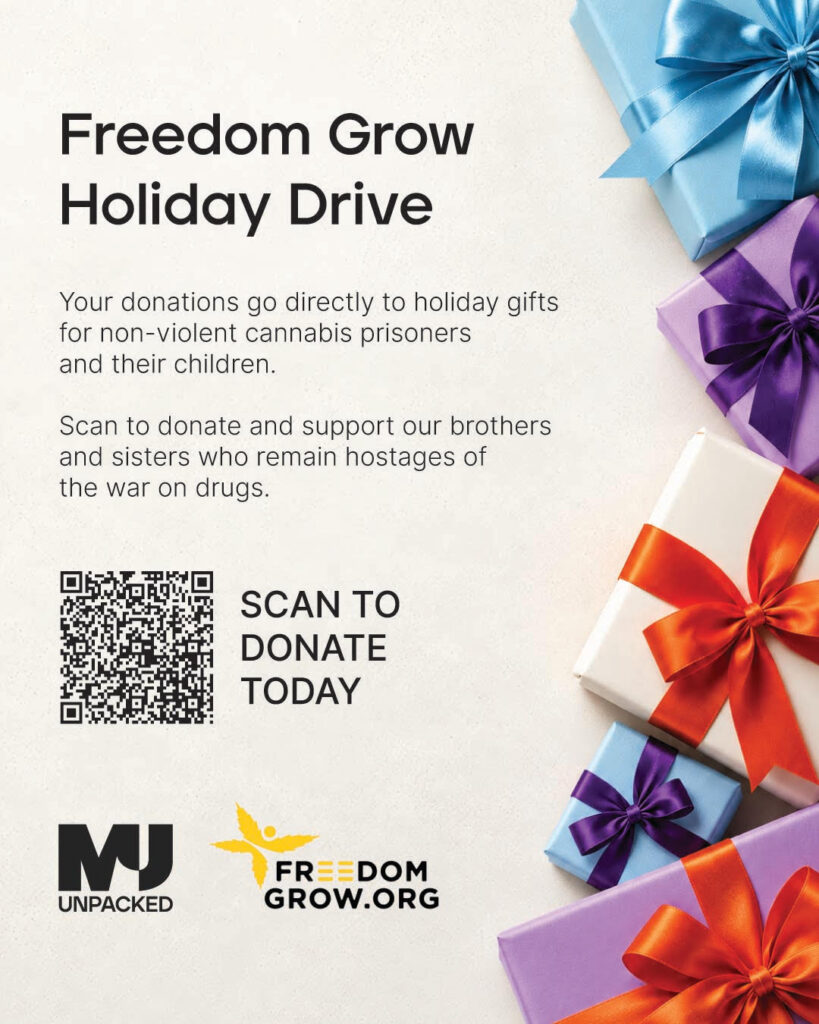
Freedom Grow’s work now extends well beyond commissary support. The organization helps children and caregivers affected by incarceration, conducts back-to-school and holiday drives, fulfills personal wishes and assists people returning home after prison. A request can be as ordinary and human as sending flowers to an incarcerated person’s mother or purchasing a textbook that helps someone continue an education from inside a cell.
These are not symbolic gestures. They are reminders that incarceration spreads through an entire family.
This Partnership Has Deep Roots in Montana’s Cannabis History
For Kristin Flor, the Lionheart partnership is intensely personal and unmistakably connected to Montana.
Her father, Richard Flor, was a Vietnam veteran, a registered medical cannabis caregiver and a co-owner of Montana Cannabis. Federal authorities raided medical cannabis businesses across Montana in 2011, even though medical marijuana was legal under state law. Richard Flor was sentenced to five years in federal prison despite serious health problems.
He died in federal custody in August 2012 after his health deteriorated. Kristin later described having to remove her father from life support while he remained shackled to a hospital bed. His death propelled her deeper into advocacy for people incarcerated under cannabis laws and the families forced to fight for them from the outside.
During Lionheart’s manager training, Flor told the team that this would be Freedom Grow’s first roundup program spanning a chain of dispensaries. She thanked Lionheart for becoming one of the first companies to step up and explained what each checkout conversation represents: a voice for people who cannot stand at that counter and speak for themselves.
That history changes the character of the campaign.
This is not a national nonprofit dropping a generic donation prompt into Montana stores. It connects today’s regulated Montana cannabis market to a Montana family directly harmed by the collision between state medical cannabis law and federal prohibition.
The state now records millions of dollars in cannabis sales every month in counties where Lionheart operates. Legal businesses generate revenue. Governments collect taxes. Customers shop openly. Richard Flor did not live to see this version of the market.
The least the industry can do is remember how it got here and support the families who paid the price along the way.
Small Donations Can Create Direct, Repeatable Support
Roundup programs work because they reduce friction. Customers do not need to research payment methods or remember to donate later. Retail staff do not need to organize a separate fundraiser every week. The opportunity is built into a transaction that is already taking place.
The amount contributed during any single purchase may be less than one dollar, but consistency is the point. If a dispensary presents the option across hundreds or thousands of transactions, those cents become commissary deposits, school supplies, holiday support, educational materials, family assistance and reentry help.
Lionheart and Freedom Grow are also discussing ways to deepen participation beyond the register, including direct-donation information, community events, staff education and recognition for stores that build the strongest participation. The first measures of success should include the number of stores activated, employees trained, customers offered the option and total donations delivered to Freedom Grow.
Transparent impact reporting will be important. Customers and retail teams should be able to see what was raised and understand how those funds helped. The goal is not only to collect change. It is to create a clean, credible and repeatable model that other cannabis retailers can adopt.
Lionheart Deserves Credit, but It Should Not Have to Stand Alone
Lionheart deserves recognition for moving first at this scale for Freedom Grow. The company is putting its staff, store network and customer relationships behind people who cannot offer it shelf space, favorable margins or social media reach in return.
That is leadership.
But congratulations are not enough. Lionheart’s action draws a bright line between retailers doing something and retailers still explaining why they have not.
The cannabis industry has no shortage of awards, panels, social-equity statements and carefully polished posts about honoring legacy culture. Yet there are still people serving lengthy sentences for conduct that now produces legal revenue. If a retailer can spend money on grand openings, loyalty promotions, influencer campaigns, trade-show booths and branded merchandise, it is difficult to argue that asking customers about a few cents at checkout is too much work.
This is where the constructive invitation becomes direct accountability.
Retailers do not need to copy every part of Lionheart’s campaign overnight. They can begin by contacting Freedom Grow. They can ask Dutchie or their own point-of-sale provider about donation tools. They can train employees with one accurate sentence. They can place a sign at the register. They can commit a monthly amount, a percentage of a campaign or another recurring source of support.
But “we support cannabis justice” cannot remain a substitute for supporting cannabis justice.
The legal industry did not create every injustice of prohibition. It did inherit a moral obligation to confront them. Everyone working in legal cannabis benefits from a social and political transformation that arrived too late for thousands of incarcerated people and their families. Retailers occupy the most frequent point of contact between the regulated industry and the public. That access is valuable, and value brings responsibility.
If a dispensary chooses not to use that access, it should at least be honest about the choice.
A Challenge to Montana and National Cannabis Retailers
Lionheart has provided the blueprint: activate the technology, educate the team, ask the customer, track the funds and report the impact.
Other retailers now have four clear ways to act:
- Activate Dutchie Round Up for Freedom Grow. Retailers using Dutchie should contact their representative and request information about enabling Freedom Grow as a Round Up partner.
- Contact Freedom Grow directly. Build a donation partnership appropriate for the retailer’s platform, market and applicable regulations.
- Commit recurring financial support. Dedicate a percentage of a campaign, a fixed monthly contribution or another dependable source of funding.
- Use the store as an education platform. Train staff, share prisoner stories responsibly and remind customers that legal access and ongoing incarceration still exist at the same time.
This challenge extends beyond Montana. Dutchie makes its Round Up program available to eligible retailers nationwide, and other point-of-sale systems may provide comparable tools. The specific button matters less than the decision to use the retail platform for repair.
No dispensary needs to solve the entire legacy of prohibition alone. Every dispensary can stop pretending the problem belongs to somebody else.
The Question at the Register Is Really a Question for the Industry
At a Lionheart counter, the customer-facing question will be straightforward: Would you like to round up to support Freedom Grow?
Behind that question sits a bigger one.
What does the legal cannabis industry owe the people still imprisoned by cannabis prohibition?
Lionheart’s answer is that Montana retailers can do more than acknowledge them. They can build support into daily business, one transaction at a time.
That is a practical beginning, not the finish line. Spare change will not overturn a sentence by itself. It can keep someone connected to family. It can place money on a commissary account.
It can help a child start school with supplies. It can support a person returning home after years away. It can keep an incarcerated person from feeling entirely forgotten by an industry now selling the same plant legally.
Lionheart has stepped forward. Other cannabis dispensaries now get to decide whether they will join the work or keep watching from the sidelines.
The register is already there. The customers are already there. The technology is already there.
The need has never left.
What, exactly, are we waiting for?
How to Support Freedom Grow
Cannabis retailers interested in joining the effort can contact Freedom Grow to discuss retail partnerships, recurring donations, staff education and local campaigns. Dutchie retailers can also contact their Dutchie representative about activating Round Up the Change with Freedom Grow.
Consumers can support the program by rounding up at participating Lionheart Cannabis dispensaries in Montana, donating directly to Freedom Grow and asking their local dispensary when it plans to join.
Learn more at FreedomGrow.org and find Lionheart locations at LionheartCannabis.com.
Frequently Asked Questions
Dutchie Round Up the Change is a voluntary checkout feature that lets cannabis customers round a purchase total to the nearest dollar and donate the difference to an approved cannabis nonprofit or industry organization. Participating retailers can track collected donations through Dutchie reporting tools.
Lionheart Cannabis is activating the Freedom Grow Round Up initiative across its 11 Montana dispensaries. Lionheart serves communities including Billings, Bozeman, Butte, Four Corners, Great Falls, Helena, Kalispell, Missoula and Paradise Valley.
Freedom Grow supports people incarcerated for cannabis offenses and their families. Its work includes commissary assistance, children’s back-to-school and holiday programs, personal wish fulfillment, family support and help for people returning home from incarceration.
A dispensary can request activation of Dutchie Round Up for Freedom Grow, contact Freedom Grow about a retail partnership, provide recurring financial support, train staff and share accurate information about people still incarcerated for cannabis.
Customers who want to contribute beyond checkout rounding can donate directly through Freedom Grow. Participating dispensaries should confirm whether their specific point-of-sale setup supports additional donation amounts.
The partnership connects Montana’s current legal cannabis market with the state’s prohibition history. Freedom Grow Executive Director Kristin Flor became a cannabis-prisoner advocate after her father, Montana medical cannabis caregiver Richard Flor, died in federal custody following a 2011 raid and prosecution.
- Freedom Grow Joins Dutchie Round-Up Program: Turning Everyday Cannabis Purchases Into Real Second Chances
- Montana’s Proposed THC Cap is a Step Backward for Voter-Approved Cannabis Legalization
- Montana Looks To Reallocate Cannabis Tax Revenues
- Montana Lawmakers Override Governor’s Veto On Use Of Cannabis Taxes
- Montana Senate Takes Issue With Governor’s Quick Veto Of SB 442