A Northern California Cannabis grower tested their plants regularly for Hop Latent Viroid (HLVd). They thought they were managing their nursery correctly, while a 40% infection rate lurked undetected. Their lab came back with 2–4% infection, a level most cultivators consider manageable and consistent with normal production.
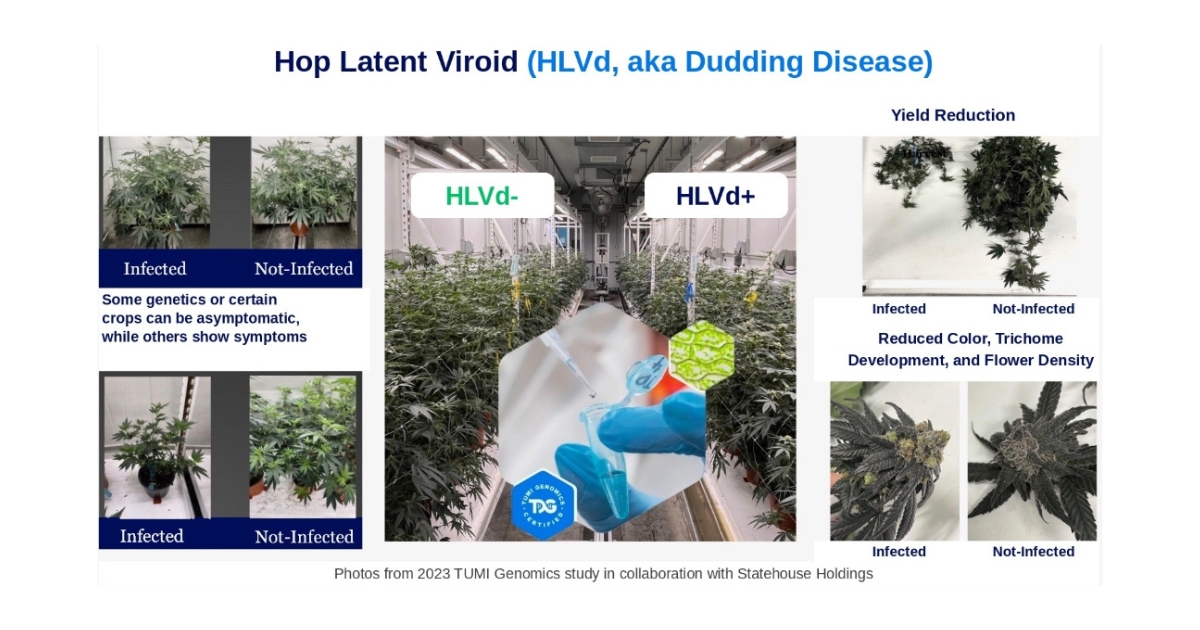
The plants kept declining with less vigor, abnormal flower structure, brittle plants at harvest, and significantly dropping yields. HLVd spreads slowly, it doesn’t kill plants overnight, it degrades them. When you don’t catch it early, it spreads throughout your mother stock and genetic library.
The cultivator recalled, “we got tests saying we had no positives, but I mean, we were literally looking at the plants and we were like, that’s impossible.”
When they finally got retested by a different lab, the results showed 40% infection. Not 2–4%. 40% of their mother stock infected meant that almost half of their production was infected. The growers felt validated for the first time in a long time.
The first lab wasn’t catching what was there. The false negativity rate had sent them down the wrong path, wasting months troubleshooting the wrong problems while HLVd spread through their nursery.
The Setting
A mixed-light cultivation operation in Northern California’s Emerald Triangle had a commercial scale nursery with about 200 mother plants. They ran a professional operation with regular testing, a solid genetics program, and the kind of attention to detail that comes from years of having your hands in the dirt. The kind of farm that seemed to have everything dialed in.
These were growers who knew their plants inside and out. They understood the nuances of their environment, the genetics they were working with, and what healthy looked like. What happened next wasn’t a case of inexperienced growers missing obvious problems or taking shortcuts. They were doing everything right by the standards they knew.
The Problem
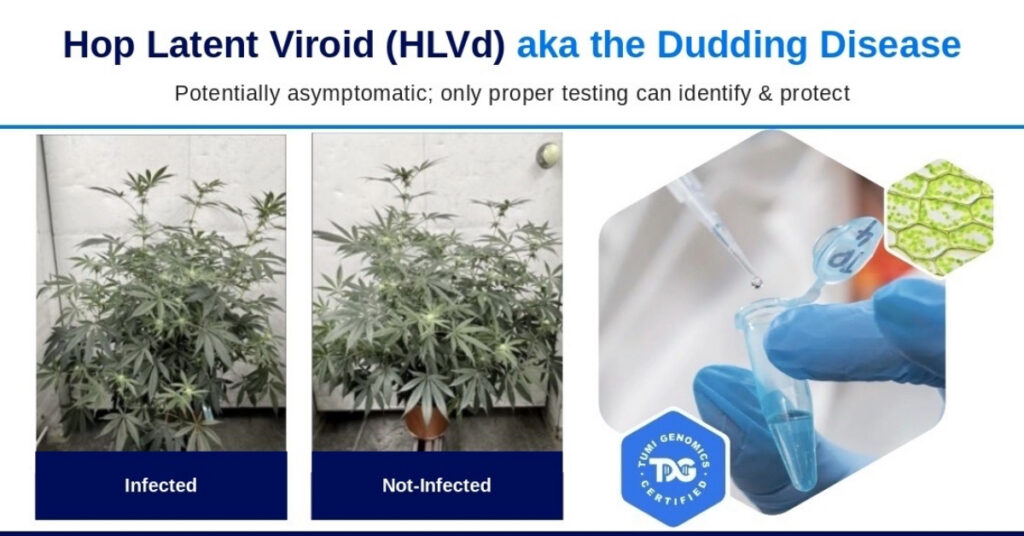
The cultivator described, “Plants were smaller, sickly looking, and didn’t have as many trichomes.” Plant vigor dropping noticeably across the board, abnormal flower structure, and brittle plants at harvest that were barely holding together. Yields dropped significantly. These are the classic, unmistakable signs of HLVd infection pressure.
The test results continued to show low rates of positivity for HLVd. Their lab report showed 2–4% infection rate, marked mostly clean. Nothing in the data suggested a problem. So while the operation continued and the test results provided false reassurance, the infection was spreading unchecked. The inaccurate results didn’t just mask the problem; they allowed it to get worse. With clean test results, there was no reason to suspect anything serious was happening. The infection spread month after month.
The cultivator was frustrated, and recalled, “we were pretty sure it was HLVd, to us it looked like 30% or more of the plants were infected, but we were told we had almost no positives.”
The growers knew something was wrong with their plants. The longer this went on, the more confusion and frustration grew. They spent time and money going through different causes and solutions. First they thought it might be a nutrient problem, and then maybe bad genetics. Every adjustment they made, every hypothesis they tested led nowhere.
This is the problem with testing that isn’t reliable. It’s not just incomplete information, it’s false information. It tells you that you’re clean when you’re not, and it allows problems to spread while leaving growers frustrated and confused.
The Retest
Faced with results that didn’t add up and still searching for answers, they made the decision to get an independent retest. Same plants, different lab: TUMI Genomics. The new results told a completely different story: where the previous lab showed 2–4% infection, their new lab partner found a 40% infection. That’s the difference between sustainable levels and seriously infected.
The cultivator felt validated, and described “the results we got back from TUMI were the same more or less to what we were seeing, so it was easy to believe it.”
The retest mattered because the data suddenly matched what they were seeing in the plants. The problem wasn’t too much fertilizer or bad genetics; it was that the original lab couldn’t detect the actual infection rate. This is why reliable testing matters.
The Recovery
Most growers can’t empty the nursery, afford a complete reset, or pause production while fixing the problem. Bills keep coming, payroll doesn’t stop, you have to keep the operation alive while fixing the issue. This is the constraint most growers face.
This operation took a phased approach that proved realistic for their situation.
Phase 1 was triage by infection level. They removed the plants with high-level and mid-level positives first, utilizing the quantitative analysis provided by their new testing partner. These were the plants with the highest infection levels that posed the biggest risk of spread. This freed physical space and removed the biggest sources of ongoing contamination. The quantified data from the new sensitive tests made the hard decisions easier. They knew which plants to get rid of and the accurate testing data gave them confidence in their decisions.
Phase 2 was deciding what was worth saving. While it’s always best to immediately remove any plants positive for HLVd of any level to prevent further disease spread, the reality is that’s not always an option. This operator just found out 40% of their library was infected, but production couldn’t just stop. The cultivator recalls saying, “kill everything, sanitize, start over, start fresh, and my bosses were like that’s going to be so costly, let’s just figure out another way.”
Some of the plants that showed a low infection level were identified as potential candidates for being carefully quarantined, especially if they represented unique or valuable traits. With specific guidance from their new testing partner, the team took extreme sanitation precautions to prevent any spread of HLVd, and they propagated fresh clones & retested these genetics. Not all survived the recovery attempt, but some did. This was possible due to the unpredictable systemic distribution of the viroid when the infection levels are low.
It is possible that one branch of an infected plant does not carry the infection where another may. While this is not a typically recommended practice due to the extreme sanitation precautions necessary and rigorous re-testing, this approach kept valuable genetics in the system and continuity in production. They could only do this confidently because they finally had reliable testing data guiding them. Without this type of guidance from experts in plant pathology and accurate data, this phase would have been guesswork.
Phase 3 was implementing preventative testing solutions. They established a testing protocol that would catch problems early. They created a clean mother stock or “grandmother room”, an isolated space for verified clean stock containing only plants that are confirmed clean. Plants in this room are tested twice and verified disease-free before they ever enter, and continue to be tested preventatively every 4 weeks. This became their repopulation source for their production mother stock.
The cultivator explained, “it’s really hard to keep a greenhouse quarantine and sterile. When we turned it down into that smaller grandmother room, it was really easy to keep sterile.” This strategy helped them stay ahead of issues while being mindful of costs and logistics. Combining system improvements with ongoing preventative testing worked to prevent future HLVd infections. Going forward, they followed the STOP pathogen protocols developed by TUMI to prevent any future infections.
The financial reality of this approach matters. Production continued throughout the recovery, revenue kept flowing, and valuable genetics were protected. This is the kind of realistic approach that actually works for commercial cultivators.
The Result
The numbers tell the story. The infection rate went from 40% down to single digits in just 4 months, and after 6 months the infection was down to sustainable levels around 2-5%. For a commercial operation, maintaining below 5% disease pressure, with continued preventative testing, is considered manageable rather than a crisis level infection.
As the operation improved disease pressure, they also dialed in other factors like genetics and nutrition. Harvest performance improved by over 50% from 300-500 pounds to 500-700 pounds per harvest cycle, according to the cultivator. Plant structure became normalized, no more brittle stems breaking on the drying racks. Trichome production increased, and dense, frosty flowers came back. Overall, quality metrics improved as disease pressure decreased.
Beyond the numbers, the team got their operation back. They weren’t questioning their decisions anymore and the growers were back in control. When asked how they feel about the farm today compared to a year ago, they responded “I’d say it’s night and day, it’s totally different.”
Why Not All Testing is Equal
A negative result is only as good as the test’s ability to find what it’s looking for. Not all testing approaches have the same sensitivity or accuracy, and the collection process also impacts the quality of the test.
The difference is in how the test is designed and validated. A properly designed test will be sensitive and able to catch what’s actually there even at low levels. An accurate test will have internal controls to ensure the correct result is reported, protecting against false results. The internal control will verify that there is plant tissue present, and that the test worked correctly. Not including an internal control adds ambiguity to a test because there is no way to differentiate between a true negative and a test that did not work correctly. A poorly designed test has a high limit of detection, which misses infections and results in false negatives. False negatives can happen for a variety of different reasons: the assay itself lacks sensitivity, the sample wasn’t collected from the right plant tissue, or there’s no internal control to verify the test actually worked correctly.
A good testing partner addresses all these issues. TUMI Genomics validates their tests against USDA standards across multiple metrics: sensitivity, accuracy, precision, and specificity. They studied hundreds of variants of HLVd to ensure their assay catches all versions in circulation. Every single test includes an internal control that validates sample integrity confirming the assay performed correctly. They’ve even conducted research to identify which plant tissue produces the most reliable results, with root tissue showing 100% detection rates.
This is what separates a Cannabis pathology partner from a testing vendor.
The Lesson
Prevention is always cheaper than crisis management. For growers reading this, get to know your testing partner. Testing sensitivity and accuracy isn’t something that should be mysterious or hidden. Ask to see the validation documents from your testing lab, a trustworthy testing lab will have this type of documentation readily available.
The consequences of unreliable testing speak for themselves. This cultivator explained, “the worst thing that could happen to you when you’re dealing with disease is to get false negatives because then you think you’re all good, and you’re just spreading it more.”
Remediation from high infection levels is possible, but it requires good data. The strategic approach this farm used only worked because they finally had reliable numbers. Accurate viroid load data, combined with partnership and expertise in pathogen mitigation planning, gave them both the clarity and the roadmap they needed. For them, the nuclear mother stock program is a pivotal prevention strategy, along with quarantine protocols for new incoming plant material.
This farm learned the hard way that quality preventative testing will always be more cost effective compared to the cost to recover from a full-blown infection. They spent a long time with an undetected infection because they did not fully understand the shortcomings of their testing lab. The false economy of picking the cheapest lab ended up costing them far more in lost production and time.
While many cultivators see all testing the same, unfortunately not all testing is created equal. Pathogen testing is a complex process, and Cannabis pathology is a newly developing field. Your lab should be on the front line of discovery with you, and a true partner throughout the process.
Closing
This farm’s recovery wasn’t complicated. They got accurate test results, they made a plan, and they executed it. Just a few months later, their operation was healthy again.
The cultivator shared that after the HLVd infection rates lowered, the team morale increased. They explained, “at first it was like we’re going to have to deal with this forever, and now you know, we feel accomplished.”
For any grower facing a similar crisis, the path is the same. Get reliable data, make a specific plan, and move forward. Everything depends on that first step.
Authored by Rachel Porter, Founder of RMP Horticulture in collaboration with TUMI Genomics, based on interviews and experiences of a Northern California cultivator.