Key Takeaways
- The California DCC proposed rulemaking will allow group tagging of cannabis plants, replacing individual plant tags with a single tag for groups.
- This change aims to reduce labor and material costs for cultivators and minimize waste from non-recyclable tags.
- Comments on the proposed rulemaking are due today, July 27, 2026, while a public hearing is set for July 28, 2026, at 10 a.m.
- The rulemaking stems from Senate Bill 622 and Assembly Bill 8, which removed the requirement for individual plant identifiers.
- Despite this progress, the rulemaking does not address safety or disposal concerns related to existing METRC tags.
The California Department of Cannabis Control has posted a formal Notice of Proposed Rulemaking Action (DCC-2026-03-R) to allow group tagging of cannabis plants, replacing the longstanding requirement to individually tag each plant. The written comment deadline is today, Monday, July 27, 2026. The public hearing takes place tomorrow, Tuesday, July 28, 2026, at 10 a.m. via WebEx. To receive a meeting link, you must contact Lilly Quynn at outreach@cannabis.ca.gov by 4:30 p.m. today.
If you’ve been following the METRC plant tag controversy we covered last week, this notice lands at an important time. The California DCC has officially opened the door to group tagging under rulemaking action, and if you want your voice heard, today is the last day to act.
Here’s a breakdown of what the notice says, what it means for California cannabis cultivators, and exactly how to participate before the deadlines pass.
What Is DCC-2026-03-R and What Does It Propose?
DCC-2026-03-R is a Notice of Proposed Rulemaking Action published by the California Department of Cannabis Control under the authority of Business and Professions Code section 26013. The rulemaking is titled “Group Tagging of Cannabis Plants.”
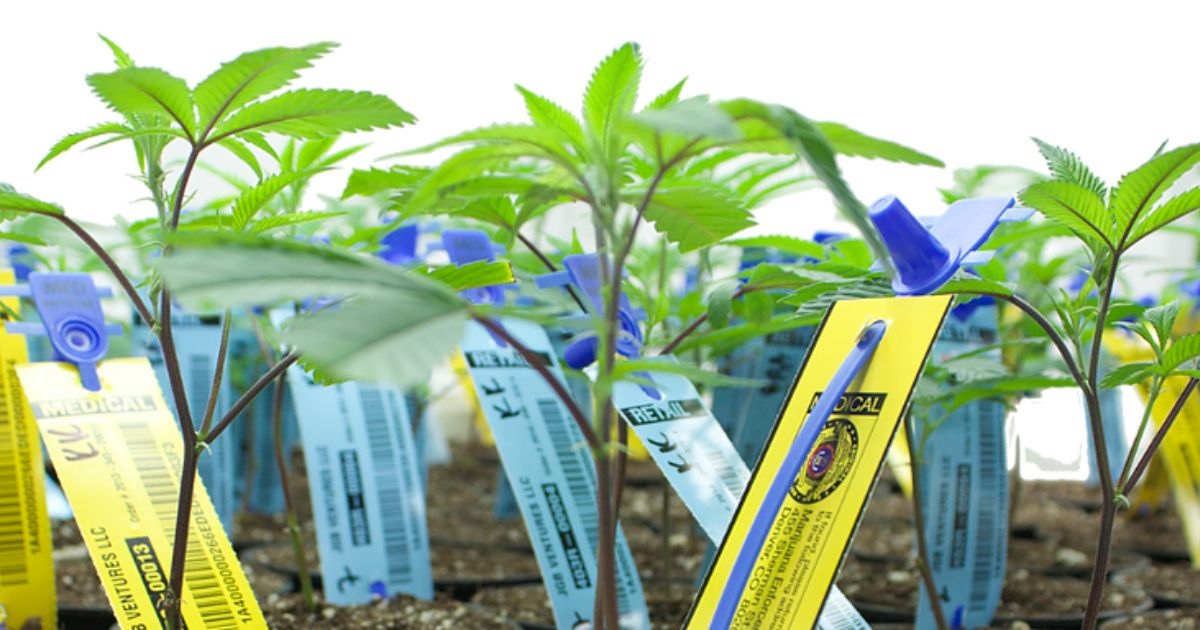
The proposed changes would eliminate the current requirement for individual plant tags on every mature plant and replace that system with group tagging. Under the proposal, cannabis plants could be tracked as a group using a single tag rather than requiring a separate physical tag for each plant.
The DCC says the proposed regulations would also update definitions to reflect legislative changes from SB 622 (2023) and AB 8 (2025), eliminate the requirement to order tags by a specific date after licensure, and extend the timeframe for licensees to record tag receipt in the California Cannabis Track and Trace (CCTT) system.
This rulemaking affects approximately 4,775 licensed cultivation businesses and 1,455 licensed retailers across California. According to DCC’s own economic analysis, roughly 90% of those businesses qualify as small businesses.
What Did SB 622 and AB 8 Actually Change?
Two pieces of legislation cleared the path for this rulemaking. Senate Bill 622, signed in 2023, removed the requirement that a physical tag be attached to the base of each cannabis plant.
That law gave the DCC authority to determine by regulation how each plant’s unique identifier would be recorded. Assembly Bill 8, passed in 2025, went a step further and removed the requirement that each individual plant have its own unique identifier at all.
The DCC-2026-03-R rulemaking is the regulatory follow-through on both of those statutory changes. The Legislature opened the door. This proposed action is how DCC formally walks through it.
What Are the Expected Benefits for California Cultivators?
According to DCC’s economic impact assessment attached to the notice, licensed cultivators would see an average annual cost savings of approximately $2,000 per operation due to reduced labor costs. The current system of hand-tagging individual plants is time-intensive. Replacing that with group-level tagging cuts down both the physical labor and the data-entry burden inside the CCTT system.
The expected annual materials cost under the new system is approximately $70 per cultivation licensee for tagging and demarcation supplies. That is a significant change from current overhead.
On the environmental side, the DCC acknowledged in its notice that existing METRC plant tags are considered non-recyclable e-waste. The RFID chips embedded in each tag cannot be easily separated from the exterior material, so the entire tag ends up in the landfill stream. Reducing the number of single-use tags deployed would directly reduce that waste volume.
DCC also noted that the proposal could support a modest increase in gross cannabis sales statewide, roughly 0.06 percent, by lowering production costs and potentially encouraging continued participation in the legal regulated market.
Context of Last Week’s METRC Coverage
Last week, we covered the controversy surrounding METRC plant tags after lab testing raised questions about the exterior tag material. A Certificate of Analysis from Infinite Chemical Analysis Labs, showed arsenic at 0.538 micrograms per gram in a METRC plant tag sample, above the listed action limit of 0.2 micrograms per gram. Lead was also detected at 0.166 micrograms per gram. The sample was labeled “without the RF strip,” meaning the concern relates to the exterior material workers physically handle, not the RFID component inside.
Jeff Nordahl of @jade_grove_farm, an OSHA-certified safety manager, raised these concerns publicly at a November 2025 Cannabis Advisory Committee meeting and says DCC never responded. He also contacted METRC directly last month to ask about proper disposal procedures and received no formal written guidance.
The DCC-2026-03-R rulemaking doesn’t directly address the worker safety or disposal questions surrounding METRC tags. That’s an important distinction to keep in mind. While the proposed changes would significantly reduce the number of tags workers come into contact with going forward, it doesn’t answer whether the tags still being handled today require safety guidance, Prop 65 warnings, or specific disposal protocols.
So here’s where things stand: the rulemaking is real, meaningful progress on cutting tag volume and that’s worth acknowledging. But the underlying safety and disposal concerns raised by Nordahl and others? Those remain open questions that this rulemaking simply doesn’t touch.
What Are Today’s Key Deadlines for DCC-2026-03-R?
Today, Monday, July 27, 2026, is the final day for two critical actions.
First, the written public comment period closes today. Any person or authorized representative who wants to submit written comments on the proposed rulemaking must have their comments received by the DCC by the end of today. Written comments can be submitted by email to publiccomment@cannabis.ca.gov or mailed to the DCC’s Legal Affairs Division at 2920 Kilgore Road, Rancho Cordova, CA 95670.
Second, to receive a WebEx link for tomorrow’s virtual public hearing, you must contact Lilly Quynn at outreach@cannabis.ca.gov or by phone at 1-844-612-2322 by 4:30 p.m. today. A link will also be posted directly on the DCC’s website by 9 a.m. tomorrow morning, so that is an option if you miss the email window.
For those interested in attending in person, limited seating is available at the DCC Hearing Room at 2920 Kilgore Road, Rancho Cordova, CA 95670. In-person attendance requests must also be submitted to Lilly Quynn by 4:30 p.m. today.
For general inquiries about the rulemaking action, the DCC contact is Melissa Brokken, with backup contact Nicole Roberts. Both can be reached at Regulations@cannabis.ca.gov or by phone at 916-465-9025.
What Happens at Tuesday’s Public Hearing?
The virtual public hearing for DCC-2026-03-R is scheduled for Tuesday, July 28, 2026, beginning at 10 a.m. The hearing will run until all testimony is submitted or until 12:00 p.m., whichever is later.
Attendees can participate via WebEx or by telephone. Once connected, participants will receive instructions on how to submit oral comments. The DCC requests, but does not require, that anyone providing oral comments also submit a written copy of their testimony by email.
If the DCC makes modifications to the proposed regulations that are sufficiently related to the original text, it will make those changes publicly available for at least 15 days before adopting the final version.
Frequently Asked Questions
DCC-2026-03-R is a Notice of Proposed Rulemaking Action from the California Department of Cannabis Control that would allow cannabis cultivation licensees to tag plants as a group rather than requiring a separate physical tag for each individual mature plant. The proposed changes implement legislative updates from SB 622 (2023) and AB 8 (2025) and are intended to reduce labor costs, administrative burden, and single-use tag waste in the legal cannabis market.
The written comment period for DCC-2026-03-R closes on Monday, July 27, 2026. Comments must be received by the DCC by the end of today. Submissions can be sent by email to publiccomment@cannabis.ca.gov or by mail to the Department of Cannabis Control, Legal Affairs Division, 2920 Kilgore Road, Rancho Cordova, CA 95670.
The virtual public hearing is scheduled for Tuesday, July 28, 2026, at 10 a.m. via WebEx. To receive a meeting link, contact Lilly Quynn at outreach@cannabis.ca.gov or 1-844-612-2322 by 4:30 p.m. on Monday, July 27, 2026. A meeting link will also be posted on the DCC website by 9 a.m. on the day of the hearing. Limited in-person seating is available at 2920 Kilgore Road, Rancho Cordova, CA 95670.
No. DCC-2026-03-R focuses on changing how plants are tracked and tagged going forward. It does not address the worker safety questions raised by recent testing of METRC plant tag materials, nor does it establish disposal guidance for tags already in circulation. Those questions remain open, as covered in our previous reporting on the METRC tags and Prop 65 concerns raised by cultivator Jeff Nordahl.
- METRC Introduces Pilot Program for New Sustainable RFID Tags
- Oklahoma Accepting Public Comments on Recent Medical Rule Changes
- METRC Money Grab? Delays Could Cost Oregon Cannabis Farmers Millions
- Colorado Removes Need For RFID Tags, Could METRC Be Next?
- California AB 622 To Change Plant Identification Program Heads to Governor Newsoms Desk