Massachusetts has spent nearly a decade building a regulated adult-use cannabis market. Voters made that decision themselves in 2016, businesses invested around it, municipalities learned how to regulate it, employees built careers inside it, consumers moved into a tested and licensed marketplace, and an entire network of retailers, cultivators, manufacturers, ancillary businesses, advocates and entrepreneurs grew around the new industry.
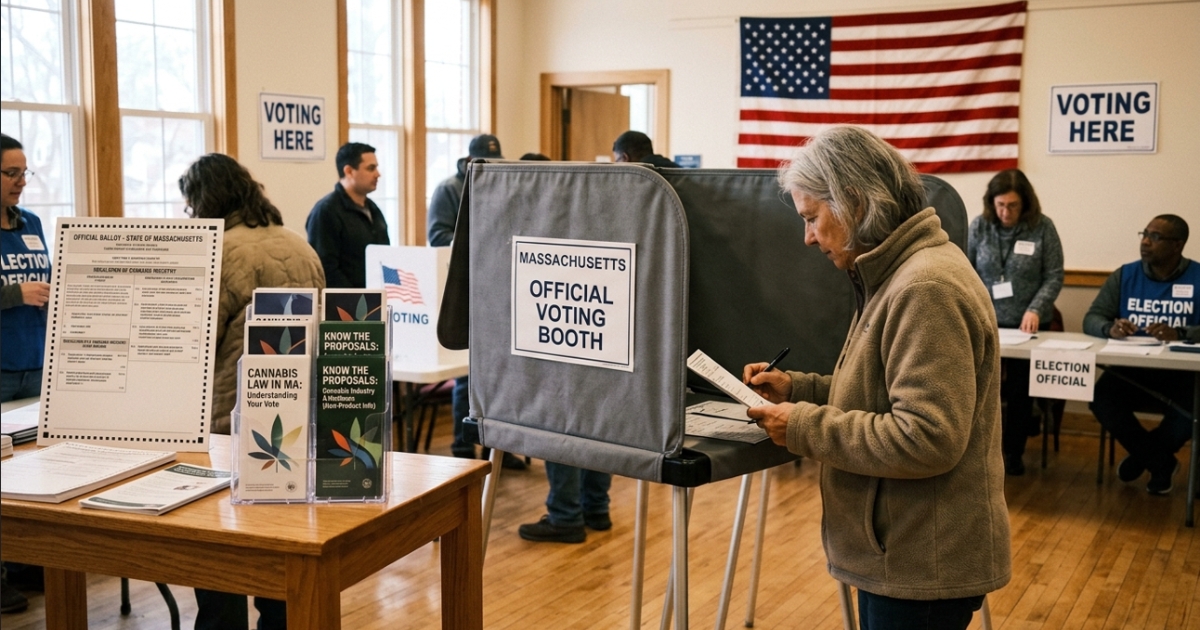
This November, Massachusetts voters will be asked whether they want to start dismantling a significant part of what they built. Question 8, officially titled “Prohibit Retail Sale of Adult Recreational Use Marijuana,” will appear on the November 3 statewide ballot. The proposal would roll back core elements of Massachusetts’ adult-use cannabis system, including regulated recreational retail sales. After years of legalization becoming part of the economic and cultural fabric of the Commonwealth, voters are suddenly being asked to revisit a question many believed Massachusetts had already answered.
That makes the next few months important for anyone who has participated in this industry, but it also deserves the attention of people who never intend to walk into a dispensary. Because this is about more than cannabis. It is about what happens to businesses, jobs, tax revenue, consumers, communities and entrepreneurs when a legal marketplace is allowed to develop for years and then faces the possibility of having one of its central pillars removed.
Massachusetts Has Already Built a Real Cannabis Economy
It is easy to talk about cannabis legalization in political abstractions. Massachusetts now has enough real-world experience that we do not need to. According to the Massachusetts Cannabis Control Commission, adult-use cannabis businesses generated more than $1.65 billion in sales during 2025 alone, the highest annual total in the state’s history. Consumers completed approximately 46.3 million transactions through the regulated marketplace during the year.
Those sales also generated $289 million in state tax revenue during fiscal year 2025. That money supports state programs and priorities ranging from restorative justice and social equity initiatives to substance-use prevention and other public services. This is no longer an experiment waiting to happen. It is an established regulated industry operating in communities across Massachusetts.
The market is certainly not perfect. Cannabis operators throughout Massachusetts will be the first people to tell you that. Operators contend with taxes, competition, regulatory costs, price compression, access to capital, local rules and all the other challenges that come with running a cannabis business. Independent companies have had to learn difficult lessons as the market matured. Those challenges deserve serious conversations and serious solutions. But eliminating legal retail does not solve the problems inside a regulated market. It removes the regulated market from the equation.
Three Years Can Tell You a Lot
“Three years ago, Massachusetts became the starting point for the Cheech & Chong dispensary concept. ‘Massachusetts gave us our proving ground,’ said Jonathan Black, CEO of Cheech and Chong’s Global Holding Company. “The local operators here didn’t just open a store with our name on it, they built the model we’ve used to expand everywhere since. This industry runs on people who show up every day, employees, compliance teams, local partners, doing the unglamorous work that makes a store actually work. Three years later, that bet has paid off for a lot of people, not just us.”
That matters because Cheech & Chong is one of the most recognizable names in cannabis culture, but the stores themselves did not appear simply because two famous names were placed on a sign. Retail requires operators. It requires employees showing up every day, inventory management, compliance, security, customer education, relationships with local brands, coordination with regulators, taxes, leases, vendors and all of the unglamorous pieces that turn an idea into an operating business.
For three years, people in Massachusetts have been doing exactly that. The anniversary is worth celebrating on its own. Three years in the modern cannabis business can feel considerably longer when you consider how quickly regulations, economics and consumer behavior change. It is also an opportunity to look beyond one retailer and recognize something broader. Massachusetts legalization created a place where businesses like these could exist legally in the first place.
What Question 8 Would Change
Question 8 did not arrive on the ballot without controversy. Massachusetts officials certified the initiative for the November 3 election after organizers submitted enough signatures during the state’s second-round petition process. The final qualification margin was extremely narrow. The Elections Division reported that 12,551 signatures were accepted when 12,429 were required.
A subsequent challenge questioned the validity of a number of signatures and alleged problems ranging from non-genuine signatures to misleading petition practices. The State Ballot Law Commission ultimately concluded that the challenger had not established grounds to invalidate enough signatures to remove the initiative from the ballot.
Those allegations should be distinguished from what election officials ultimately decided. Question 8 qualified, survived its challenges and will be presented to Massachusetts voters. That is where the conversation needs to be now. The more consequential question is what the proposal itself would mean for a legal marketplace that consumers, workers, businesses and municipalities have spent years building.
The state’s official ballot title gets directly to the issue: prohibit retail sale of adult recreational use marijuana. Massachusetts could therefore find itself in the unusual position of continuing to recognize adult cannabis possession while taking away the regulated retail infrastructure through which adults legally obtain the product. That deserves scrutiny.
Regulation Exists for a Reason
Legalization was never supposed to mean cannabis without rules. The entire premise of regulated adult use is the opposite. Licensed cannabis sold through Massachusetts dispensaries exists within a state regulatory system. Products move through seed-to-sale tracking. Businesses operate under licensing requirements. Sales happen through age-restricted establishments. Products are tested and labeled. Transactions are visible to regulators and taxable by the state.
Illegal sellers do not suddenly disappear because cannabis is legal, and the legal market still competes every day against unregulated sources. But removing licensed recreational sales does not remove cannabis demand. It changes where consumers can satisfy that demand. That distinction matters.
The Commonwealth has spent years developing an infrastructure intended to move adult consumers away from an illicit system and into a controlled marketplace. Massachusetts should be asking how to make that regulated system work better, not whether it should eliminate a central part of it and hope the underlying consumer demand disappears with it.
Look at What Has Been Built Before Deciding What to Remove
For all the difficulty of operating a cannabis company, Massachusetts’ legal industry has continued to grow. The state’s $1.65 billion in 2025 adult-use sales represented another annual record. More than 46 million regulated transactions took place in a single year.
Behind those numbers are people. They are budtenders and managers, cultivators and manufacturers, compliance professionals and marketers. They are founders who invested their savings, landlords who leased commercial property, accountants who learned an entirely new industry, municipalities collecting local revenue, and brands trying to survive in one of the most competitive consumer markets in America. They are also consumers who have become accustomed to purchasing cannabis from licensed retailers rather than relying on an illicit source.
“Three years ago this was just one store,” said Tommy Chong, Co-founder of Cheech and Chong’s Global Holding Company. “We always knew we wanted to roll it out across multiple markets, and now it’s real people with real careers. That’s what’s actually on the ballot this November, not a drug, people’s livelihoods.”
Cheech & Chong’s Massachusetts story is one small part of that much larger ecosystem. When the company’s first retail pilot opened in the Commonwealth three years ago, nobody knew exactly where the concept would lead. Since then, Cheech & Chong has continued building a wider retail network while the Massachusetts operators who helped start that chapter have remained part of an increasingly mature state market.
There is something fitting about celebrating that anniversary at the same moment Massachusetts is debating the future of legal cannabis again. The anniversary offers a reminder that legalization is not merely a law written on paper. It becomes businesses, paychecks, relationships, investments, products and communities once people begin building around it.
“We’ve watched this plant go from something people hid to something people build careers on,’ said Cheech Marin, Co-founder of Cheech and Chong’s Global Holding Company. “Massachusetts used the plant to create real jobs, real businesses, and support real communities, that’s the punchline we always hoped for.”
The Better Question for Massachusetts
There are legitimate debates to have about cannabis. Massachusetts should continue discussing public health, responsible use, youth prevention, product safety, impaired driving, taxation, social equity, local control and whether existing regulations actually help independent businesses succeed.
A mature cannabis industry should be willing to have those conversations. The question is whether eliminating regulated adult-use retail is an effective answer to any of them. After nearly a decade of legalization, Massachusetts has actual evidence available. It has years of sales data. It has tax collections. It has hundreds of businesses. It has millions of consumer transactions. It has operators who can explain what works and what needs to change. That should be the starting point.
This fall, Beard Bros will spend more time talking with the people who have been living this experience firsthand. We will look at the Massachusetts businesses and workers behind the numbers, explore Cheech & Chong’s first three years of retail in the state, and hear from operators and community members about what legalization has meant to them.
Question 8 has put cannabis legalization back into the Massachusetts conversation. That conversation should begin with a clear understanding of what the Commonwealth has already built, who has built it, and what would actually be affected if a major piece of the regulated marketplace disappeared. Three years inside one Massachusetts dispensary can tell part of that story. Nearly a decade of legal cannabis across the Commonwealth tells the rest.
- Tommy Chong Reaches For Higher Living & Higher Power (Part 1)
- Tommy Chong Part 2: Blowin’ in the Wind; The Serendipitous Path From Homelessness to Hollywood
- Cheech and Chong Sue California After Emergency THC Hemp Regulations
- Tommy Chong, Operation Pipe Dreams, and the Absurd War on Glass: A Cannabis Culture Flashback
- Massachusetts Cannabis Repeal Is Trailing by 22 Points in New Poll