Why commercial cannabis edibles require culinary skill, food science, formulation experience, and a deep understanding of what happens when a recipe leaves the kitchen and hits the production floor.
Making something delicious is one thing. Making that same product thousands of times through commercial equipment, while maintaining the texture, consistency, processing characteristics, and quality that made the original version work, is something else entirely.
That distinction is where Michael’s career lives.
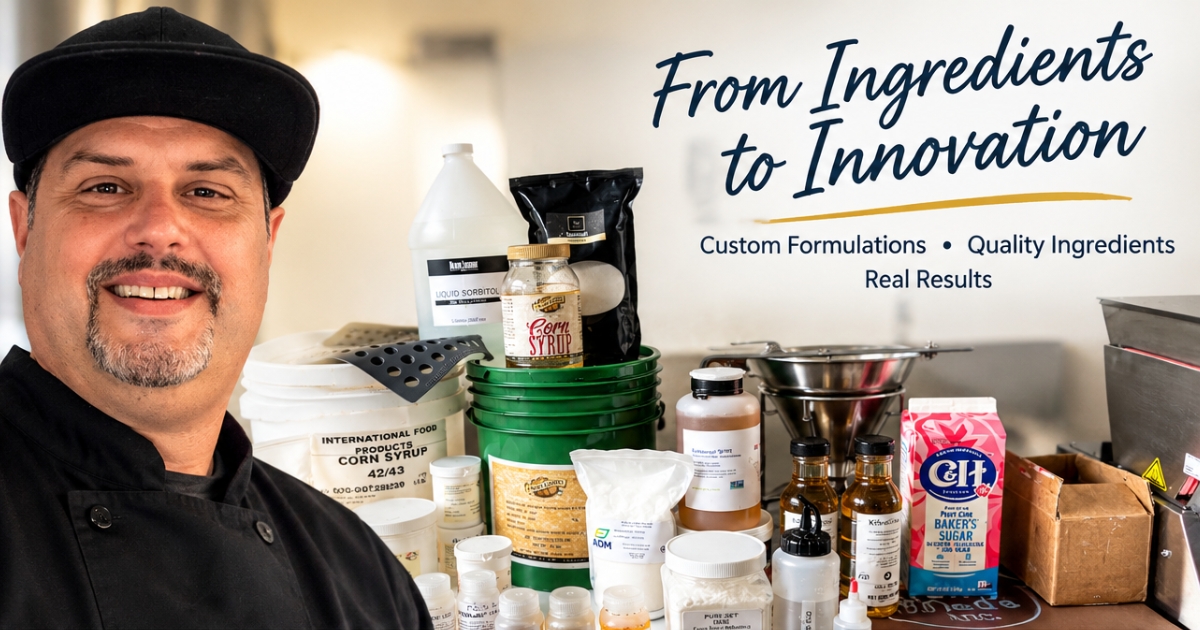
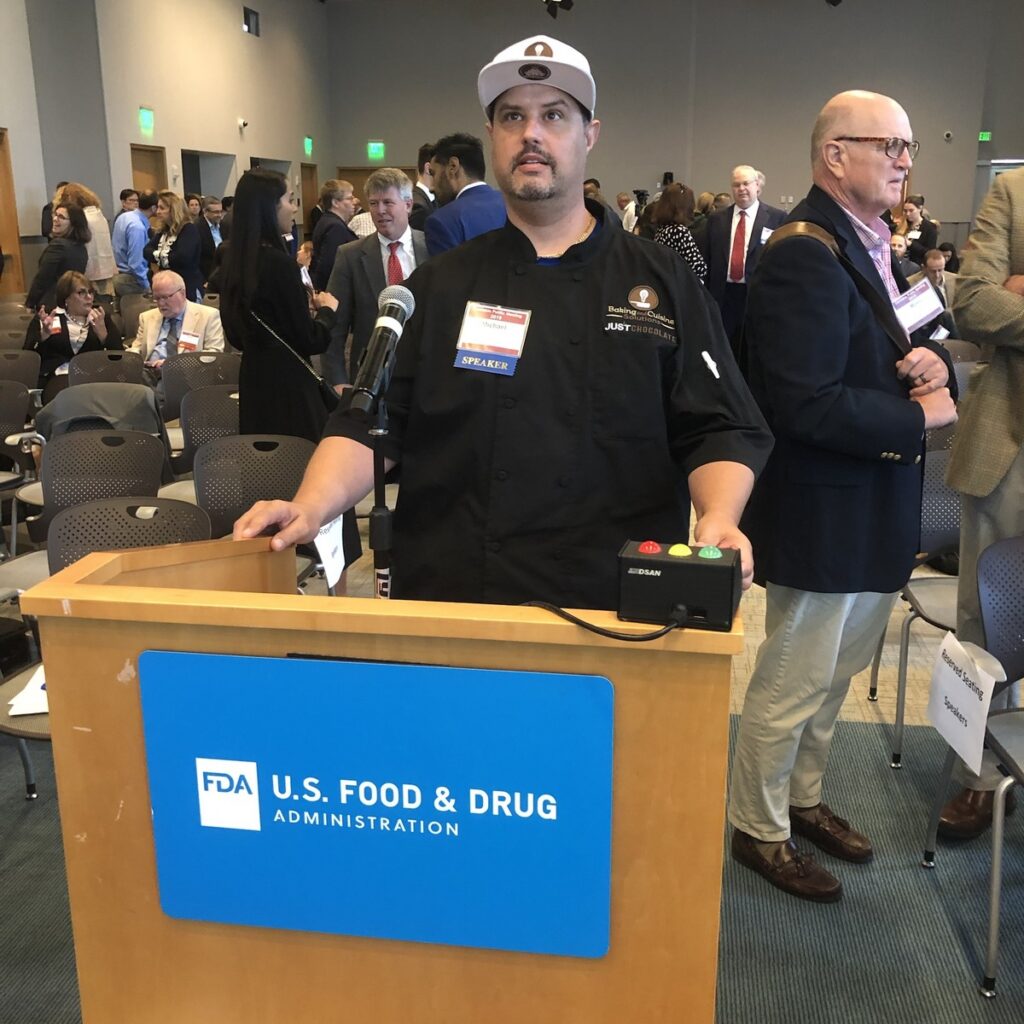
A professionally trained pastry chef with additional education in baking science, food science, ingredient functionality, formulation, food processing, sanitation, and confectionery development, Michael has spent decades working at the intersection of culinary creativity and commercial production. His background includes an AOS degree in Baking & Pastry Arts from The Culinary Institute of America, studies in Baking Science & Technology through the American Institute of Baking, coursework in food science, ingredient functionality, formulation, processing, and sanitation at Kansas State University, and advanced education in gummies and jellies through the University of Wisconsin.
His involvement with cannabis, however, did not begin with a product launch or a business plan. It began in 2004 when a student asked him to help develop a cannabis-infused butter recipe for her mother, who was battling Stage 4 breast cancer. That experience led Michael into a much longer journey involving cannabis-infused foods, recipe development, formulation, product research and development, and eventually consulting for an industry that was still figuring out what commercial cannabis edibles could become.
Over the years, Michael traveled throughout the United States, gaining firsthand exposure to medical and adult-use cannabis markets and to infused-product businesses operating in very different regulatory and manufacturing environments. That experience gave him a perspective few product developers have: not simply how one company or one state approached edibles, but how the category evolved across multiple cannabis markets.
What began as culinary experimentation ultimately developed into something much more technical. Today, his expertise sits at one of the most important points in cannabis manufacturing: the space between creating a recipe and creating a product that can actually be manufactured consistently.
About Michael
Michael is a professionally trained pastry chef and cannabis edible product-development specialist whose work combines culinary arts, food science, ingredient functionality, formulation, confectionery R&D, process development, production scale-up, and manufacturing optimization.
His consulting and R&D work includes gummies, caramels, lozenges, lollipops, gelatin- and pectin-based formulations, recipe development, viscosity and texture control, equipment-focused formulation, troubleshooting, SOP development, training materials, and commercial production processes.
For cannabis brands, manufacturers, and product developers, his focus is helping turn promising edible concepts into formulations and processes capable of working in real-world production environments.
A Good Recipe Is Not Necessarily a Good Commercial Formulation
Anyone who has spent time around cannabis edibles has encountered a great homemade product. It might be a gummy with an incredible flavor, a caramel with the perfect chew, a lozenge, lollipop, or another infused confection that works beautifully when somebody makes a small batch by hand.
Commercial production changes the equation.
Once a company moves from a kitchen or development bench onto a manufacturing floor, every part of the formulation begins interacting with the production process. Ingredients behave differently depending on temperature. Texture can change when processes or batch sizes change. Viscosity determines how easily a formulation can move through depositing equipment. Timing, ingredient functionality, equipment selection, and processing conditions all become part of the finished product.
Something that performs perfectly in a small batch may behave very differently when the volume increases dramatically.
That is why Michael’s work goes well beyond simply developing recipes. His specialty includes the technical development of infused edible products, with particular attention to formulation, ingredient selection, texture, viscosity, temperature, processing, consistency, and production troubleshooting.
That combination of culinary knowledge and technical understanding is increasingly valuable as the cannabis edible category matures. A chef may approach a product by asking whether it tastes good and delivers the desired experience. A food scientist may ask why the formulation behaves the way it does. A production specialist may be concerned with whether that formulation can run efficiently through commercial equipment.
Michael’s work brings those questions together.
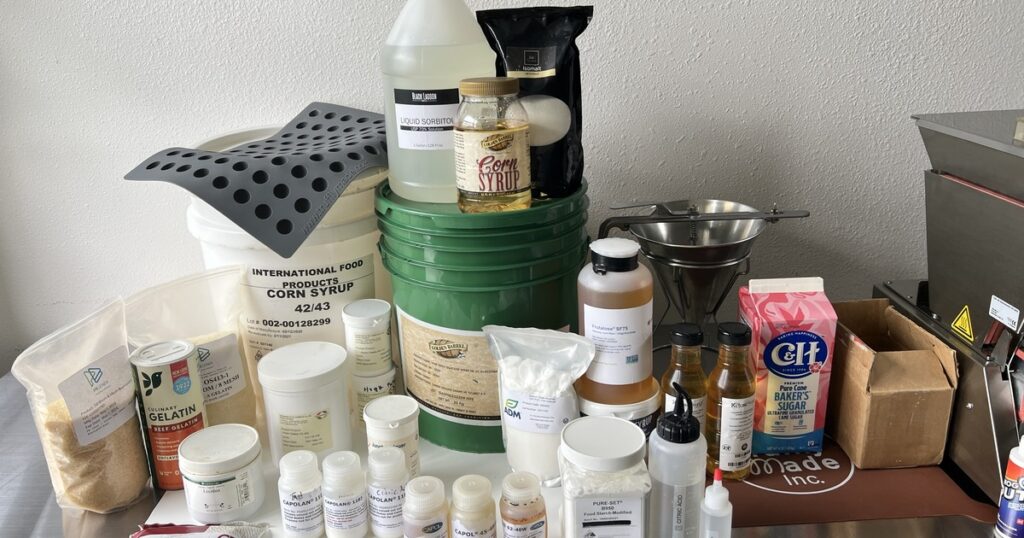
Gummies Show Just How Complicated “Simple” Products Can Be
Few products demonstrate the complexity of commercial edible manufacturing better than gummies. From the consumer’s perspective, the product looks simple: a small piece of flavored confectionery containing cannabinoids. From the manufacturing side, however, there are a considerable number of variables influencing how that gummy behaves during production and how it ultimately reaches the consumer.
Michael has experience developing both gelatin- and pectin-based formulations, with an emphasis on controlling viscosity and texture during commercial production. His broader confectionery development work includes gummies, caramels, lozenges, lollipops, and other infused products.
The difference between gelatin and pectin formulations alone demonstrates why commercial product development cannot always be reduced to following a recipe. Different ingredients perform different functions, and changing one component can alter the behavior of the entire system. The formulation also has to work within the physical realities of the production environment.
For a cannabis manufacturer, the important question is therefore not simply whether a company can make a gummy. The real question is whether it can make that gummy repeatedly, efficiently, and consistently using the equipment, ingredients, and production process available to it.
That is where formulation becomes a business issue rather than just a culinary one.
Scaling Is Where Many Edible Products Start to Break
One of the biggest misconceptions in commercial food development is that scaling a recipe simply means multiplying the ingredients. A recipe that works as a five-pound batch does not necessarily become a successful 500-pound batch by adding two zeros to every measurement.
At commercial scale, manufacturers have to consider equipment capacity, processing sequence, temperature control, ingredient behavior, viscosity, production timing, and a host of other variables that may barely register when a product is made by hand.
Michael’s work includes translating small-scale recipes into repeatable commercial production processes, including equipment considerations and process optimization.
That ability can be especially valuable for emerging cannabis brands. A company may already have a product concept and perhaps even a finished recipe, but what it may not have is a formulation designed around the realities of commercial manufacturing.
When that gap exists, problems tend to surface quickly. Production slows down. Textures become inconsistent. Products behave differently from batch to batch. Equipment struggles with a formulation that was never developed for the machine being used. Operators begin adjusting ingredients, temperatures, or processes without fully understanding how those changes affect everything else.
Eventually, what initially appears to be a recipe problem may turn out to be a manufacturing problem. What looks like an equipment problem may actually begin with the formulation.
Michael’s background allows him to look at both sides of that equation.
The Product and the Equipment Have to Work Together
Commercial cannabis manufacturing has come a long way from the early days of infused brownies and handmade candies. Manufacturers increasingly rely on specialized depositing and processing equipment designed to produce larger volumes with greater efficiency and consistency.
But better equipment does not automatically fix a formulation.
The product still has to behave correctly inside the system.
Michael’s current R&D work includes developing formulations specifically designed for universal depositing equipment, along with creating SOPs, training materials, recipes, and technical documentation.
That highlights an important reality for cannabis companies investing in manufacturing infrastructure: equipment and formulation cannot be treated as unrelated decisions. A manufacturer can have an excellent product concept and sophisticated machinery and still struggle if the formulation and equipment do not work well together.
That is why commercial product development has to consider process from the beginning. Flavor may be what gets a consumer’s attention, but consistency and manufacturability are what allow a company to keep that product on the shelf.
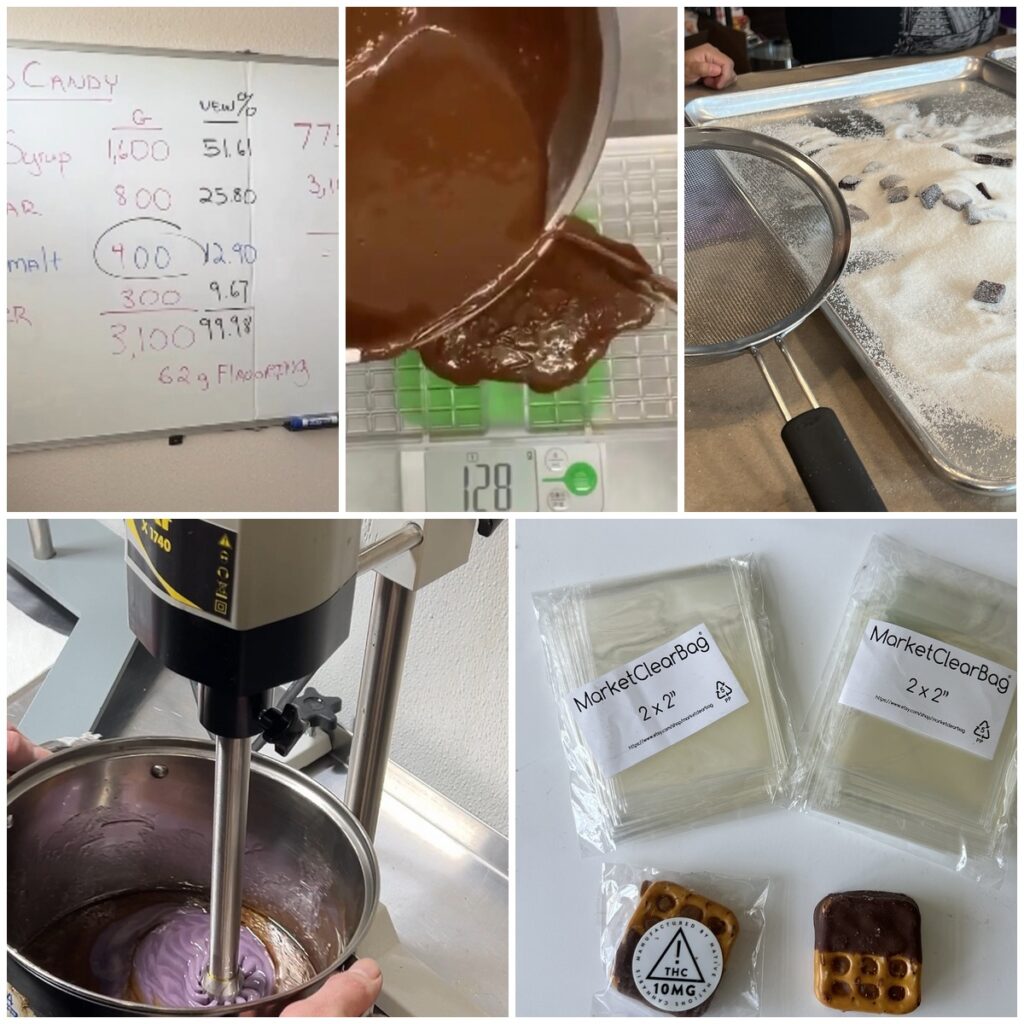
Cannabis Edibles Need More Than Culinary Creativity
Cannabis has never had a shortage of creativity. This is an industry that has spent decades experimenting with flavors, formats, cannabinoids, ingredients, delivery systems, and new ways of creating consumer experiences.
What often separates a promising concept from a commercially successful product is execution.
That means understanding ingredient functionality. It means knowing why a formulation is becoming too thick or why its texture has changed. It means understanding why the same recipe behaves differently at another scale, why a depositing system is struggling, or why a process that worked perfectly during development produces different results once production begins.
Michael describes his approach as combining culinary expertise with food science and manufacturing principles, allowing him to troubleshoot both the formulation and production sides of an infused edible.
That combination becomes more important as cannabis brands compete not simply on potency or packaging, but on the overall quality of the product experience. Flavor matters. Texture matters. Consistency matters. Production efficiency matters. The ability to scale matters.
And ultimately, the product that leaves a commercial production line still has to deliver the experience the developer originally intended.
Turning Product Ideas Into Production Reality
For manufacturers, brands, and entrepreneurs developing infused products, Michael’s expertise can become relevant at several different points in the product development process. One company may need help creating an initial formulation. Another may already have a working formulation but be struggling to scale it. A manufacturer may be dealing with inconsistent results during production, while another company may need to adapt an existing product to different equipment or manufacturing conditions.
There are also companies that need the infrastructure surrounding the recipe itself: SOPs, training materials, technical documentation, process development, and troubleshooting systems that can help turn individual knowledge into a repeatable production process.
Michael’s areas of expertise span cannabis edibles, infused food products, edible R&D, cannabis product development, formulation, confectionery, recipe development, food science, ingredient functionality, gummies, pectin and gelatin systems, production scale-up, viscosity and texture control, process development, and manufacturing and equipment optimization.
The common thread is straightforward.
Michael does not just help companies develop something worth eating. He helps them figure out how to actually make it.
Where Cannabis Edible Development Is Headed
There was a time when much of the cannabis edible category was built almost entirely through experimentation. People learned by doing. Recipes were adjusted until something worked, production processes evolved alongside the market, and many of the techniques now considered standard within cannabis manufacturing were developed through trial and error.
That experimentation helped create the modern cannabis edible industry. But the expectations surrounding commercial products are different now. Brands are being judged not only on creativity, potency, or packaging, but on whether a product performs consistently from batch to batch and whether the manufacturing process behind it can support real growth.
The best commercial edible products live somewhere between the kitchen, the laboratory, and the production floor. They need culinary thinking because consumers care about flavor, texture, and experience. They need food science because ingredients have specific functions and interact with one another. They need formulation expertise because changing one variable can alter the entire product. They also need manufacturing knowledge because eventually the formulation has to work on real equipment, under real production conditions, at commercial volume.
That is the space Michael has spent years learning to work in.
For cannabis companies developing gummies, confectionery, infused foods, or new edible formats, the challenge is no longer simply coming up with a good idea. The harder work is turning that idea into a product that can be manufactured consistently, scaled intelligently, and repeated without losing what made it good in the first place.
That is where Michael’s experience becomes more than culinary expertise.
It becomes part of the manufacturing solution.
If you you like to Speak to Michael over at thconfections you can email him here.