This spring, during the same negotiations where the WNBA and the WNBA Players Association fought for better pay and better travel, the league quietly made one of the biggest cannabis policy moves in pro sports.
Cannabis Policy in Professional Basketball
Using similar language to the NBA’s CBA, the new WNBA CBA removed marijuana from its banned substances list entirely. Most coverage focused on the testing change under Article 21, “Anti-Drug Program,” which now limits testing to cases where cannabis use affects performance, meaning impairment or dependency, rather than testing across the board.
The bigger shift is in Article 14, “Player Conduct and Discipline,” Section 19, “Player Involvement with Cannabis Companies.” Subsection b covers investment in cannabis companies. Subsection c covers promotion and endorsement. Together, they mean WNBA and NBA players can now use cannabis responsibly without risking a suspension or a violation on their record, and they can invest in, promote, and endorse cannabis companies under specific conditions.
The NFL, By Comparison
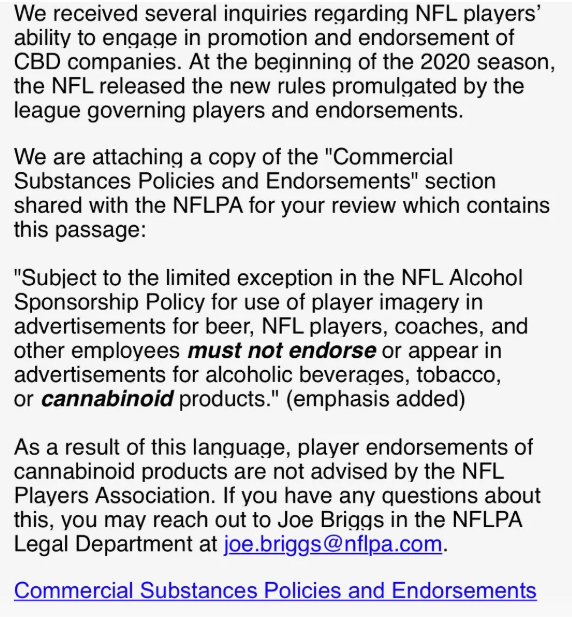
The NFL is moving the opposite direction on the business side. Earlier this fall, the NFL Players Association sent a memo reminding players they still cannot endorse or appear in ads for cannabinoid products, including CBD brands, even as the league has loosened its own testing policy over the past few years. Suspensions for positive tests are gone and the allowed THC threshold has gone up, but if a player tries to build a business around cannabis, the league draws a hard line.
Two leagues, both making changes on paper, but with two very different definitions of what “progress” means for the athletes living it.
Former Professional Athlete Advocacy
We saw the excitement around this change up close at the Green Room WNBA event, hosted at Level Sports Club by Social Marketing Agency. Anzisha Consulting co-founder Steven Philpott Jr. moderated an intimate conversation with a panel of influential women covering every angle of it: Edie Moore, executive director of Chicago NORML, policy expert, and owner of Sway dispensary; Aysha Hill, executive director of Illinois Women in Cannabis; Sharaun Brown, model, wellness practitioner, and owner of Model Tribe; and Angel McCoughtry, the 2009 WNBA number one draft pick, a 13 year league veteran, and a medical cannabis advocate.
It was a room full of fitness, wellness, and cannabis business owners talking openly about investment, endorsement, and promotion, without whispering about it or dancing around a policy that still treats cannabis like a threat instead of a tool.
That kind of openness keeps showing up in rooms full of players who used to play. In 2023, former NFL pros now in the cannabis industry gathered at Lemonhaze Executive Sessions with Ricky Williams, Jim McMahon, Calvin Johnson, Adam “Pacman” Jones, and Frostee Rucker, an NFL focused conversation on cannabis and business. Beardbros hosted a separate event at Planet 13 where Anzisha consulting founders Steve Philpot Jr and Earle Lawrence sat down with Ricky Williams again, this time to dig into the real intersection of athletic performance and the endocannabinoid system. In each case, it’s the same pattern every time. It’s the retired players having these conversations out loud, building real businesses and sharing real research, while the guys still active in the league have to stay quiet about the exact same plant.
Beyond the Policy Language
Actions speak louder than words, and sometimes even louder than policy. When it comes to research, no pro sports league has made the commitment the NFL has. That’s what makes the contradiction so striking. The NFL’s own research, funded in part by its Pain Management Committee and the NFLPA, has been studying cannabinoids for exactly what the WNBA just built protections around like pain, inflammation, concussion related recovery.
The science pointing toward cannabis as a legitimate part of an athlete’s recovery toolkit isn’t coming from outside pressure. It’s coming from research the leagues themselves paid for. The WNBA looked at that evidence and moved. Active NFL players are still stuck using cannabis quietly while being blocked from ever talking about it publicly, let alone building something around it.
That’s the real story here. It’s not just which league is more progressive. It’s what happens when a league treats cannabis as part of an athlete’s health and financial opportunity versus part of an athlete’s image problem. The WNBA’s new rules say pain management and recovery are a health conversation. The NFLPA’s endorsement memo says cannabis is still a brand risk.
Education is the Bridge
The number of NFL players being diagnosed with degenerative brain disease is alarming, and the league already funds a cannabinoids and concussion study of its own. The NBA dropped cannabis from its banned list back in 2023, the NCAA followed in 2024, and the WNBA 2026. When one major league normalizes something this directly, the pressure on the others tends to build fast.
The real barrier is language, not science. The CBA language isn’t perfect, and the language gap around cannabis, marijuana, and CBD products can be confusing. With regulation, revenue, and reputation on the line, that confusion is a real risk that requires credible information. That’s exactly why we built the ACES course, to give athletes, trainers, and the people around them a real working understanding of the endocannabinoid system, not just the headlines about policy changes.
The question isn’t whether the NFL eventually gets here. It’s how many more players have to manage pain in silence before it does, and how much faster that changes once people actually understand what they’re talking about.