Key Takeaways
- The Supreme Court ruled unanimously (9-0) in United States v. Hemani that the government cannot strip Second Amendment rights from marijuana users.
- This ruling impacts millions of Americans who use cannabis and own firearms, easing legal jeopardy for casual users.
- The court found that the government’s prosecution of Hemani violated his constitutional rights under 18 U.S.C. § 922(g)(3).
- Justices, including Neil Gorsuch, rejected the notion that marijuana users are categorically dangerous or similar to habitual drunkards.
- While this decision limits federal prosecution for casual marijuana users, it does not eliminate all regulations surrounding drug use and gun possession.
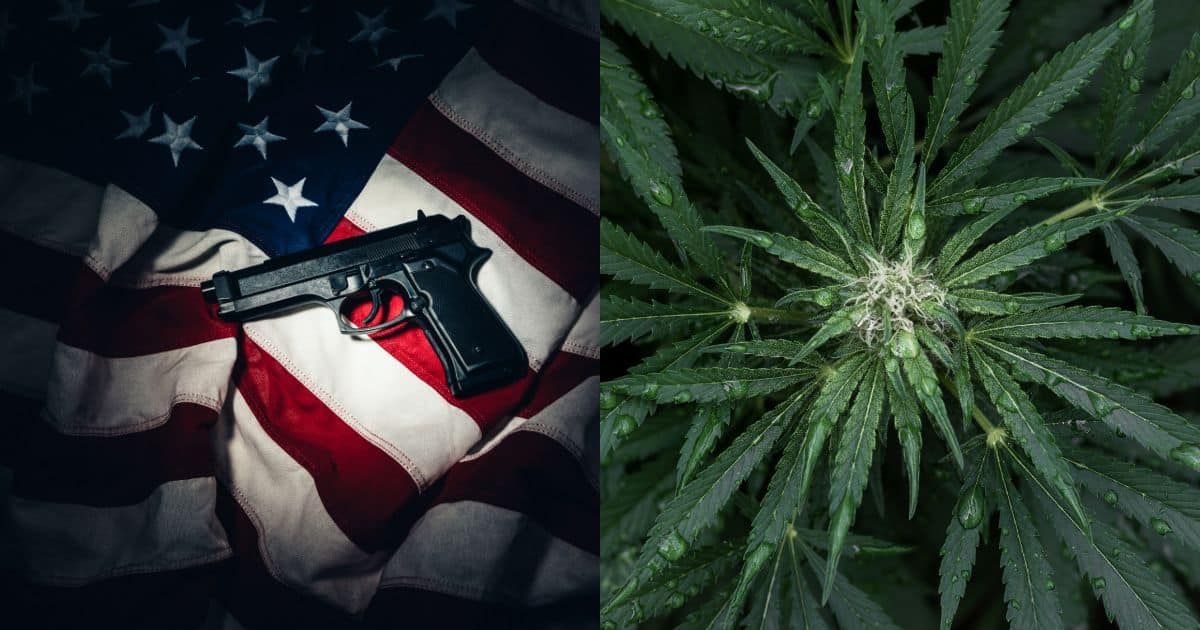
Today the Supreme Court ruled unanimously (9-0) in United States v. Hemani that the government cannot strip someone of their Second Amendment rights just because they use marijuana. The decision found that prosecuting a Texas man for owning a gun while using cannabis violated the Constitution.
We’ve said it for years: there’s no good reason a cannabis consumer should lose their right to own a firearm simply for using a plant that’s legal in most of the country. On Thursday, all nine justices of the Supreme Court agreed.
The ruling in United States v. Hemani is a big deal for the millions of Americans who use marijuana and also happen to own a gun. For decades, those two facts together could land someone in federal prison. That just changed.
What Did the Supreme Court Rule in United States v. Hemani?
The court ruled that the government’s prosecution of Ali Danial Hemani under a federal gun law violated his Second Amendment rights. The vote was 9-0, with Justice Neil Gorsuch writing the opinion.
The law in question is 18 U.S.C. § 922(g)(3), part of the 1968 Gun Control Act. It makes it a crime for anyone who is an “unlawful user of or addicted to any controlled substance” to possess a firearm. Break that law, and you could face up to 15 years in prison and lose your gun rights for life.
The court didn’t throw out the entire statute. Gorsuch made clear the decision is “a narrow one.” But it does make it much harder for prosecutors to use the law against casual marijuana users who haven’t done anything dangerous.
Who is Ali Danial Hemani?
Hemani is a dual citizen of the United States and Pakistan who was born in Texas and has lived most of his life in the Dallas area with his parents. He held a steady job and, by his own account, used marijuana “about every other day.”
In 2022, federal agents searched his family home over suspected terrorism-related activity. Hemani cooperated fully. He handed over a gun he kept in the house, pointed agents toward marijuana on the property, and sat for an interview where he admitted his cannabis use.
Here’s the kicker: more than six months later, the government charged him with a single crime. Not terrorism. Not drug trafficking. Just possessing a gun in his home while being a marijuana user. Lower courts in Texas and the Fifth Circuit Court of Appeals sided with Hemani, and the government took the case to the Supreme Court.
What Did the Justices Say?
Gorsuch’s opinion picked apart the government’s whole argument. To defend the law, the government compared marijuana users to “habitual drunkards” from the founding era, claiming there’s a historical tradition of disarming people who regularly use intoxicants.
The court wasn’t buying it. As Gorsuch wrote, the government “asks us to conclude that anyone who regularly uses marijuana is categorically violent and dangerous without any further showing.” He noted this position was “at odds with its own regulatory actions,” pointing out that the federal government had recently moved some marijuana products to Schedule III and that most states have legalized cannabis in some form.
Gorsuch also dismantled the historical comparison. Back at the founding, a “habitual drunkard” wasn’t just someone who drank regularly. It was someone so impaired they couldn’t manage their own affairs. He pointed out that plenty of Founding Fathers drank daily. John Adams started his mornings with hard cider. George Washington often had three glasses of madeira in the evening. By the government’s logic, they’d all be banned from owning guns.
The opinion also flagged a basic fairness problem. The law strips away gun rights automatically, the moment someone becomes a user, with no hearing or process beforehand. That’s very different from the old laws, which generally required a court proceeding first.
One line from the opinion sums up the stakes. Giving the government “broad power to designate any group as dangerous and thereby disqualify its members from having a gun” would risk allowing it to “quickly swallow” the Second Amendment.
Why Was the Decision Unanimous?
A 9-0 ruling on a hot-button issue like guns and drugs is rare, especially from a court often split along ideological lines. Gorsuch’s main opinion was joined by Chief Justice Roberts and Justices Thomas, Sotomayor, Kavanaugh, Barrett, and Jackson.
A few justices wrote separately. Thomas agreed but went further, suggesting the entire § 922(g) statute may overstep Congress’s power to regulate interstate commerce. Jackson, joined by Sotomayor, used her concurrence to argue the court should rethink its current approach to gun cases altogether. Alito, joined by Kagan, agreed with the outcome but reached it on slightly different reasoning, writing that “marijuana use today is like alcohol use at the founding.”
That last point gets at something we’ve argued all along: it makes little sense to treat cannabis consumers as uniquely dangerous when alcohol and prescription drugs are perfectly legal for gun owners. As Alito noted, marijuana use is “widespread and increasingly considered socially acceptable.”
Why Should Cannabis Users Be Allowed to Own Guns?
This question sits at the heart of the case, and the answer comes down to basic consistency. People who drink alcohol can legally buy and own firearms. So can people who take prescription medications that affect judgment, like Ambien or Adderall. Yet a person who uses a cannabis gummy as a sleep aid a few times a week was, until now, treated as a felon in waiting.
During oral arguments, the Trump administration’s solicitor general even claimed that people who use illegal drugs “pose a greater danger” than those who drink. The court rejected that kind of sweeping, evidence-free assumption.
Consider the numbers. According to the Substance Abuse and Mental Health Services Administration, more than 15 percent of Americans aged 12 or older used marijuana in 2024. The ACLU’s legal director, Cecillia Wang, via USA Today noted that “with nearly half of Americans reporting marijuana use at some point in their lives, this ruling protects the rights of millions.” One study even found that for the first time in 2022, more Americans reported daily or near-daily marijuana use than alcohol use.
The point isn’t that intoxication and firearms mix well. The court was clear that “drugs and guns can sometimes make for a dangerous mix.” The point is that you can’t strip a fundamental right from tens of millions of people based on a category alone, with no proof any individual is actually dangerous.
What the Case Means Going Forward
The decision created some unusual alliances. The ACLU and the National Rifle Association both backed Hemani, along with cannabis groups like NORML. On the other side stood the Trump administration and gun-control groups like Everytown for Gun Safety.
It’s worth knowing what the ruling does not do. The court left several questions open. It didn’t address banning drug addicts or people who are currently intoxicated from owning guns. It didn’t touch the law that bars convicted felons from possessing firearms. And it left room for the government to bring future cases if it can show specific proof that someone’s drug use makes them dangerous.
Still, the direction is clear. This ruling lands alongside other recent federal moves on cannabis, including the rescheduling of medical marijuana to Schedule III and a new ATF gun-purchase form that acknowledges that change. The era of treating every cannabis consumer as a presumed threat appears to be ending.
Frequently Asked Questions
The ruling makes it unconstitutional to prosecute someone under § 922(g)(3) simply for being a casual marijuana user who owns a firearm, as the court did with Ali Hemani. It does not fully erase the federal law, and gun-purchase forms still ask about drug use, so the practical situation remains in flux. The decision strongly limits how prosecutors can apply the law against everyday users.
The case centered on 18 U.S.C. § 922(g)(3), a provision of the 1968 Gun Control Act that bans anyone who is an “unlawful user of or addicted to any controlled substance” from possessing a firearm. This is the same law used to convict Hunter Biden in 2024.
Yes. The vote was 9-0. Justice Neil Gorsuch wrote the main opinion, with separate concurrences from Justices Thomas, Jackson (joined by Sotomayor), and Alito (joined by Kagan).
The decision focused specifically on Hemani’s marijuana use. The court did not rule that all controlled substances are treated the same way, and it left open the possibility of future prosecutions if the government can prove a specific drug or a specific person poses a real danger.
- Supreme Court to Hear Arguments on March 2nd on Whether Cannabis Users Have The Right to Own Guns
- Supreme Court to Decide if Marijuana Users Can Own Guns
- Supreme Court Ruling Changes View on Gun Rights for Medical Cannabis Patients
- 5th Circuit Appeals Court Declares Marijuana User Gun Ban Unconstitutional
- Justice Department Appeals Decision On Gun Rights Ban For Marijuana Consumers