

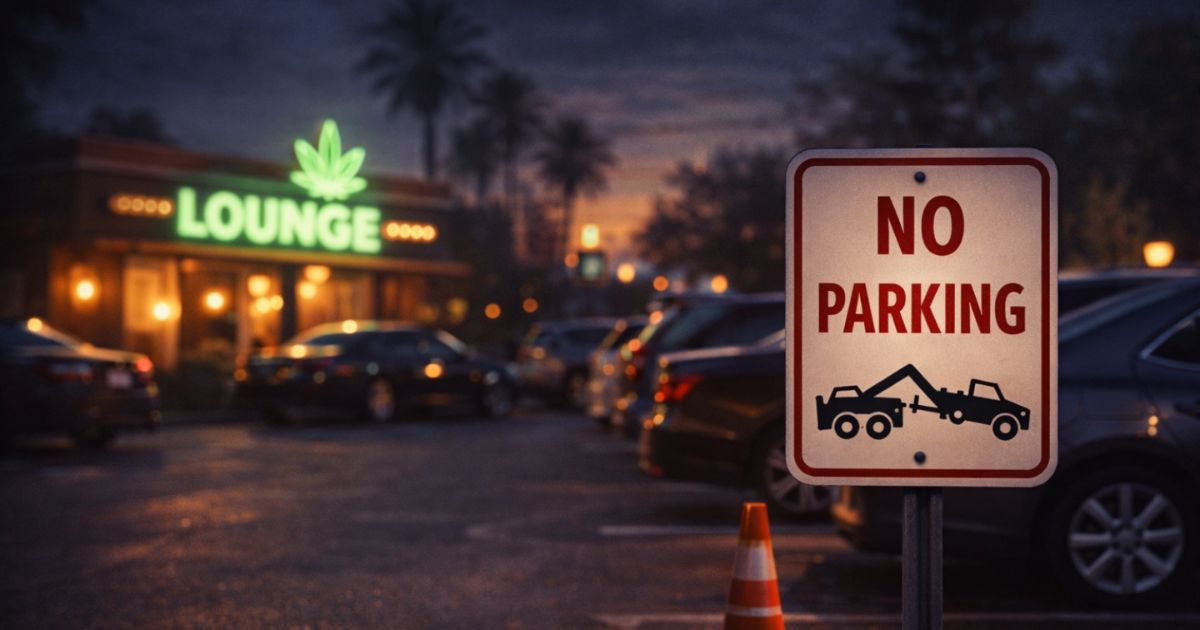



I arrived at a Los Angeles dispensary with a consumption lounge, parked in their lot, and walked to the entrance. I handed over my ID and began the check-in process.
That’s when security told me that if I planned to use both the dispensary and the lounge, I couldn’t park there. I needed to leave immediately, go offsite, find parking, and only then would I be allowed back in.
No parking lot signage.
No mention in the event details.
No warning before I’d already parked, walked inside, and checked in.
Just: do this, or be denied entry.
To use the lounge, I was instructed to park “around the corner.”
That meant walking away carrying cash, returning to make my purchase, consuming onsite, and later walking back to my car impaired, with product and whatever cash remained.
Two vulnerable walks. The second while high.
I asked to speak with a manager. By the time anyone came out, I realistically could have completed my visit and left. Instead,
security acted as the gatekeeper while other guests were waved through without issue. Enforcement was selective. The criteria was never explained.
Because the environment felt unwelcoming from arrival, my behavior shifted. I moved quickly, skipped browsing, spent less. That’s not unique to me. Research confirms that emotional stressors directly affect consumer spending behavior, particularly for discretionary, infrequent purchases like cannabis lounge visits.¹ When guests don’t feel comfortable, they shorten their visit, reduce discretionary spending, and disengage.
Later that same day, I attended a second lounge event in West Hollywood.
This time, I avoided onsite parking entirely and used a paid city structure. It was well lit, monitored, and straightforward.
I don’t mind paying for parking. Valet or paid lots are familiar in hospitality. What matters is knowing there’s an accountability structure, that someone thought through arrival, departure, and guest safety.
Midway through the event, dispensary staff entered the lounge, turned off the music, and began announcing that any cars parked in dispensary spaces would be towed.
There was no posted signage. No mention in event materials. No clarity at entry.
The announcements continued. The music stayed off. The energy shifted.
And nobody moved.
When the music finally returned, the room felt different. Conversations started. That’s when I learned multiple guests had experienced similar situations at the same Los Angeles
location: inconsistent enforcement, some people allowed to park and stay, others turned away without explanation.
I had parked offsite, walked several blocks to support the event, and still found myself sitting inside a space where guests were being publicly threatened over parking.
How do you enjoy a place where you’re being harassed?
This wasn’t a one-off operational hiccup.
It revealed a larger pattern: California consumption lounges are being built as third spaces — without third-space infrastructure.
When a dispensary operates a consumption lounge, they’re no longer running a simple retail transaction.
They’re hosting guests.
That distinction matters.
Guests don’t experience the dispensary and the lounge as separate entities. They experience them as one destination.
So when someone pulls into a lot attached to the business they’re visiting, parks, and walks inside, that isn’t confusion — that’s a reasonable assumption of access.
If parking rules differ between retail and lounge use, that responsibility falls on the operator to communicate clearly before guests arrive. Not after they’ve already parked. Not through confrontation. Not through inconsistent enforcement.
Retail Logic Doesn’t Work Once Consumption Enters the Picture
Dispensaries were designed for quick transactions: arrive, purchase, leave.
Lounges create extended dwell time. Guests stay. They consume. They become impaired. Then they’re expected to navigate back to wherever they’ve found a place to park.
That requires a different operational model.
Experiential hospitality has always accounted for the full journey, from the moment someone considers visiting, through arrival, through departure. Bars, wine lounges, member clubs, galleries, and ticketed events all build this into their planning.
Dual use venues combining retail and consumption require even more intentional design. You can’t run experiential traffic on retail infrastructure and expect it to hold.
This Isn’t Just a Safety Issue. It’s a Business Issue.
People don’t spend where they feel harassed. They don’t linger where access feels unclear. They don’t return to places that make arrival stressful or departure feel exposed.
And they don’t need surveys to decide.
They decide with their dollars.
They notice when parking feels confusing.
They feel it when enforcement feels arbitrary.
They clock when they’re walking alone after consuming.
And some guests are calculating even more. In Los Angeles right now, many people are already navigating public space
with heightened awareness. Women, and people of color, are weighing exposure the moment they step outside. When a business expects guests to walk blocks alone while impaired and carrying cash and product, those calculations compound.
They remember whether they felt welcomed — or managed. Most won’t complain.
They’ll simply choose somewhere else next time.
What Solutions Look Like
What works will vary: validated nearby parking, partnerships with structures, designated rideshare zones, shuttles for larger events, valet when space allows.
But whatever the approach, it has to be intentional, communicated clearly in advance, and enforced consistently.
What doesn’t work is inviting people to consume onsite and leaving them to solve safety logistics afterward.
Hospitality Doesn’t Start After Someone Walks in the Door
Many California lounges are beautifully designed. Menus are curated. Programming is thoughtful.
But hospitality doesn’t start after someone walks in the door, it starts the moment they consider visiting.
And it ends when guests walk back to their car and get inside safely.
The dispensary lounge combinations that will thrive are the
ones that put thought into the entire experience from beginning to end — not the ones relying on underground legacy rules inside legal businesses.
Parking may seem like a small operational detail. In consumption lounges, it’s foundational.
Access isn’t just convenience.
It’s trust. It’s safety.
In the end, guests remember the experience, and over time, that becomes the difference between lounges that build intentional community and those that become an afterthought.
References
¹ Mynaříková, L., & Pošta, V. (2023). The Effect of Consumer Confidence and Subjective Well-being on Consumers’ Spending Behavior. Journal of Happiness Studies, 24(2), 429-453.
https://doi.org/10.1007/s10902-022-00603-5

Victoria Burkard is a cannabis strategist and content consultant who helps brands grow authentically while navigating the ever-changing landscape of shadowbans and platform restrictions. She writes from the intersection of creativity and compliance—because in this industry, you need both.