


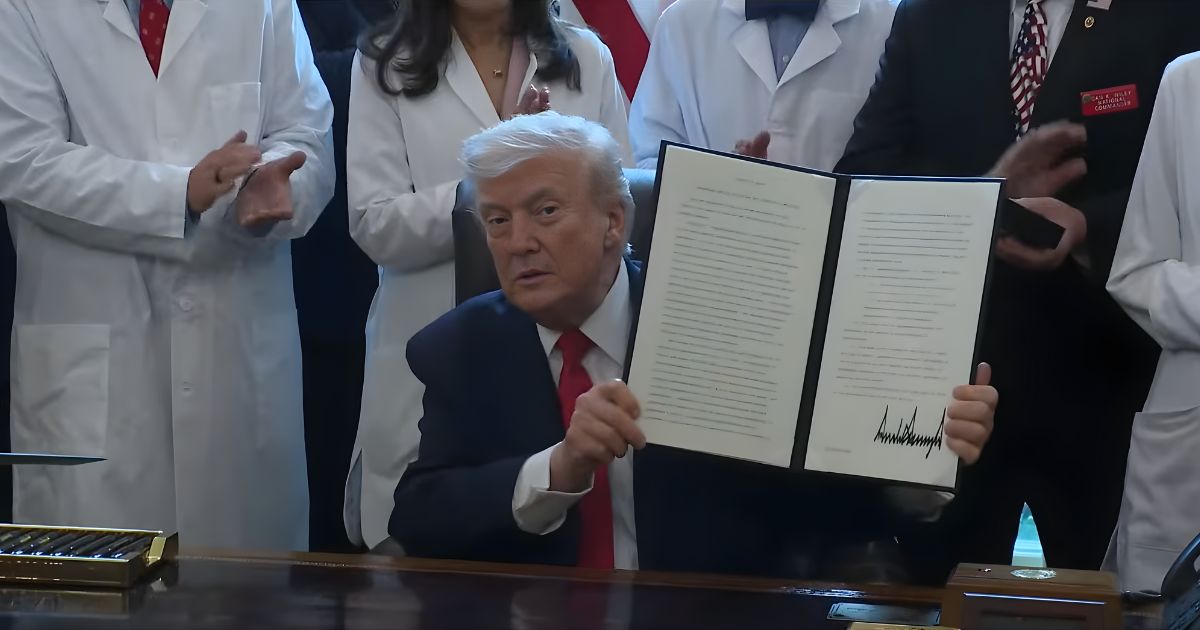



The federal government’s approach to cannabis has shifted dramatically. Yesterday, President Donald Trump signed an executive order directing the Attorney General to expedite the rescheduling of marijuana from Schedule I to Schedule III under the Controlled Substances Act (CSA).
This move marks the most significant change in U.S. drug policy since 1970. For decades, cannabis has sat alongside heroin and LSD as a substance with “no accepted medical use.”
Now, the White House is pushing to acknowledge its medical validity, a decision that will ripple through the banking sector, tax codes, and the lives of millions of Americans.
However, while the headlines promote progress, the reality of Schedule III brings new complexities. From the elimination of the punitive 280E tax code to the looming questions about FDA oversight, here is everything you need to know about this pivotal moment in cannabis history.
How Did We Get Here? A Timeline of Delays
The path to this executive order has been paved with bureaucratic hurdles. While the recent announcement accelerates the process, the machinery of rescheduling began years ago.
- October 2022: President Biden issued a directive asking the Secretary of Health and Human Services (HHS) and the Attorney General to review how marijuana is scheduled under federal law. This officially kicked off the administrative review.
- August 2023: After an extensive scientific evaluation, the HHS recommended that the Drug Enforcement Administration (DEA) move marijuana to Schedule III. They concluded that cannabis has a lower potential for abuse than Schedule I or II drugs and possesses legitimate medical value.
- 2024 – Late 2025: Despite the HHS recommendation, the process stalled at the DEA. The agency faced pressure to conduct its own review, leading to a period of “administrative limbo” where the industry waited for a proposed rule that seemed perpetually delayed.
President Trump’s executive order cuts through this red tape, ordering the Justice Department to finalize the rule “in the most expeditious manner.”
What Does the Executive Order Actually Do?
The President cannot unilaterally reschedule a drug—that authority lies with the Attorney General and the DEA. However, this executive order applies maximum political pressure to close the deal.
According to the White House Fact Sheet, the order does three primary things:
- Accelerates Rescheduling: It directs the Attorney General to finish the rulemaking process to move cannabis to Schedule III immediately.
- Expands Research: By acknowledging the medical use of cannabis, the order removes the strict barriers that have historically made it difficult for scientists to study the plant.
- Medicare Pilot Program: Perhaps the most surprising inclusion is a directive to create a pathway for seniors to get reimbursed for CBD and medical cannabis products through Medicare, acknowledging the high usage rates among older Americans for pain management.
Why is Schedule III a Game-Changer for Business?
For the $32 billion state-regulated cannabis industry, the shift to Schedule III is primarily a financial rescue mission. The biggest winner here is the tax sheet.
The End of Section 280E
Currently, cannabis businesses are subject to Internal Revenue Code Section 280E, which prohibits ‘traffickers’ of Schedule I or II substances from deducting standard business expenses. This means cannabis companies often pay effective tax rates of 70% or more.
Moving to Schedule III eliminates this burden. As David Culver of the U.S. Cannabis Council noted, companies will finally be treated like normal businesses, unlocking cash flow that can be reinvested into growth, hiring, and research.
Banking and Investment
While Schedule III is not the same as passing the SAFE or SAFER Banking Act, it significantly de-risks the industry for financial institutions. Banks that were previously terrified of money laundering charges may be more willing to service businesses dealing with a Schedule III prescription drug rather than a Schedule I illegal narcotic. This could lead to lower fees, better loan terms, and an influx of institutional capital.
Will Rescheduling Fix the State-Federal conflict?
This is where the celebration meets reality. Rescheduling is not full legalization.
Schedule III drugs, like Tylenol with codeine or ketamine, are legal only when prescribed by a doctor and dispensed by a licensed pharmacy. They must be approved by the FDA.
Under the current state-legal model, customers walk into dispensaries (not pharmacies) and buy products that lack FDA approval, all without a prescription.
Consequently, a strict interpretation of Schedule III leaves the current recreational market in a legal gray area. State-licensed dispensaries would technically still be violating federal law regarding how Schedule III drugs are distributed.
While the federal government is unlikely to crack down on a tax-generating industry it just helped liberate, the legal mismatch remains unresolved.
Who Wins. Big Pharma?
The move to Schedule III opens the door for pharmaceutical companies to enter the space. Companies are already racing to develop cannabis-derived medicines for conditions like autism and chronic pain that can pass FDA trials.
This raises a concern for legacy operators and small businesses: Will the industry eventually shift toward a pharmaceutical model dominated by giants with deep pockets?
While Multi-State Operators (MSOs) can more easily adapt to stricter regulations, potential FDA-level compliance demands could squeeze out smaller craft growers.
Is Rescheduling the Same as Federal Legalization?
No. Full legalization (often called “descheduling”) would remove cannabis from the Controlled Substances Act entirely, regulating it like alcohol or tobacco.
As NORML’s Paul Armentano pointed out, Schedule III “falls well short of the changes necessary to bring federal marijuana policy into the 21st century.” It does not automatically expunge past criminal records, nor does it legalize recreational use federally.
Schedule III is a compromise. It validates the medical efficacy of the plant and saves the industry from taxation collapse, but it retains federal control and oversight.
President Trump’s executive order has broken the dam. By forcing the DEA’s hand, the administration has signaled that the days of prohibition-era thinking are over. The immediate future will see a healthier business climate for cannabis companies and expanded access for medical patients.
However, for those seeking the freedom to grow, sell, and consume cannabis without any federal oversight, Schedule III is just a step on the ladder—not the top. The ultimate goal is to deschedule cannabis, treating it not just as a medicine but as a legal commodity available to all responsible adults.
- Moving Cannabis to Schedule III Could Have Far Reaching Impact
- Feds Release All Marijuana Rescheduling Documents, Confirming Recommendation To Move To Schedule 3
- Legal Consequences of Rescheduling Marijuana Outlined By The Congressional Research Service
- Missouri Governor’s New Executive Order Targets Sale of Unregulated Psychoactive Cannabis Products
- Supreme Court Denies to Hear Federal Marijuana Case as Potential Executive Order Looms