

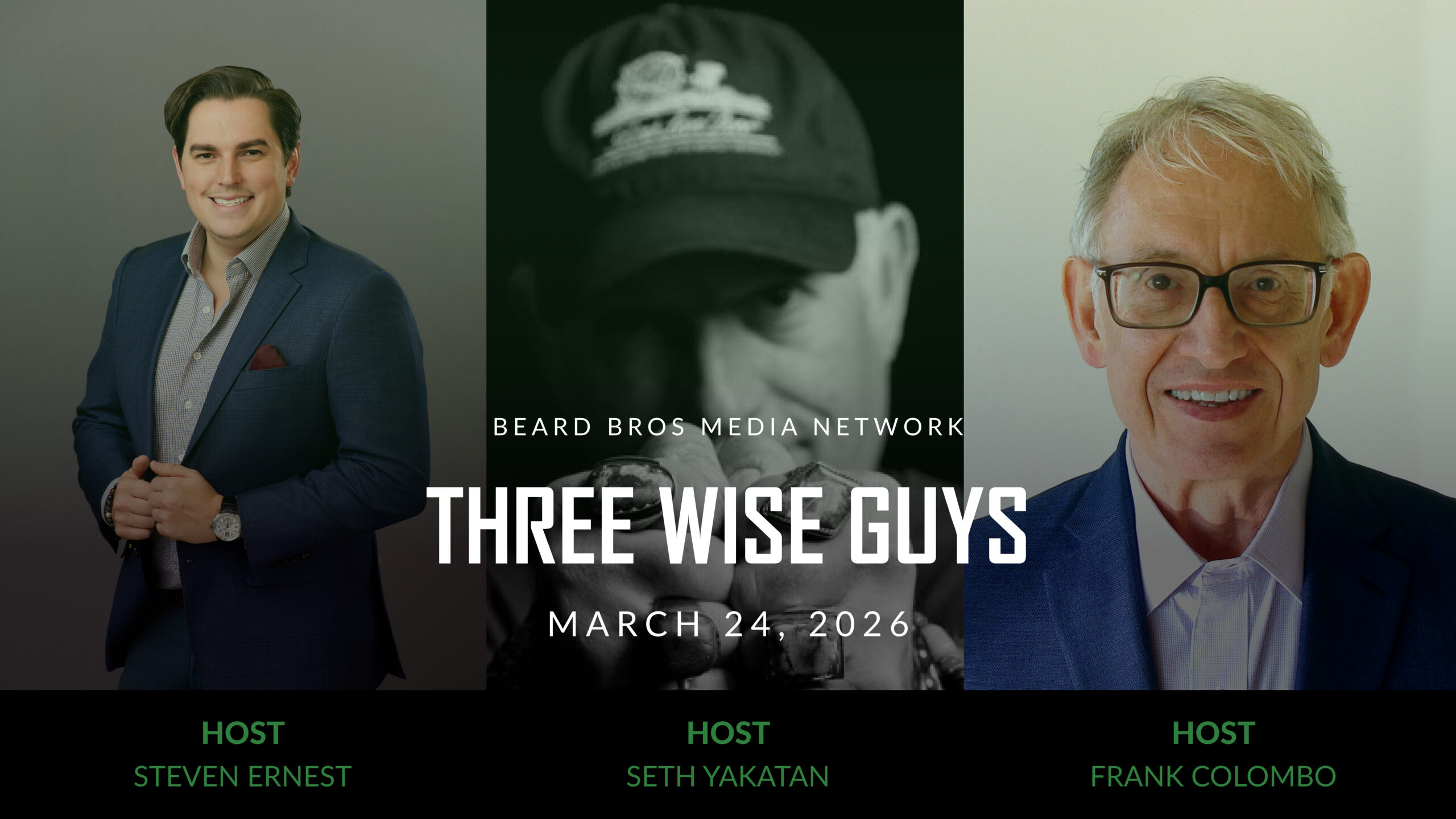



In an exciting development for cannabis industry insiders and investors, a new series titled Three Wise Guys has debuted, offering in-depth analysis and candid discussions on the evolving landscape of cannabis capital markets and deal-making. The show features Seth Yakatan, a recognized figure in the industry, alongside two prominent experts—Frank Colombo, head of investment banking at Viridian Capital Markets, and Steven Ernest, CEO of Chicago Atlantic—each bringing decades of experience to the table.
A Collaborative Effort to Illuminate Cannabis Capital Markets
Seth Yakatan, the host, explained the genesis of the show: “I wanted to call it Two Wise Men and an Idiot, but they didn’t want to do that. We saw a space in the market to talk about capital markets and deals, and I recruited two of the most knowledgeable people I could find.” Recognized for their expertise, Frank Colombo is noted as one of the industry’s most prolific quantitative analysts, and Steven Ernest oversees assets exceeding three billion dollars at Chicago Atlantic, making it one of the largest institutional investors in U.S. cannabis.
Both guests expressed enthusiasm about the series’ potential. Steven highlighted the industry’s rapid evolution: “We’ve deployed over three billion dollars into U.S. cannabis and have been at the intersection of capital and cannabis for over a decade. Looking forward to discussing the latest trends with my esteemed colleagues here.”
Recent Market Dynamics: A Surge in Cannabis Deal Activity
The conversation quickly shifted to recent market developments. Seth pointed out that in the past sixty days, the cannabis industry has witnessed more exits and cash-out deals than in the previous six years combined. This surge signals a potential turning point, breaking a long period characterized by limited liquidity and cautious deal-making.
Steven noted that the industry’s recent activity reflects a shift in liquidity visibility. “In cannabis capital markets, we’ve had limited visibility to liquidity, but recent transactions, especially ESOPs (Employee Stock Ownership Plans), are gaining momentum. These are attractive because they often involve no tax — no federal, no state, no 280E — which is a game-changer given how heavily taxed the industry has been,” he explained.
The Significance of ESOPs and Tax Benefits
The discussion highlighted the rising popularity of ESOPs as a liquidity tool for cannabis companies. Frank elaborated on the benefits: “ESOPs offer no tax, no state tax, no federal tax, and no 280E — which is huge for cannabis companies taxed out of existence. They also promote employee ownership, culture, and can lead to better acquisition deals, as buyers may pay a premium knowing the deal is tax-efficient.”
Steven added that recent high-profile transactions, such as illicit shout-out to the operators, demonstrated the cash-on-table now returning to cannabis deals. “We’re seeing cash deals in cannabis again, which we haven’t seen in a long time. For example, Organigram’s recent acquisition shows substantial cash components—70% in cash—indicating a shift in deal structures,” he said.
Impact of Policy Changes and Market Timing
A key part of the conversation centered on the potential impact of upcoming legislation, particularly the rescheduling of cannabis to Schedule III. Frank noted that the timing of this change could influence the momentum of ESOPs and other liquidity strategies. “If Schedule III happens, it could cut taxes significantly, but it might also slow down some of the deal activity,” he warned.
Steven agreed, emphasizing that the industry’s evolution is driven by multiple factors, including the broader macroeconomic environment and legislative changes. “The industry has matured. Companies are asking themselves what makes money and what’s sustainable,” he said. “We’re seeing better visibility, stronger balance sheets, and a move toward profitability.”
International Markets and Catalyst Opportunities
Beyond the U.S., the panel examined international opportunities. Steven pointed out that European markets, while still emerging, are poised for growth, with countries like Germany, France, and Australia showing increasing activity. “Europe is about ten years behind the U.S., but it’s starting to build infrastructure. We’re evaluating which companies are profitable and poised to gain market share as these markets develop,” he explained.
The panel agreed that international markets could represent significant catalysts for future growth, especially as regulatory environments become clearer and local cultivation ramps up. Frank mentioned that Canadian imports might give way to local European cultivation, especially as geopolitical factors and local infrastructure improve.
Addressing the Illicit Market and Regulatory Challenges
A recurring theme was the persistent illicit market, which remains a thorn in the side of legal cannabis markets worldwide. The panel discussed reasons for its persistence: lack of enforcement, consumer confusion, and incentives for illicit operators. Frank pointed out that many consumers prefer purchasing from unregulated stores due to convenience, lower prices, and difficulty discerning legal from illegal outlets.
Steven underscored the importance of enforcement: “Until regulators crack down on illegal storefronts, the illicit market will persist. Better enforcement and local cultivation could help curb this issue,” he said.
The Future Outlook: Industry Strength and Investment Opportunities
Concluding the episode, the panelists expressed optimism about the industry’s future. “Cannabis has never been stronger or more investable,” Seth asserted. “Despite the nuclear winter of recent years, the industry is now healthier, more mature, and better positioned for growth,” Steven added.
Frank emphasized the importance of focusing on profit and cash flow: “The key metrics now are whether companies can generate sustainable cash flow to cover their cost of capital. That’s a sign of real progress.”
Final Thoughts and Next Steps
As the inaugural episode of Three Wise Guys wraps up, the hosts agreed to continue exploring critical topics such as international markets, new catalysts, and legislative developments. The series aims to provide industry participants with insights, analysis, and foresight to navigate the complex and rapidly changing cannabis landscape.
Stay tuned for future episodes of Three Wise Guys, where expertise meets industry innovation.
- Free Frank Rogers: 12 Years In for a Nonviolent Cannabis Charge—and Still Waiting on Justice
- Why the Next Cannabis Talent War Will Be Won With Ownership
- Breeding the Culture: Mel Frank, Afghani No.1 and Durban Poison
- Florida Homegrow Campaign Gathering Signatures For 2024 Initiative
- Travel Spotlight: Frank Sinatra’s Twin Palms Estate