New Hampshire lawmakers are currently advancing a bipartisan measure, House Bill 1809, which seeks to legalize the medical use of psilocybin. The bill is a significant pivot in how the state addresses severe mental health conditions, it acknowledges that for many patients, standard run-of-the mill health treatments simply may not work for them.
The proposed legislation is not a push for recreational legalization. Instead, it creates a tightly regulated, clinically supervised framework overseen by the Department of Health and Human Services (DHHS). With the bill recently clearing a major committee hurdle with a unanimous vote, residents and medical professionals alike are watching closely to see if New Hampshire will become the next safe haven for psychedelic therapy.
What is HB 1809?
HB 1809 is a legislation designed to authorize the medical use of psilocybin through a specific program established within the DHHS in New Hampshire. The bill’s primary goal is to provide a legal, regulated pathway for patients suffering from treatment-resistant conditions to access psilocybin therapy.
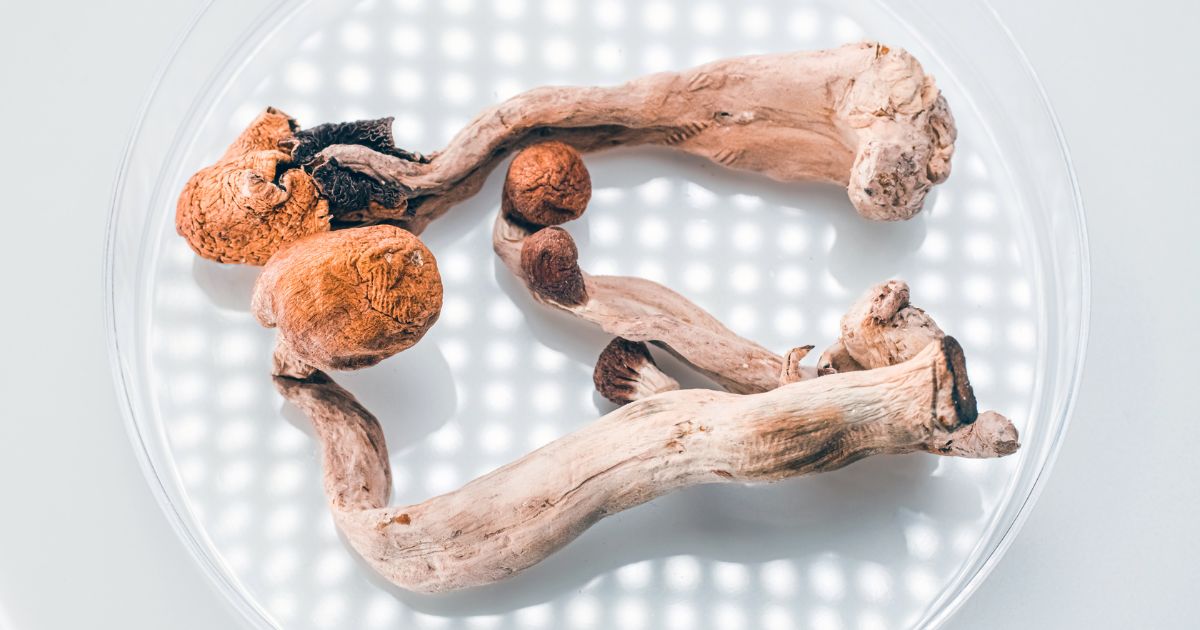
Unlike recreational models seen in other jurisdictions, HB 1809 focuses strictly on therapeutic application. It creates a closed loop where the substance is produced, administered, and monitored by licensed professionals. The legislation explicitly defines psilocybin as the naturally occurring compound found in mushrooms, notably excluding synthetic versions or chemical analogs.
Who Qualifies for Treatment?
The bill is specific about who can access this program. It is designed for patients who have exhausted other options or are dealing with conditions known to respond well to psychedelic-assisted psychotherapy.
Under the current text of HB 1809, qualifying conditions include:
- Major treatment-resistant depression: For patients who have not found relief through standard antidepressants or therapy.
- Post-Traumatic Stress Disorder (PTSD): Aiming to help veterans and trauma survivors.
- Substance Use Disorders: Leveraging psilocybin’s potential to break addiction cycles.
However, the list is not static. The bill establishes a Medical Psilocybin Advisory Board, which has the authority to recommend additional conditions to the DHHS for approval as clinical evidence evolves.
The “Provider-Producer” Model
One of the most unique aspects of HB 1809 is how it handles the supply chain. The bill allows approved medical providers to also act as “producers.”
This allows a licensed provider to grow, harvest, and process psilocybin mushrooms for use with their patients. Vertical integration ensures better quality control and secures the supply chain. These providers are exempt from state criminal statutes regarding possession and production, provided they stay strictly within the therapeutic boundaries of the law.
Treatment Protocol
The legislation outlines a structured therapeutic process to ensure psilocybin is never just “handed out” to a patient. This protocol involves three distinct phases.
First, the provider and patient complete a preparation session where they discuss goals, medical history, and safety before the provider administers any substance.
Next comes the administration session, where the patient takes psilocybin in a supervised, safe medical setting while the provider closely monitors them.
Finally, an integration session provides follow-up therapy, allowing the patient to process their experience and maximize long-term mental health benefits.
Legislative Progress and Bipartisan Support
In a political climate often defined by division, HB 1809 has garnered impressive bipartisan support. Representative Buzz Scherr (D) sponsors the bill, with support from Republican colleagues Rep. Carol McGuire and Rep. Erica Layon.
The bill’s momentum has been strong. On January 28, 2026, the House Health, Human Services and Elderly Affairs Committee voted 18-0 to recommend the bill as “Ought to Pass.”
Following this unanimous committee support, the full House of Representatives advanced the bill via a voice vote on the consent calendar in early February.
Despite the legislative enthusiasm, the bill faces a practical obstacle: funding. The fiscal note attached to HB 1809 estimates that establishing the program will cost the state approximately $250,000 in the first year for staffing and administration.
However, the bill essentially introduces a program without currently allocating the funds to pay for it. Consequently, as of February 12, 2026, the bill has been referred to the House Finance Committee. This is a critical stage where lawmakers must decide if the state is willing to invest the necessary capital to get the program off the ground.
Safety Measures and the “Sunset” Clause
Critics of psychedelic reform often cite safety concerns, but HB 1809 includes several layers of oversight to mitigate risk.
If passed, the newly created Medical Psilocybin Advisory Board will consist of 11 members, including the DHHS medical director, a qualifying patient, a veteran’s affairs representative, and experts in addiction, palliative care, and mental health counseling. This board is tasked with monitoring clinical outcomes and ensuring the program adheres to best practices.
Perhaps the most significant safety valve in the legislation is its “sunset” clause. The program operates on a contingency: the Advisory Board must certify that the program is ready for implementation within two years of the bill’s effective date. If the board cannot certify that the regulatory framework is safe and ready within that window, the program dissolves, and the law effectively creates nothing.
The Future of Psychedelic Medicine in New Hampshire
The advancement of HB 1809 signals that New Hampshire is ready to seriously consider alternatives to the status quo of mental health care. By focusing on a medical, provider-driven model, the state is attempting to strip away the stigma of “magic mushrooms” and focus on the clinical data supporting their efficacy.
While the bill still needs to clear the Finance Committee and the Senate—and potentially face scrutiny from Governor Kelly Ayotte, who has historically held firm stances against recreational drug liberalization—the unanimous committee support suggests a changing tide. For residents suffering from PTSD and depression, HB 1809 offers a glimpse of a new, hopeful horizon.
- New Hampshire House of Representatives Advance Bills Signaling A New Approach to Cannabis and Psilocybin Policy
- HB 198 in New Hampshire Looks To Legalize Small Possession Amounts of Cannabis
- Marijuana Legalization Bill HB 1633 Tabled In New Hampshire
- New Hampshire House To Rule On Adult-Use Marijuana Bill
- New Hampshire’s Cannabis Legalization Bill (HB 186) Advances, Faces Uphill Battle