Cannabis rescheduling has been treated like a finish line by some, a trap door by others, and a giant federal shrug by anyone who has spent more than five minutes paying attention to how cannabis policy actually works in America.
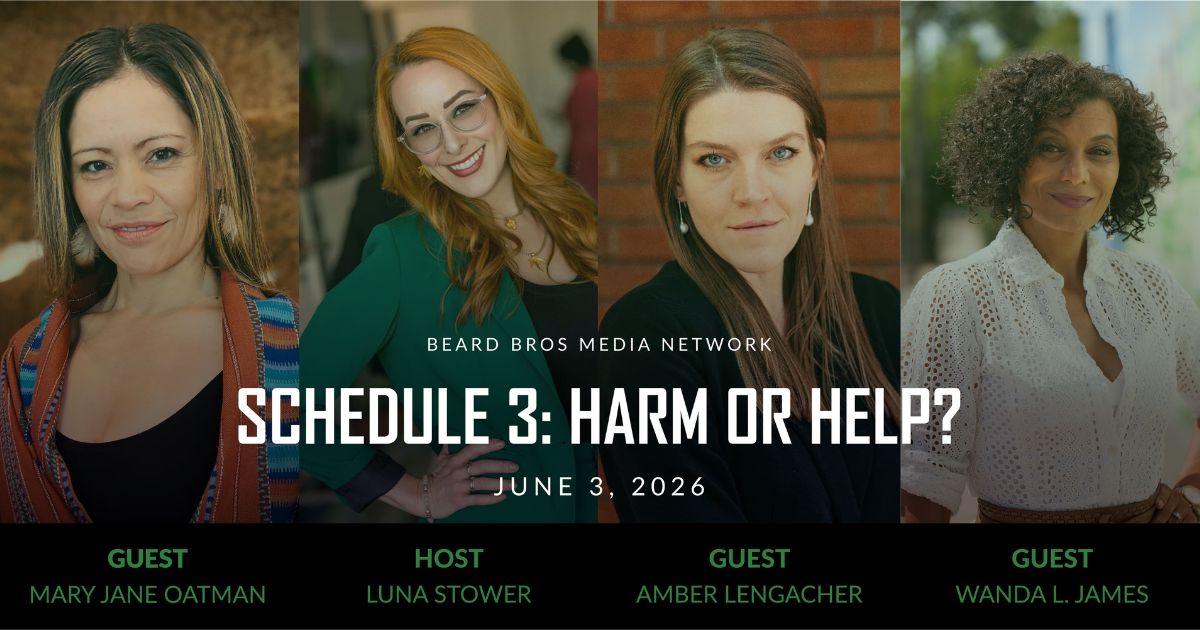
That tension was the entire point of Schedule 3: Harm or Help?, a live webinar hosted on the Beard Bros Media Network and moderated by Luna Stower with guests Amber Lengacher, Wanda James, and Mary Jane Oatman. The conversation brought together legal experience, operator perspective, political urgency, Indigenous advocacy, and the kind of reality check this industry needs when federal headlines start moving faster than federal clarity.
For anyone who missed it live, the full webinar is available to watch here.
Does Cannabis Rescheduling Help, Harm, or Land in the Messy Middle?
The central question was simple enough to fit in a headline, but complicated enough to fill an entire conversation. Does Schedule 3 help cannabis, harm cannabis, or land somewhere in the messy middle where most cannabis policy seems to end up?
The answer, like most honest answers in this industry, depends on who you ask, where they sit, and whether they are looking at this from a legal, business, medical, investment, criminal justice, tribal sovereignty, or legacy market perspective.
Luna opened the conversation by making it clear that this was not going to be another round of talking heads congratulating the industry for being almost free. The point was to separate facts from assumptions, because the biggest mistake cannabis can make right now is confusing movement with resolution.
What the Legal Lens Reveals About Marijuana Rescheduling
Amber Lengacher brought the legal lens. Her background includes time at Vicente, the launch of Purple Circle Consulting, and work with Kite Law, giving her a rare view across policy, multistate operations, hemp, small businesses, women-owned businesses, veteran-owned businesses, and diversely owned operators.
That experience mattered because one of the first things she made clear was that no, cannabis is not suddenly legal. That misconception is already floating around, because of course it is. Cannabis loves a headline, and the federal government loves making things more confusing than they need to be.
Amber explained that the Attorney General order placed medical marijuana, as defined, into Schedule 3. That language matters. This is narrow. It applies to medical marijuana approved by the FDA and medical marijuana governed under state-regulated medical cannabis programs.
The second piece is where things get unusual, because the federal government is effectively deferring to state medical programs in a way we have not seen before. That is a big deal, but it is not the same thing as legalization. It is not descheduling.
It is not a clean federal fix. And as Amber pointed out, if an Attorney General can do this with the stroke of a pen, another Attorney General could potentially undo it with the stroke of a pen. That alone should keep everybody from spiking the football too early.
Seventeen Years In: An Operator’s Perspective on Cannabis Policy
Wanda James brought the operator, political, and historical perspective with the kind of directness this industry desperately needs. She and her husband were the first African Americans legally licensed in America to own a dispensary, edible company, and cultivation facility. After 17 years in this business, her point was hard to miss. Cannabis operators, patients, consumers, product makers, and communities have spent nearly two decades living with one foot in the legal world and one foot in a federal framework that still treats the plant like a criminal enterprise.
That gray area has caused real damage. Businesses have lost savings. Patients have lost freedom. Operators have struggled to access banking. Families and communities have carried the cost while the industry generated billions in revenue, millions in taxes, and thousands of jobs. Yet here we are, still debating whether the plant has value as if the last 20 years of state-legal markets, patient outcomes, employment, tax revenue, and public demand never happened.
Wanda also pushed back on the artificial separation between “medical” and “recreational” cannabis. As the panel discussed, the plant is the plant. The difference often comes down to the regulatory tag, the license, the patient card, or the tax structure wrapped around it. That distinction may matter to regulators, but it can look absurd from the perspective of patients, consumers, and operators who understand that medical use and adult use are not always cleanly separated in real life.
Why Policy Language Matters in Cannabis Rescheduling
That was one of the strongest threads of the webinar. Language matters. Policy language matters even more. Luna pointed to California’s experience, where voters thought they were voting broadly for weed, while the actual framework became tax, control, regulate, and commercialize. The way cannabis policy is written can shape who gets access, who gets boxed out, who gets protected, and who gets sold a headline that does not match the fine print.
Indigenous Communities and the Fight for Tribal Inclusion
Mary Jane Oatman brought that same clarity from the Indigenous advocacy side. As Executive Director of the Indigenous Cannabis Industry Association, she spoke to the reality that Indigenous communities are once again sitting in the messy middle of cannabis policy. One of the most important points raised in the webinar was that the statutory language did not clearly include two words that should never be treated as an afterthought: and tribes.
That omission matters. Indigenous communities have a pre-existing relationship with this plant, and if tribal rights, sovereignty, and reserved authority are not centered in cannabis reform, then the industry is once again asking Native communities to carry the burden while others capture the opportunity. Mary Jane made it clear that there should be zero tolerance for building the future of cannabis on the backs of Indigenous communities.
Patient Rights and the Limits of Schedule 3 Protections
The webinar also touched on patient rights and medical sovereignty. Amber noted that as a patient herself, the Schedule 3 shift raises interesting questions about what it means to no longer be treated as an unlawful user of a controlled substance in the same way. But the panel was careful not to overstate that point. Patients may still face discrimination, stigma, legal uncertainty, firearm restrictions, travel complications, and confusion across state lines.
That uncertainty came through clearly in the discussion around what happens if a patient with a California medical card is caught with cannabis in a state like Alabama. Does Schedule 3 protect them? The answer is not simple, and the safest takeaway is that patients and operators should not assume federal movement on marijuana rescheduling automatically protects them under state law.
What Operators Need to Know Before Talking to the DEA
The same caution applies to businesses. Amber discussed how some operators may be looking at DEA applications, particularly around medical operations, but that process carries serious risk. For operators with combined adult-use and medical licenses, carving out medical operations may sound like an opportunity, but disclosing cannabis activity to the DEA is not something anyone should do casually. There are timelines, possible expedited processing windows, grace periods, and strategic decisions that require real legal counsel.
In other words, do not make million-dollar decisions off LinkedIn posts, rumor smoke, or consultant jazz hands. Talk to lawyers who actually understand federal controlled substances law, state cannabis systems, and the risks of telling the DEA exactly what you have been doing.
Social Equity and the Hidden Traps in the Rescheduling Process
The panel also raised important concerns around social equity. In some states, tying social equity programs to medical cannabis programs creates a disturbing tension. Operators who qualify because of prior justice system involvement now face disclosing that history in a federal application process. For communities already harmed by prohibition, that is not a small procedural issue. That is the kind of policy trap cannabis has seen too many times before.
Cannabis Rescheduling Does Not Free People Behind Bars
The criminal justice conversation was just as sobering. Schedule 3 does not automatically free people in prison. It does not automatically clear records. It does not automatically repair the damage of enforcement. Amber noted that there may be creative legal arguments to help some people currently incarcerated, especially where statutes apply to Schedule 1 and Schedule 2 substances, but the government has already shown signs that it may resist retroactive relief.
That is the moral contradiction at the center of this whole debate. Cannabis cannot call Schedule 3 a full win while people remain locked in cages for the same plant now being discussed in compliance webinars and investor decks. If rescheduling does not come with justice, then it is progress with a hole in the middle.
Federal Hearing Timelines: What to Watch and What Not to Assume
The hearing process was another major piece of the discussion. The panel noted that the upcoming federal hearing could matter, but that timelines remain uncertain. Amber pointed out that prior hearings were delayed and that there are still administrative and procedural questions around how this moves forward. The industry should watch closely, but nobody should assume this is all wrapped up because the federal machine released a new chapter in its favorite novel, Almost, But Not Quite.
The Real Goal: Descheduling, Not Just Rescheduling
The practical takeaway was clear. Do not ride the roller coaster. Stay informed. Keep the final goal in sight. Incremental progress can matter, but only if the industry remembers that the real goal is removing marijuana from the Controlled Substances Act entirely and building a framework that prioritizes public safety, access, equity, patients, communities, and responsible business.
Wanda made the broader political point plainly. The country needs elected officials who understand cannabis, human rights, medical sovereignty, bodily autonomy, Indigenous rights, LGBTQ rights, voting rights, women’s rights, and basic freedom. Cannabis policy is not separate from those issues. It is tied to all of them.
That may be the biggest lesson from Schedule 3: Harm or Help? This is not just a business conversation. This isn’t just a tax or legal conversation. It’s a discussion about who gets protected, who gets punished, who gets access, who gets erased, and who gets invited into the future after being harmed by the past. Schedule 3 may help. It may harm. Most likely, it will do both depending on who you are, where you operate, and whether the next phase of reform centers on people or just profits.
If you missed Schedule 3: Harm or Help?, watch the full webinar here.
Be sure to like the video, subscribe to the Beard Bros Media Network, and stay locked in for more webinars, AMAs, event coverage, and our monthly shows featuring the operators, advocates, policymakers, culture keepers, and industry voices shaping what comes next.
Because federal cannabis rescheduling is not slowing down, and neither are we.
Frequently Asked Questions
No. Cannabis rescheduling to Schedule 3 does not make marijuana federally legal. The Attorney General order specifically applies to medical marijuana as defined by the FDA and state-regulated medical cannabis programs. Adult-use cannabis remains Schedule I. Rescheduling and legalization are not the same thing.
Cannabis rescheduling moves marijuana from one schedule to another within the Controlled Substances Act — in this case, from Schedule I to Schedule 3. Descheduling removes the plant from the CSA entirely. Many industry advocates argue that descheduling is the only path to a truly functional and equitable federal framework for cannabis.
Not reliably. A state that restricts or outlaws cannabis won’t automatically honor a medical card from another state.. The federal Schedule 3 designation does not override state law, and patients should not assume otherwise until there is clear, consistent federal and state alignment.
This was one of the webinar’s most critical concerns. The statutory language did not explicitly include tribes, which creates real uncertainty around how marijuana rescheduling affects Indigenous cannabis programs and tribal sovereignty. Advocates like Mary Jane Oatman of the Indigenous Cannabis Industry Association are pushing for explicit tribal inclusion in any future federal cannabis framework.
- VA Continuing Forward Momentum on Psychedelics
- Webinar: Discussing SB 56 And Its Threat to Ohio’s New Adult-Use Cannabis Industry
- Indigenous Communities Left Out of the Rise of Modern Psychedelics
- Indigenous Cannabis Industry Association Formally Launches
- Indigenous Communities Leading the Way in Cannabis Programs