


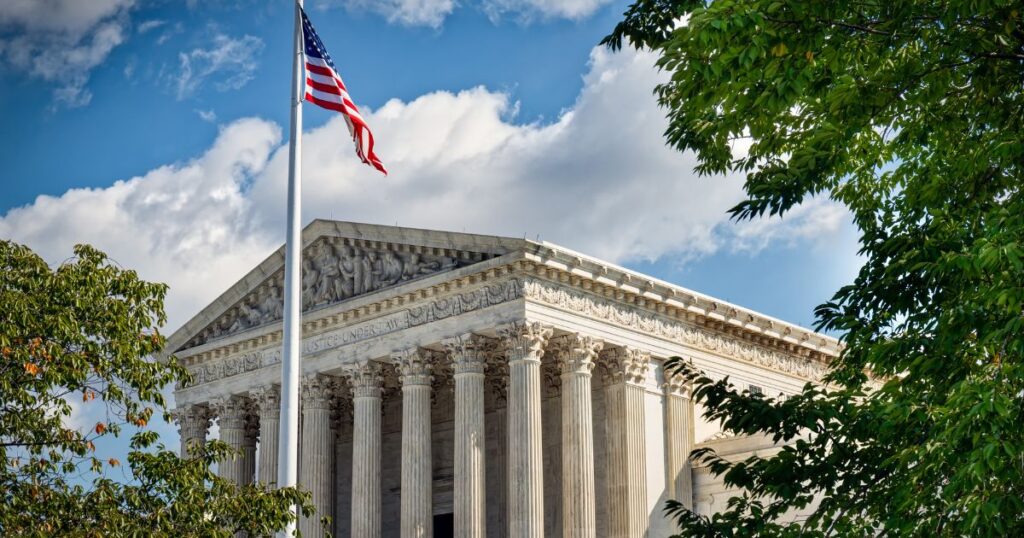
The U.S. Supreme Court is set to hold a private, closed-door conference on December 12 to decide whether it will hear a case challenging the constitutionality of federal marijuana prohibition. This conference marks an important moment for the national cannabis industry and could set the stage for a legal battle that has been brewing for years, potentially reshaping federal law and its conflict with state-legal cannabis markets.
The case of Canna Provisions v. Bondi, brought by Massachusetts-based cannabis businesses. The petitioners, represented by the law firm Boies Schiller Flexner LLP, argue that the federal government’s criminalization of marijuana under the Controlled Substances Act (CSA) is an overreach of congressional power, particularly in states that have established their own legal and regulatory frameworks for cannabis. They contend that federal prohibition violates the Commerce Clause of the U.S. Constitution when applied to purely intrastate cannabis activities.
The journey to the Supreme Court has been a long-intended one for the plaintiffs. After facing dismissals in lower courts, including the U.S. Court of Appeals for the First Circuit, the legal team has maintained that the ultimate goal was to bring the matter before the nation’s highest court. The core legal question is whether the federal government can enforce prohibition against cannabis cultivation and sales that occur entirely within a state’s borders, a practice the Court upheld two decades ago in Gonzales v. Raich. Now, with a vastly different legal landscape where 38 states permit some form of legal cannabis, the petitioners believe it is time to revisit that precedent.
The Constitutional Argument: Commerce Clause and Federal Power
The legal challenge hinges on the interpretation of the Commerce Clause, which grants Congress the authority to regulate commerce “among the several States.” The plaintiffs argue that the federal government cannot regulate commercial activity confined to a single state. They claim that Massachusetts’ comprehensive “seed-to-sale” tracking system ensures all products are grown and sold locally, leaving no constitutional basis for federal intervention.
This argument directly confronts the 2005 Supreme Court ruling in Gonzales v. Raich. In that case, the Court ruled that Congress could regulate even homegrown, non-commercial marijuana because it could potentially impact the interstate drug market. The current lawsuit argues that the legal and factual foundation of Raich no longer holds. With most states now regulating cannabis, proponents claim that a regulated intrastate market is fundamentally different from the situation in 2005.
Filed Briefs in Favor of Ending Federal Marijuana Ban
Further strengthening the case are several amicus briefs filed in support of the petition, which add significant legal and ideological weight. The Cato Institute, a libertarian think tank, filed a brief arguing that the Court should restore the original, narrower meaning of the Commerce Clause. Their brief asserts that “commerce” was historically understood as trade across state lines, not activities like local agriculture or manufacturing. Cato argues that the modern “substantial effects” test has transformed a limited federal power into a nearly limitless one, allowing Congress to regulate almost any activity.
Similarly, an amicus brief from Michael Colosi, filed by the Pacific Legal Foundation, emphasizes how an over-expansive interpretation of the Commerce Clause harms property owners. Colosi’s own case involves a dispute over federal regulation of his land due to the potential habitat of an intrastate bird species. The brief argues that this kind of federal overreach, justified by a loose connection to interstate commerce, has devastating impacts and strays far from the Constitution’s original intent to limit federal power.
These briefs not only support the petitioners’ specific claims but also encourage the Court to use this case as an opportunity to rein in what they see as decades of federal encroachment on powers reserved for the states.
Why Now? A Shifting Legal and Political Tide
The timing of this challenge is significant. The Supreme Court itself has shown signs of being open to reconsidering federal cannabis policy. In 2021, Justice Clarence Thomas issued a statement criticizing the federal government’s “contradictory and unstable” stance on marijuana, noting the tension between federal prohibition and the growing number of state-legal markets. This statement has been widely interpreted as an invitation for a case like Canna Provisions v. Bondi.
The Department of Justice, in a notable move, declined the opportunity to file a brief opposing the Court’s consideration of the case. While this does not indicate the government’s position on the merits, it removes a potential barrier to the Court granting certiorari. At least four of the nine justices must vote to hear the case during their December 12 conference.
The potential implications of a favorable ruling are immense. It could effectively end federal prohibition as it applies to state-legal cannabis markets, providing profound relief for businesses. This would likely resolve major industry challenges, such as the punitive federal tax code Section 280E, which prevents cannabis businesses from deducting standard business expenses. It could also open the door to mainstream banking services, access to institutional investment, and listing on major stock exchanges.
A Decisive Moment for Federal Cannabis Law
The Supreme Court’s upcoming conference is a critical inflection point. The justices will decide whether to confront the deep-seated conflict between federal law and the reality of state-regulated cannabis industries. The petitioners and their supporters, including influential groups like the Koch-founded Americans for Prosperity Foundation, argue that the federal government is lagging far behind the will of the people and the actions of the states.
Regardless of the outcome of the conference, the fact that the Supreme Court is formally discussing a case to overturn federal marijuana prohibition is a significant development. It reflects a growing recognition at the highest levels of the judiciary that the current legal framework is untenable. The decision made behind closed doors on December 12 could trigger the most significant shift in U.S. drug policy in over half a century.