


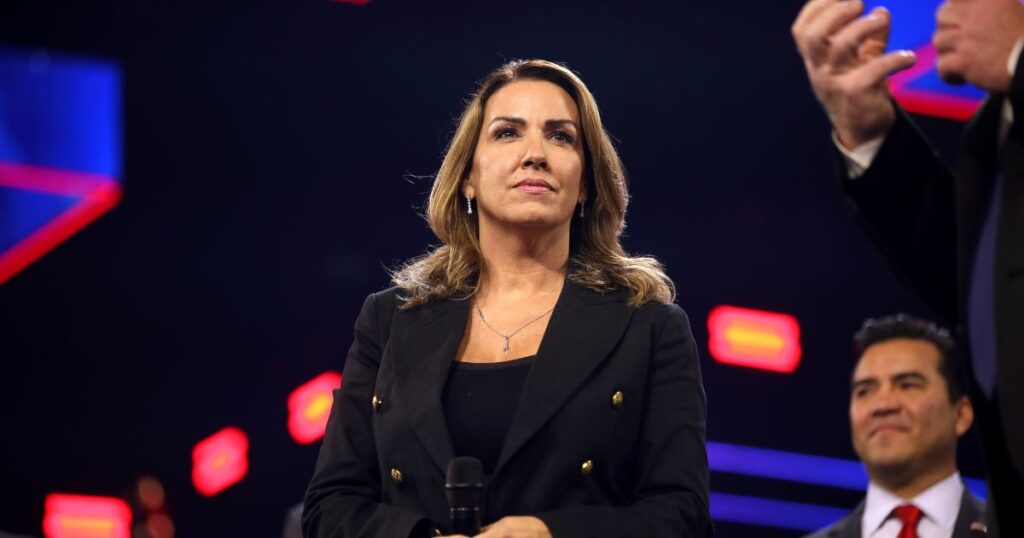
The United States Senate has officially confirmed Sara Carter as the next director of the Office of National Drug Control Policy following a tight 52-48 vote on Tuesday. While the appointment of a “Drug Czar” typically signals a ramping up of prohibitionist rhetoric, this specific confirmation offers a surprisingly optimistic outlook for the cannabis industry.
Unlike many of her predecessors who viewed marijuana solely as a public threat, Carter enters the role with a record of supporting medical cannabis and viewing legalization through a lens of regulation rather than criminalization.
For cannabis advocates and business owners alike, her confirmation marks a potentially pivotal moment in federal drug policy. Carter arrives at the ONDCP right as the Trump administration is actively pursuing the rescheduling of cannabis, creating a unique alignment between the White House’s executive actions and the personal views of its new drug policy chief.
A Narrow Confirmation With Major Implications
The Senate voted largely along party lines to confirm Carter, with one notable exception. Senator Rand Paul joined Democrats in opposition, resulting in a narrow 52-48 victory. Despite the close margin, the result places a figure in the White House who has publicly acknowledged the medical efficacy of cannabis. This is a significant change from the historical function of the ONDCP, an office that was originally designed to coordinate the War on Drugs and legally mandated to oppose the legalization of Schedule I substances.
Carter, a former investigative journalist known for her extensive coverage of drug cartels and border security, brings a “law and order” background to the position. However, her specific focus has historically been on illicit trafficking and “narco-terrorists” rather than cracking down on state-legal cannabis operators. This distinction is vital for the regulated industry, which has long argued that the best way to combat the illicit market is to support legal, tax-paying businesses.
The Drug Czar Who Supports Medical Marijuana
What makes Carter’s confirmation particularly noteworthy for the industry is her on-the-record support for medical marijuana. In a 2024 episode of her podcast, Carter stated she did not have a problem with legalization provided it is monitored. She went further to describe cannabis as a fantastic treatment for cancer patients and those suffering from other illnesses, specifically highlighting its ability to manage side effects of medication.
This perspective aligns her with the overwhelming majority of Americans who support medical access. It also suggests that the ONDCP under her leadership may finally pivot away from viewing cannabis consumers as criminals and instead view them as patients. By acknowledging the therapeutic value of the plant, Carter validates the work of thousands of medical researchers and caregivers who have operated in a gray area of federal law for decades.
Furthermore, during her confirmation hearings, Carter described cannabis reform as a bipartisan issue. She assured senators that the administration is exploring all options regarding scheduling. This rhetoric signals a departure from the dogmatic opposition of the past and opens the door for a more pragmatic, science-based approach to federal cannabis policy.
The Path to Schedule III
Carter’s confirmation cannot be viewed in isolation from the broader moves being made by the Trump administration. On December 18, 2025, President Trump signed an executive order directing Attorney General Pamela Bondi to expeditiously move cannabis from Schedule I to Schedule III under the Controlled Substances Act. This context is essential because federal statute currently prohibits the ONDCP director from using federal funds to study or advocate for the legalization of any Schedule I substance.
If cannabis remains a Schedule I drug, Carter’s hands are legally tied, regardless of her personal views. However, the move to Schedule III changes the entire legal landscape. Once cannabis is rescheduled, it would no longer be subject to the statutory requirement that forces the Drug Czar to oppose its legalization. This would free Carter to implement policies that reflect her stated support for medical access and regulated markets.
The shift to Schedule III would also have profound financial implications for cannabis businesses, primarily by removing the burden of Section 280E of the Internal Revenue Code. This tax code prevents businesses trafficking in Schedule I or II substances from deducting standard business expenses. By aligning the ONDCP’s leadership with the President’s rescheduling directive, the administration is paving the way for a more financially viable and federally recognized cannabis industry.
Focusing on the True Enemy
Throughout her career and confirmation process, Carter has maintained a fierce focus on drug cartels and the trafficking of fentanyl. She has frequently discussed the dangers of illicit grow operations, particularly those linked to foreign criminal organizations that use hazardous chemicals and pesticides. For the legal cannabis industry, this creates a clear lane of opportunity.
Regulated cannabis businesses already adhere to strict testing standards for pesticides and contaminants, ensuring a safe product for consumers. By cracking down on the illicit market—which Carter has vowed to do—the ONDCP effectively strengthens the position of legal operators. The regulated market has long struggled to compete with the prices of the illicit market, which cuts corners on safety and pays no taxes. A Drug Czar focused on eliminating these illegal operations helps level the playing field for compliant businesses.
Carter’s rhetoric suggests she draws a sharp distinction between the legal, monitored market and the illicit market. She has explicitly supported monitored legalization. This shift suggests her primary concern lies with the unregulated criminal activity of the illicit market rather than the plant itself. This “law and order” approach to the illicit trade, combined with a permissive stance on regulated cannabis, is exactly what some legal operators have been asking for.
A New Era for Federal Policy?
The confirmation of Sara Carter could be a significant shift in the federal government’s posture toward cannabis. We now have an ONDCP director who views cannabis reform as a bipartisan issue, recognizes the medical value of the plant, and is serving under an administration actively working to lower its scheduling status.
While challenges remain, particularly in the implementation of rescheduling and the harmonization of state and federal laws, the legal cannabis industry has reason to be optimistic. The era of the Drug Czar serving as the primary antagonist to cannabis progress appears to be ending.
Instead, the ONDCP may finally become a partner in prioritizing public health, safety, and the success of a regulated American industry.
Featured Image from Wikimedia Commons via Gage Skidmore