


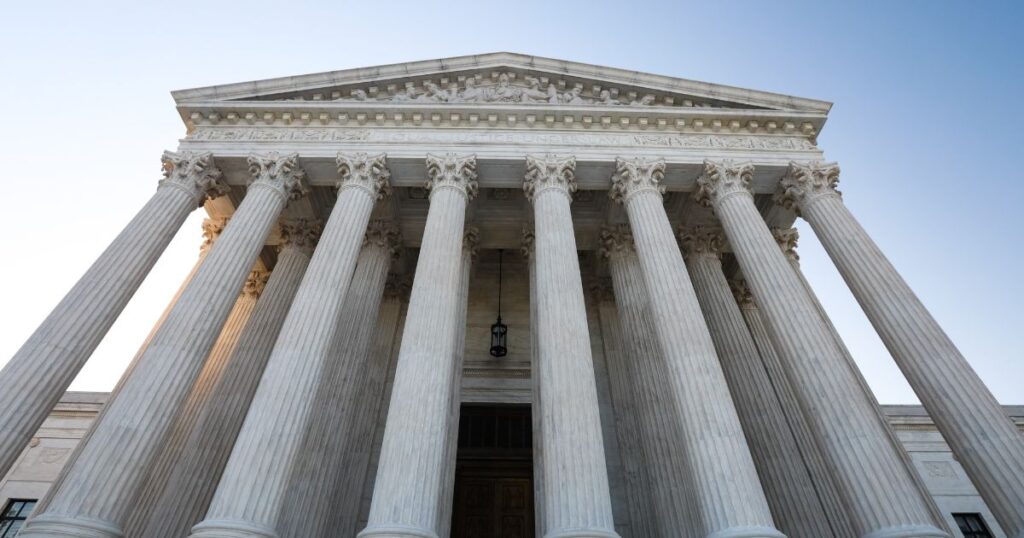



The path to federal cannabis reform has taken two sharply divergent turns in a single week, leaving the cannabis industry and legal experts scrambling to interpret the mixed signals coming from Washington. On Monday, December 15, 2025, the U.S. Supreme Court issued an order list denying certiorari in Canna Provisions v. Bondi. This effectively kills a high-profile legal challenge that sought to declare federal marijuana prohibition unconstitutional under the Commerce Clause. The refusal to hear the case leaves the status quo intact: despite state legalization, cannabis remains federally illegal.
However, the courtroom defeat arrives amid reports that the White House is preparing to pivot on the issue. Sources indicate that President Donald Trump is expected to sign an executive order reclassifying marijuana from a Schedule I to a Schedule III substance. This juxtaposition—a judicial door slamming shut while an executive window cracks open—highlights the chaotic and often contradictory nature of U.S. drug policy.
For cannabis businesses, the implications are massive. While the Supreme Court’s silence preserves the criminal risks of federal prohibition, the potential executive action could finally dismantle the crippling tax burdens that have stifled the industry’s growth.
The Supreme Court’s Decision to Reject Marijuana Case: A Blow to Constitutional Challenges
The case, Canna Provisions, Inc. v. Bondi (No. 25-518), was viewed by many as the industry’s best shot at overturning federal prohibition through the judicial system. The petitioners, a group of Massachusetts-based cannabis companies represented by Boies Schiller Flexner LLP, argued: the federal government no longer has the constitutional authority to ban cannabis that is grown, manufactured, and sold entirely within a single state.
The Commerce Clause Argument
The legal challenge hinged on the Constitution’s Commerce Clause, which grants Congress the power to regulate commerce “among the several States.” The plaintiffs argued that because Massachusetts has a closed, highly regulated “seed-to-sale” market, their activities do not affect interstate commerce. Therefore, they claimed, the federal government’s reach should not extend to their local operations.
By declining to hear the case, the Supreme Court has allowed a lower court ruling—which rejected these arguments—to stand. This confirms that, at least for now, federal supremacy trumps state legalization efforts, even when the commerce in question is purely intrastate.
The Shadow of Gonzales v. Raich
The denial of Canna Provisions reinforces the precedent set by the 2005 case Gonzales v. Raich. In that decision, the Court ruled that Congress could ban homegrown medical marijuana because allowing it could disrupt the broader national market for the drug.
Attorneys for Canna Provisions argued that the landscape has shifted so dramatically since 2005 that Raich effectively no longer applies. They pointed to the fact that the federal government has largely abandoned enforcement against state-legal businesses, creating the “half-in, half-out” regime that Justice Clarence Thomas has previously criticized.
Despite these arguments, the Court was evidently not ready to revisit the issue, leaving the constitutional question unresolved but the federal ban firmly in place.
The Executive Branch Steps In: Trump’s Expected Move
While the judiciary declined to act, the executive branch appears poised to make a significant move. According to recent reports, President Trump is preparing to sign an executive order that would instruct federal agencies to move marijuana to Schedule III of the Controlled Substances Act (CSA).
Rescheduling vs. Descheduling
It is crucial to understand the distinction between what the lawsuit sought and what the President is offering.
- The Lawsuit (Descheduling): The Canna Provisions case sought to declare the federal ban unconstitutional. If successful, this would have effectively “descheduled” cannabis, removing it from the CSA entirely regarding intrastate commerce and treating it more like alcohol.
- The Executive Order (Rescheduling): Moving cannabis to Schedule III does not make it legal. It simply recategorizes it as a drug with a lower potential for abuse and some accepted medical use—placing it alongside substances like Tylenol with codeine or anabolic steroids.
While rescheduling is not full legalization, it is far from a hollow victory.
The Death of Section 280E?
The most immediate impact of rescheduling would be financial. Currently, because marijuana is a Schedule I substance, cannabis businesses are subject to IRS Code Section 280E. This tax code prevents them from deducting standard business expenses, leading to effective tax rates that can exceed 70%.
If marijuana is moved to Schedule III, Section 280E would no longer apply. This shift would instantly improve the balance sheets of cannabis operators across the country, allowing them to reinvest in their businesses, hire more staff, and stabilize an industry that has been struggling with profitability. This financial relief explains why cannabis stocks, including major players like Tilray Brands and Canopy Growth, surged on the news of the executive order, even as the Supreme Court denied the Canna Provisions case.
Justice Thomas and the “Half-In, Half-Out” Regime
The Supreme Court’s refusal to take the case is particularly notable given previous comments from Justice Clarence Thomas. In 2021, Thomas issued a statement slamming the federal government’s approach to marijuana as “contradictory and unstable.” He argued that the government’s tacit tolerance of state-legal marijuana undermined the rationale for federal prohibition.
“Once comprehensive, the Federal Government’s current approach is a half-in, half-out regime that simultaneously tolerates and forbids local use of marijuana,” Thomas wrote.
Many legal observers hoped that Thomas would convince enough of his colleagues—four votes are required to grant a writ of certiorari—to hear the Canna Provisions case. The denial suggests that the conservative majority on the court remains hesitant to limit Congress’s power under the Commerce Clause, or perhaps they prefer to let the political branches (Congress and the President) resolve the issue themselves.
With the Trump administration signaling a move toward rescheduling, the Court may have decided it was imprudent to intervene in a policy area that is actively shifting within the executive branch.
What This Means for the Future of Cannabis
The events of this week clarify the battlefield for cannabis reform. The judicial route—hoping that courts will strike down prohibition on constitutional grounds—has hit a dead end for the foreseeable future. The focus now shifts entirely to the political arena.
If the projected executive order is signed, it will mark the most significant federal loosening of cannabis restrictions in history. However, it falls short of the comprehensive reform many advocates want. Rescheduling leaves the criminal penalties for unsanctioned marijuana activities in place and maintains the FDA and DEA’s authority over the substance.
For the entrepreneurs who brought the Canna Provisions case, the fight continues, albeit on different terrain. The constitutional challenge may be over, but the industry is entering a new phase where regulatory reclassification could provide the economic lifeline businesses have desperately needed.
As the dust settles on the Supreme Court’s rejection of a federal cannabis case, the industry now looks to the White House. The pen, it seems, may prove mightier than the gavel.
- Supreme Court Grants Extension in Cannabis Prohibition Case
- Women’s Canna Awards Returns For Second Year
- Recap: Smoke-laced Comedy Show Hosted at Cookies NYC
- Missouri Governor’s New Executive Order Targets Sale of Unregulated Psychoactive Cannabis Products
- SCOTUS to Weigh Case on Federal Marijuana Ban