

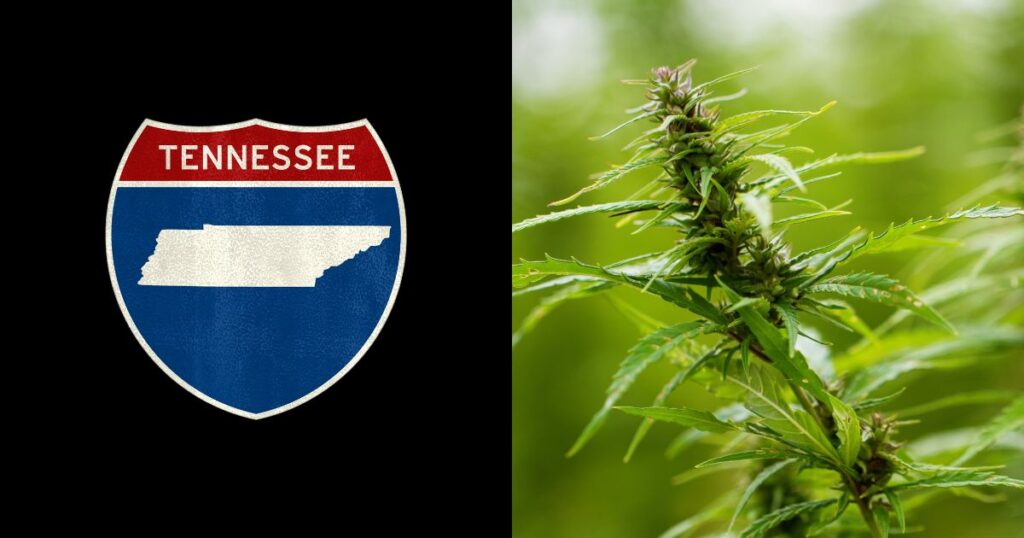
The hemp industry in Tennessee has secured a temporary victory, but a larger federal battle casts a long shadow over its future. While a recent agreement with state agencies allows some retailers to continue selling hemp-derived THC products for a limited time, a new federal law threatens to dismantle the market entirely. This development leaves many businesses and consumers in a state of uncertainty, balancing short-term relief with long-term anxiety.
Tennessee’s Temporary Reprieve For Hemp Industry
Tennessee’s hemp industry, represented by the Tennessee Healthy Alternatives Association, reached an agreement with the state’s Agriculture and Revenue Departments. This deal allows some businesses to continue selling hemp-derived products like THCA, even after new, stricter state regulations take effect.
According to a report from the Tennessee Lookout, the agreement permits businesses with licenses issued before December 31, 2025, to operate under the previous 2023 regulatory framework. This arrangement will last until their licenses expire on June 30, 2026. As a result of this compromise, a lawsuit filed by the association against the state departments has been dismissed.
This temporary measure provides a crucial lifeline for many retailers. A new state law, set to begin on January 1, will transfer regulatory power over hemp products to the Tennessee Alcoholic Beverage Commission and ban THCA. THCA is a non-intoxicating cannabinoid that converts to the illegal delta-9 THC when heated.
The law also bans the synthetic cannabinoid THCP. Industry representatives have warned that this new law could render about 75% of the current market illegal, affecting products like THCA flower and vapes and potentially forcing many businesses to close.
The deal offers a grace period, allowing licensed retailers to sell their existing inventory and adapt their business models before the full force of the new state law is felt. However, this state-level agreement is overshadowed by a much larger threat at the federal level.
The Federal Outlook for Hemp THC
While Tennessee retailers navigate their local regulatory landscape, a federal storm is brewing. A government spending bill signed into law by President Donald Trump includes a provision that could effectively end the legal sale of most intoxicating hemp-derived products outside of state-licensed dispensaries.
This provision, tucked into the funding bill, aims to close what lawmakers call the “hemp loophole” created by the 2018 Farm Bill. The 2018 bill legalized hemp by defining it as cannabis containing less than 0.3% delta-9 THC. This definition inadvertently created a legal pathway for intoxicating products derived from hemp, such as those containing delta-8 THC and THCA.
The new federal regulations, scheduled to take effect one year after the bill’s signing, introduce several drastic changes. The 0.3% THC limit will now apply to “total tetrahydrocannabinols,” which includes THCA. This change alone would make much of the currently grown hemp non-compliant.
The law also bans synthetically derived cannabinoids and imposes a strict cap of 0.4 milligrams of total THC per container for final products. This cap is so low it would eliminate nearly all intoxicating hemp edibles, beverages, and vapes from the market.
Industry leaders have described the potential impact as an “extinction-level event,” warning that it could wipe out a multi-billion dollar industry that supports hundreds of thousands of jobs. Many believe this move will not eliminate demand but instead push consumers toward the unregulated black market, posing greater risks to public health and safety.
The Fight for the Future of Hemp
The one-year implementation window for the federal ban has sparked a race against time for hemp advocates. The industry is mobilizing to lobby Congress for a legislative solution before the new rules take effect.
A key effort is a new bill, H.R.6209, titled “The American Hemp Protection Act of 2025,” introduced by a bipartisan group of representatives led by Rep. Nancy Mace (R-SC). This bill seeks to repeal the restrictive hemp provisions in the spending bill. Proponents of the repeal argue that the ban would destroy the livelihoods of farmers and small business owners who have invested heavily in the hemp industry based on the 2018 Farm Bill.
Beyond a simple repeal, many industry leaders and organizations, like the American Herbal Products Association (AHPA) and the Hemp Education & Marketing Initiative (HEMI), are pushing for a more comprehensive regulatory framework. They advocate for a clear distinction between industrial hemp (used for grain and fiber) and floral hemp (used for cannabinoids).
This approach would allow for different regulatory pathways, treating industrial hemp as a standard agricultural commodity under the USDA, while creating a structured system for cannabinoid products. This could involve the FDA regulating non-impairing cannabinoids like CBD under dietary supplement standards, and the Alcohol and Tobacco Tax and Trade Bureau (TTB) overseeing impairing cannabinoids with an approach similar to alcohol regulation.
These advocates believe that smart, science-based regulation, rather than outright prohibition, is the solution. It would provide clarity for businesses, ensure consumer safety with standards for testing and labeling, and maintain a legal, thriving market.
Navigating an Uncertain Path
The hemp industry finds itself at a critical juncture. The deal in Tennessee provides a temporary sigh of relief for local businesses, allowing them to continue operating for a little longer. However, the looming federal ban presents a formidable challenge that threatens the entire industry’s existence.
The coming year will be decisive. The fate of thousands of farmers, entrepreneurs, and employees hangs in the balance as advocates work to persuade Congress to reconsider its course. Whether the outcome is a full repeal of the ban, the adoption of a new regulatory framework or changes to the hemp-derived THC market could lead to significant shifts, with decisions made in Washington playing an important role.. For now, the industry can only watch, wait, and fight for a future where it can continue to grow and innovate responsibly.
- Tennessee Continues To Add Rules For Hemp Products
- Cannabinoids of the Future: CBDa and THCa
- DEA Letter Clarifies THCA Does Not Meet the Definition of Legal Hemp
- Cannabis, Hemp and THC: Psychoactive Hemp Gains Ground as States and Others Push Back — Part 1
- Beard Bros. Pharms Cannabis Laws Road Trip – Part 4: The South