Getting pulled over is stressful enough, but for cannabis users, a routine traffic stop can quickly escalate into a nightmare. You might be completely sober, having enjoyed a joint with friends several days ago, yet you still feel a wave of panic. Because cannabis metabolites stay in the body for weeks, a standard blood or urine test could falsely label you an impaired driver.
For decades, the legal system has relied on fundamentally flawed methods to determine current marijuana intoxication. Law enforcement officers often use the mere smell of cannabis in a vehicle as probable cause to initiate a grueling investigation. They demand field sobriety tests or blood draws, operating under the assumption that presence equals impairment. This approach punishes responsible consumers and medical patients who use cannabis legally but happen to have lingering, inactive compounds in their system.
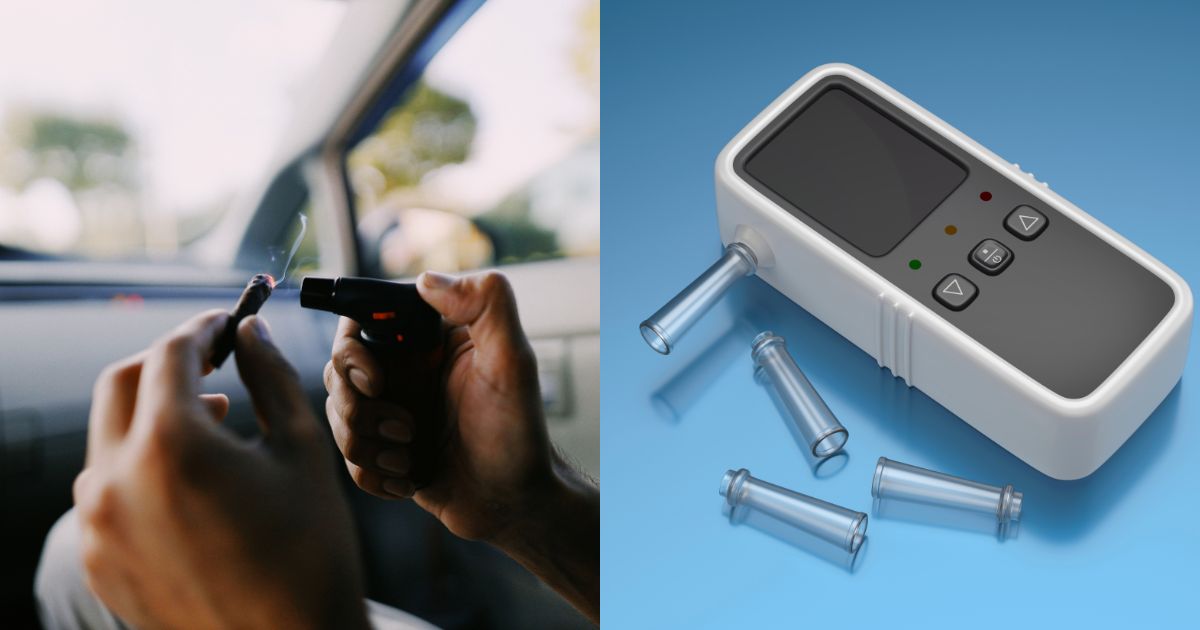
A new solution could finally on the horizon. Researchers have developed a portable, low-cost marijuana breathalyzer designed to detect recent cannabis use right at the roadside. By focusing on active delta-9 THC rather than leftover metabolites, this device aims to accurately gauge true impairment.
A recent patent application submitted to the United States Patent and Trademark Office highlights the rapid advancement of this technology. With the potential to eliminate arrests based purely on an officer smelling cannabis or outdated chemical tests, this innovation could forever change the way we approach roadside safety and consumer rights.
The Problem with Traditional Cannabis Testing
To understand why a cannabis breathalyzer is a massive victory for the community, we have to look at the failures of current testing methods. When you consume alcohol, it processes through your body relatively quickly. Blood alcohol content provides a generally reliable snapshot of how intoxicated you are at that exact moment. Cannabis operates completely differently.
THC is a fat-soluble compound. After the initial effects wear off, your body stores the inactive metabolites in your lipid cells. These metabolites slowly release back into your bloodstream over days, weeks, or even months, depending on your frequency of use. A daily medical cannabis patient will almost always test positive for these compounds, even if they have not consumed any marijuana for twenty-four hours and are entirely clear-headed.
Many states have established “per se” limits for driving, meaning you can be charged with a DUI if your blood contains a certain concentration of THC—typically between two and five nanograms per milliliter. A federal study funded by the National Highway Traffic Safety Administration recently noted that relatively little research supports a relationship between these specific blood concentrations and an actual risk of crashing. A chronic user might naturally sit above that legal limit completely sober, while an infrequent user might be heavily impaired at the exact same level.
Furthermore, police officers routinely use the odor of cannabis as justification for an arrest. You might have a legally purchased, sealed jar of flower in your passenger seat. The distinct smell of raw cannabis can prompt an officer to assume you are driving under the influence. Without a reliable roadside tool to prove otherwise, you are left vulnerable to wrongful prosecution, expensive legal battles, and severe disruptions to your life.
The Science Behind the New THC Breathalyzer
A federally funded study led by Dr. Emanuele Alves at Virginia Commonwealth University has successfully created the chemical foundation for a highly accurate marijuana breathalyzer. The research team focused on developing a tool that acts much like an asthma inhaler, utilizing 3D-printed cartridges to capture exhaled breath and test it immediately.
Most existing marijuana breathalyzers act strictly as collection devices. An officer gathers a breath sample and sends it off to a laboratory, leaving the driver in legal limbo while waiting for the results. The VCU prototype is entirely different because it produces a visible, colorimetric reaction on the spot.
The researchers achieved this by integrating specific chemical dyes, known as Fast Blue B and Fast Blue BB, into a synthetic ballistic gelatin matrix within the cartridge. When a person exhales into the device, any active delta-9 THC particles in their breath collide with the gelatin layer. The Fast Blue dye selectively reacts with the THC, shifting the color of the cartridge from light yellow to dark red. This visual change provides immediate proof of recent consumption.
One of the most impressive aspects of this study is how the technology handles different cannabinoids. The device clearly distinguishes between intoxicating delta-9 THC and non-psychoactive compounds like CBD. Using a three-dimensional color-space model, the researchers proved that CBD produces a distinct orange hue that clusters completely apart from THC. This selective chemistry ensures that someone using a legal CBD tincture for pain relief will not trigger a false positive for marijuana impairment.
The researchers submitted a patent application (PCT/US25/19696) to the United States Patent and Trademark Office based on the excellent foundational data from these experiments. The proposed design outlines a simple, affordable prototype that police departments nationwide could eventually use.
Distinguishing Actual Impairment from Mere Presence
The cannabis community has long advocated for a testing standard that separates acute intoxication from historical use. Breath testing represents the most promising avenue for achieving this goal. When you smoke or vaporize cannabis, the active parent compound—delta-9 THC—coats your oral cavity and airways. This active compound remains detectable in your breath for only a few hours after consumption.
If a breathalyzer detects delta-9 THC, it strongly correlates with the window of actual psychoactive impairment. If you consumed cannabis last Friday and drive to work on Monday, your breath will be completely clear, even if your blood and urine still contain high levels of inactive metabolites. A reliable breathalyzer protects sober drivers from being penalized for their lifestyle choices outside of the vehicle.
This technological leap aligns with a growing consensus among federal agencies. Researchers from the National Institute of Standards and Technology and the Department of Justice have publicly questioned the validity of charging drivers based solely on blood THC concentration. As the scientific community moves away from outdated blood tests, the legal system will be forced to adapt, creating a fairer landscape for everyone.
A Rapidly Evolving Industry Landscape
The VCU prototype is not the only major development in this space. The commercial sector is also aggressively pursuing fair roadside testing. Cannabix Technologies, a developer of marijuana breathalyzers, received a granted patent (No. 18/1729,658) from the USPTO for a contactless breath analysis device in October 2025.
Their BreathLogix platform utilizes dual-mode technology, allowing users to provide a breath sample without physical contact. The system can be integrated into workplace kiosks, public health monitors, and law enforcement tools. The simultaneous advancement of academic research and commercial patents proves that the era of guessing marijuana impairment is rapidly coming to an end.
As these devices move through beta testing and into active production, lawmakers will finally have the objective standard they need to rewrite flawed DUI legislation. We are stepping closer to a reality where the smell of cannabis or a lingering metabolite will no longer be enough to take away your freedom.
The push for a reliable marijuana breathalyzer is about much more than adopting cool new technology. It is a fundamental fight for civil liberties and basic fairness. Nobody should have to fear losing their driver’s license or their job simply because they responsibly consume a plant in the privacy of their own home.
Frequently Asked Questions (FAQ)
The device uses a 3D-printed cartridge containing synthetic ballistic gelatin and Fast Blue dye. When a person exhales into the mouthpiece, active delta-9 THC particles react with the dye. The chemical reaction turns the target area a dark red color, indicating recent cannabis consumption.
No. The chemical structure of CBD reacts differently to the Fast Blue dyes than THC does. While THC produces a red color, CBD produces a distinct orange hue. This color difference allows the detection system to easily separate the two, ensuring it won’t falsely accuse legal hemp and CBD users of intoxication.
Blood tests detect inactive cannabis metabolites that can linger in your system for weeks after you consume marijuana. Breath tests specifically capture the active delta-9 THC compound, which disappears from your breath after a few hours. This makes breath testing a much more accurate indicator of whether you are currently high.
While developers have established the chemical foundations and patents, the devices are still in the prototyping and commercial validation phases. These tools will likely need a few years for rigorous field testing, regulatory approval, and distribution to local law enforcement agencies.