In cannabis, everybody loves talking about innovation until the conversation gets to packaging. Then suddenly the room gets quiet.
Not because packaging does not matter. It absolutely does. Packaging is where a great product either gets protected, presented, and prepared for the shelf, or where it gets slowed down, mishandled, and quietly turned into a margin problem.
For vape manufacturers, this is especially true. The industry has spent years advancing oil formulations, hardware designs, filling accuracy, terpene preservation, capping systems, testing protocols, and retail readiness. But once the cart is filled, capped, and , many operators still hit the same vexing wall.
Packaging. The slow part. The repetitive part. The part that ties up labor, creates handling risk, and turns a clean production workflow into a pileup at the finish line. That is exactly where the Xylem Robotics XB Automated Vape Cart Bagging System comes in.
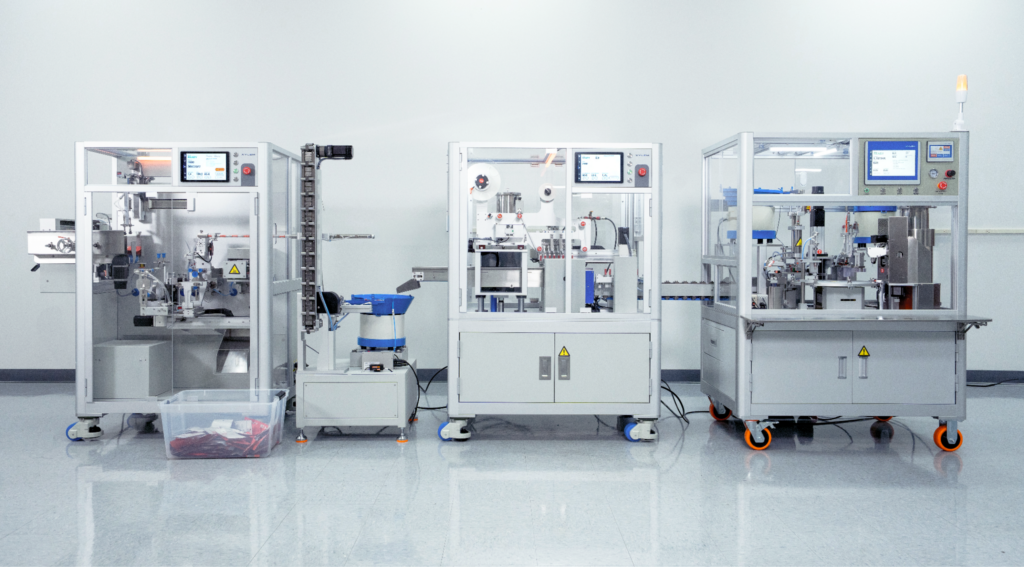
The XB was built to solve one of the most common bottlenecks in vape manufacturing by automating the process of sorting, orienting, loading, and heat-sealing vape carts into bags and pouches. It can handle standard mylar bags, child-resistant packaging bags, top-seal formats, and bottom-seal formats, and it can package 510 thread vape carts at more than 800 filled and sealed bags per hour.
XB can run as a standalone unit or connect in-line with Xylem Robotics vape cart manufacturing systems to create a real production flow instead of another disconnected workstation. Xylem lists the XB as compatible with standard and child-resistant bags, capable of more than 800 units per hour, and built with a high-capacity cart autoloader and a bag magazine for efficient production. There’s also the option to feed all-in-one disposable vapes into your desired packaging In plain English, XB is designed to keep the end of your line from choking the rest of your production process and your business.
The Last Step Should Not Be the Weakest Link
Here is the dirty little secret in vape production. It is entirely possible to invest in better filling, better capping, better oil handling, better compliance systems, and better hardware, only to have the whole operation dragged down by manual packaging. That is not innovation. That is putting a jet engine on a shopping cart.
When carts are hand-bagged, each unit requires an additional touchpoint. More touches mean more chances for inconsistency. More chances for fingerprints, oils, residue, debris, orientation issues, missed seals, damaged packaging, and operator fatigue. It also means you are paying skilled team members to do work that should have been automated yesterday.
The problem is not that people are bad at packaging. The problem is that humans are not machines. Repetitive, high-volume, precision handling is where fatigue wins. Eventually, even the best team slows down, and the quality risk creeps in.
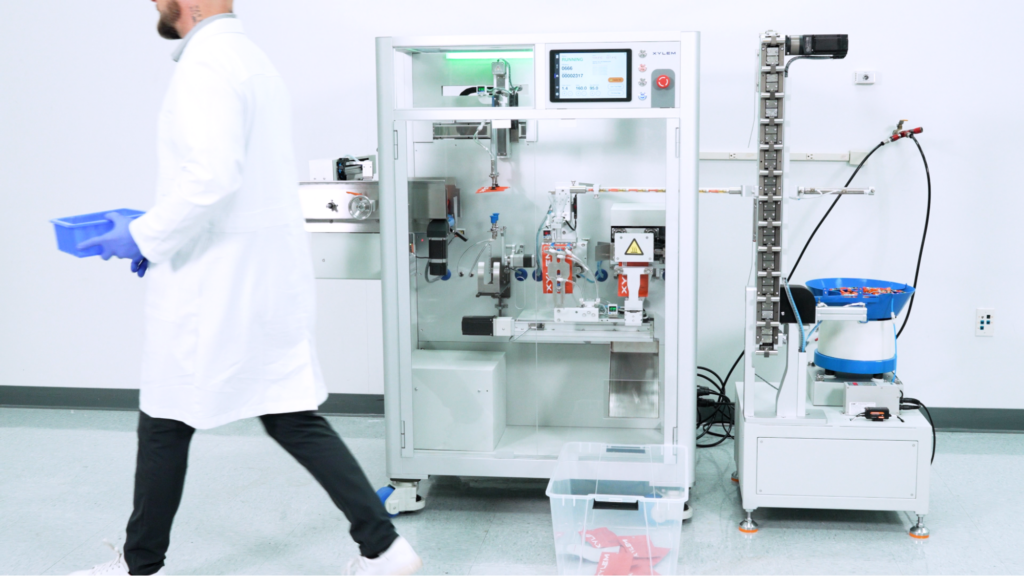
The XB reduces that risk by automating the steps that usually drain time and attention. It auto-sorts vape carts. It auto-orients them. It auto-loads them into bags and pouches. Then it heat-seals the finished package for retail.
That is not a flashy promise. That is a practical fix. In a space where operators are trying to squeeze more productivity out of smaller teams, fewer square feet, and tighter margins, practical fixes matter more than buzzwords.
What XB Actually Does
The XB Automated Vape Cart Bagging System is purpose-built for the packaging stage of vape manufacturing. It is not trying to be everything. It is trying to solve one very specific problem extremely well.
The system takes vape carts, sorts them, orients them, loads them into bags or pouches, and seals them. Xylem describes the XB as the first fully automated vape packaging system, designed to auto-load both carts and bags or pouches while minimizing operator machine time. This matters because bagging is not just one task. It is a chain of small tasks, and each task creates friction.
You need carts fed properly. You need them facing the right direction. You need bags ready to receive vape carts. You need the cart inserted cleanly. You need the seal to land correctly. You need packaging that can satisfy both brand standards and regulatory requirements. When those steps are manual, the operator becomes the system. When those steps are automated, the operator becomes the supervisor. That is a major difference.
XB is built to let operators monitor the process rather than living inside it. The high capacity cart autoloader can hold more than 500 units, while the bag magazine capacity ranges from 150 to 600 bags. Xylem lists the system throughput at more than 800 units per hour. That is the kind of shift that changes the math on labor allocation.
Instead of having a team stuck hand-bagging finished carts all day, you can move people into quality control, inventory, fulfillment, production prep, maintenance, or other areas where human decision-making actually creates value.

Built for the Packaging Reality Operators Actually Face
Cannabis packaging is not simple. Anyone who says otherwise probably has not spent enough time near a compliance calendar. Different states have different requirements. Different brands run different bag formats. Different product lines require different pouch sizes, seal locations, and packaging flows. Operators need flexibility because the market does not sit still long enough for rigid systems to stay useful.
XB was designed with that flexibility in mind. The system can handle standard and child-resistant packaging bags. It supports top-seal and bottom-seal formats. Xylem lists compatible bag sizing from 120 mm to 180 mm in length and 70 mm to 100 mm in width, with bag material thickness from 0.1 mm to 0.12 mm. XB also possesses the capability to close the child lock in addition to sealing child-resistant bags.
For operators, that means the machine is not locked into one narrow version of production reality. The user interface is intuitive, with numbered stations for easy navigation and settings configuration. The system is designed for ease of use and simplicity in adjusting and maintaining across multiple bag sizes. It runs on standard 120 volt electrical power and requires compressed air, which makes integration more approachable for existing facilities. Xylem lists input power at 120 volts and 10 amps, with minimum compressed air requirements of 100 psi at 7.6 CFM. The auto-orienter that is included with the automated vape bagging system requires 120 volt electrical power as well and compressed air needs of 70-80 psi at 2.3 CFM.
That last part matters because nobody wants to buy a system that requires a full facility rebuild before it can start saving money. The best automation does not just work in a perfect showroom. It works inside real labs, real manufacturing rooms, real facility constraints, and real production schedules. XB is built for that world.
Standalone or In-Line, Because Not Every Facility Scales the Same Way
One of the smartest parts of the XB design is that it does not force every operator into the same setup. Some teams need a standalone automated vape bagging system to support existing production. Others want a connected workflow that ties into Xylem Robotics vape cart systems. XB can do both.
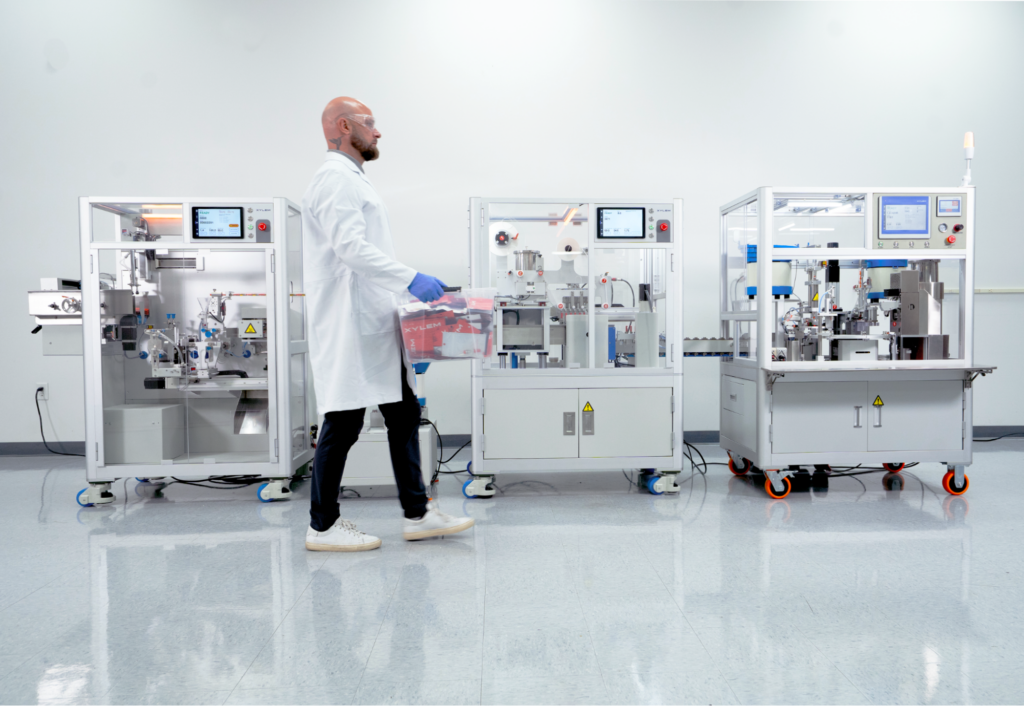
Xylem states that the XB can operate independently or connect in line with Xylem vape filling equipment, and you will not need to create new entrances in your facility since the XB can fit through any standard doorway on caster wheels for mobility in the lab and stability during production. The automated vape bagging system is part of full-line automation and compliance, with the ability to connect to vape manufacturing lines for post-packaging compliance testing or operate independently for pre-packaging compliance testing. That flexibility is important because cannabis manufacturing is not one size fits all.
A legacy operator might already have filling and capping equipment that works well, but still needs to clean up packaging. A growing brand might need a modular packaging system that can keep up with increased demand without forcing a full-line upgrade. A larger manufacturer might want to integrate XB into a continuous workflow to reduce handoffs and improve production rhythm.
All of those use cases are valid. That is the point of modular automation. It lets operators improve the areas that are actually hurting them now while leaving room to scale later.
And if demand grows further, the scalability is simple. Add another bagger. Increase output. Double production capacity without reinventing the whole room. That kind of modular thinking is exactly what cannabis operators need because the market keeps moving, margins keep shifting, and the cost of overbuilding is real.
Less Labor. Less Risk. Better Flow.
Let’s talk about labor without pretending this is only about cutting headcount. Automation is not just about replacing manual work. It is about reducing the dumb work that burns people out and creates preventable mistakes. Hand-bagging is repetitive. It is slow. It requires constant attention. It creates ergonomic strain. It is also the kind of work where small mistakes add up fast.
A bad seal is not just a bad seal. It can become a rejected unit, a rework pile, a retail complaint, or a compliance headache. A misoriented cart can slow the next step. A packaging jam can throw off the shift. A station that needs constant human attention becomes a drag on the whole operation.
XB is designed to reduce those risks by turning packaging into a controlled process. That means fewer manual touches. Fewer opportunities for contamination or cosmetic issues. Fewer operators stuck feeding bags and carts by hand. More predictable output. Better alignment between filling, sealing, packaging, and finished goods movement. It also helps protect the brand experience.
When a customer opens a vape product, they do not know what your production day looked like. They do not care that the line was backed up, someone called out sick, the bagging table was short-staffed, or the afternoon shift was buried. They see the product in front of them.
Packaging is part of the promise. It should look clean. It should feel intentional. It should arrive sealed, consistent, and retail-ready. The XB helps operators make that standard repeatable.
Why This Matters Now
The vape category is not slowing down. Retailers want more variety. Brands want more formats. Consumers want consistency. Operators want better throughput without adding chaos to the floor. That combination creates pressure.
If you are running more SKUs, more batches, more hardware types, and more packaging requirements, the old approach starts to break down. A manual process that worked at small volume becomes a liability at scale.
This is where the cannabis industry is maturing. The winning operators are not just the ones with good products. They are the ones with better systems. Better systems protect quality. Better systems reduce labor waste. Better systems make compliance easier to manage. Better systems help brands scale without turning every growth phase into an operational fire drill.
XB fits into that bigger story. It is not automation for the sake of automation. It is a practical response to one of the least glamorous but most important parts of vape manufacturing.
The end of the line matters. Because if your packaging cannot keep up, your production line is only as fast as the slowest person at the bagging station.

The Bigger Xylem Robotics Picture
Xylem Robotics has been building around a clear idea. Cannabis manufacturers need automation that reflects the way the industry actually operates.
That means systems that are modular. Systems that support compliance. Systems that reduce unnecessary labor. Systems that can adapt and remain accurate as product formats change. Systems that make sense for operators who cannot afford long downtime, massive facility changes, or rigid equipment that becomes outdated the moment the next hardware trend hits.
The XB Automated Packaging System is a strong example of that philosophy. It can stand alone. It can connect in-line. It can support standard and child-resistant packaging. It can handle top and bottom-seal bags. It runs at more than 800 filled and sealed bags per hour. It fits into existing production thinking without demanding the entire facility to revolve around it.
And maybe most importantly, it solves a problem that everybody in vape manufacturing understands. The packaging bottleneck is real. Xylem built XB to make that bottleneck a lot less real.

Last Hit
Cannabis manufacturing has spent years proving that craft and scale do not have to be enemies. But getting there requires better tools. Not louder tools. Not shinier tools. Better tools.
The XB Automated Vape Cart Bagging System enables vape manufacturers to turn packaging from a labor-intensive choke point into a streamlined, automated process. It helps reduce manual handling. It improves consistency. It supports multiple bag formats. It can operate on its own or integrate into a broader Xylem Robotics workflow. It gives operators a cleaner path from filled cart to finished package.
That is not just an equipment upgrade. That is how you build a production floor that is ready for what comes next. For cannabis businesses trying to scale smarter, protect quality, and stop losing time at the end of the line, XB is worth a serious look. Learn more about the Xylem Robotics XB Automated Vape Cart Bagging System here