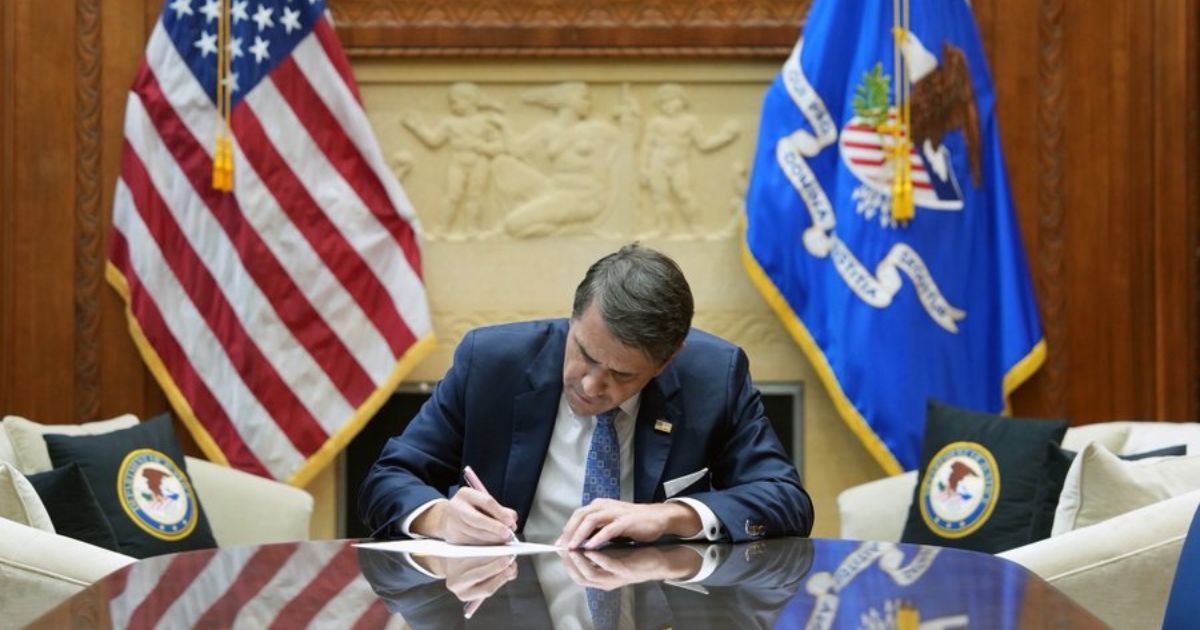
The cannabis industry has been waiting for a major federal policy shift for decades. On Thursday, Acting Attorney General Todd Blanche signed an executive order that fundamentally changes how the government handles state-licensed medical marijuana. If you follow marijuana rescheduling news, you already know this is a massive deal for patients and business owners alike.
Headlines across the country are celebrating this announcement. The immediate reaction makes it seem like all federal barriers have vanished overnight. The truth is a bit more complicated. Understanding the fine print of this Trump marijuana rescheduling directive is crucial for anyone involved in the cannabis space.
We are breaking down exactly what this order accomplishes, what it leaves out, and the bureaucratic catch you need to know about. You will learn how the government plans to treat medical cannabis moving forward and why the official timeline might look different than you expect.
Under the decisive leadership of @POTUS, this Department of Justice is delivering on his promise to improve American healthcare. This includes:
• Immediately rescheduling FDA-approved marijuana and state-licensed marijuana from Schedule I to Schedule IIl
• Ordering a new,… pic.twitter.com/DUtqKQgavl— Acting AG Todd Blanche (@DAGToddBlanche) April 23, 2026
Regulated Like Schedule 3 Now, Rescheduled Later
When the government makes a major change, the bureaucratic wheels turn incredibly slowly. Acting Attorney General Blanche signed the order, but that does not mean the official rulebook changed the very next second. We want to clear up a major misconception floating around in the cannabis rescheduling news today.
Right now, state-licensed and FDA-approved medical marijuana will technically be regulated like a Schedule 3 drug. The official, permanent move down to Schedule 3 under the Controlled Substance Act (CSA) is still pending. The Drug Enforcement Administration has an administrative hearing set for late June to handle the formal reclassification.
Until that hearing concludes and the final rules are published, the government is essentially giving state-licensed medical programs a regulatory hall pass.
Federal agencies are instructed to treat these specific medical products with the leniency of Schedule 3, even as the official paperwork catches up. This approach allows the administration to deliver what it believes as immediate relief while the traditional legal processes play out in the background.
What This Cannabis Rescheduling Update Actually Does
Treating medical cannabis like a Schedule 3 substance brings immediate, tangible benefits to the state-level medical marijuana industry. The strict federal controls that previously choked medical operators are finally loosening.
Major Tax Breaks for Cannabis Businesses
For years, state-licensed dispensaries and cultivators have struggled under IRS Code Section 280E. Because cannabis was classified alongside thing such as heroin as a Schedule 1 narcotic, businesses selling it could not deduct standard operating expenses on their federal taxes. Rent, payroll, and marketing costs were entirely non-deductible.
Regulating medical cannabis under Schedule 3 guidelines removes this crushing tax burden. Medical operators can finally write off their everyday business expenses. This massive tax break will improve cash flow, allowing companies to reinvest in their facilities, hire more staff, and stabilize their operations.
Easier Access to Banking and Funding
The strict Schedule 1 status scared most major banks away from the cannabis industry. Operating as a cash-only business creates massive security risks and logistical nightmares.
With the new federal guidance, financial institutions have a clearer, safer pathway to offer banking services to state-licensed medical operators. Securing loans and outside funding will become significantly easier for growing brands.
Opening the Doors for Scientific Research
Because the government previously viewed cannabis as having no medical value, scientists faced nearly impossible hurdles to study it. Researchers had to navigate strict approval processes, limited supply access, and heavy compliance requirements.
This order explicitly protects cannabis researchers from penalties when using state-licensed marijuana for their work. Medical professionals can finally conduct the rigorous clinical trials needed to understand how cannabis helps treat chronic pain, PTSD, and neurological disorders.
What the Order Fails to Change
While this is a historic moment, the order is highly specific. It leaves several major issues completely untouched.
Recreational Use Remains Federally Illegal
This directive applies strictly to FDA-approved products and state-licensed medical marijuana. Adult-use recreational cannabis remains classified as a Schedule 1 substance under federal law.
If a business operates in a state with recreational sales, those specific transactions do not gain the new federal protections. Interstate commerce also remains illegal, meaning operators cannot transport products across state lines.
No Relief for Incarcerated Individuals
Advocates have long pushed for criminal justice reform alongside cannabis legalization. Unfortunately, this order does not address past convictions.
It does not pardon or release individuals currently incarcerated for federal marijuana possession or distribution charges. The focus here is entirely on medical regulation and business operations, leaving criminal justice reform for future legislation.
Looking Ahead for the Cannabis Industry
The federal government is finally acknowledging the medicinal value of cannabis. While the immediate shift applies to regulation rather than a permanent legal reclassification, the benefits for medical operators are very real.
Companies can finally operate with standard tax deductions, researchers can expand their clinical trials, and patients will eventually benefit from a more stable medical market. As the June hearings approach, the industry will be watching closely to see how the permanent rules take shape. Stay informed, stay compliant, and get ready for a new era of cannabis business.
Frequently Asked Questions
Technically, the acting attorney general signed an order instructing federal agencies to regulate state-licensed medical marijuana like a Schedule 3 drug immediately. The formal, permanent decision to reschedule marijuana will happen after an administrative hearing scheduled for late June.
The regulatory landscape is shifting rapidly. Keep following Beard Bros Pharms for the most accurate cannabis rescheduling update, as we break down the complex legal jargon into information you can actually use.
State-licensed medical marijuana dispensaries, cultivators, and researchers are the primary beneficiaries. They gain massive tax breaks, easier banking access, and fewer federal hurdles to conduct clinical studies.
Key Takeaways
- The recent executive order changes federal treatment of state-licensed medical marijuana, but formal rescheduling is still pending.
- State-licensed medical cannabis will be regulated like a Schedule 3 substance, providing significant tax breaks and easier access to banking.
- The order protects cannabis researchers and opens opportunities for scientific studies but does not address recreational use or past convictions.
- While the order marks progress, challenges remain, including the continued federal illegality of recreational cannabis and lack of reform for incarcerated individuals.
- Michigan Governor Signs Bills Allowing Business Between Tribes And State Licensed Companies
- Minnesota’s Cannabis Supply Chain Struggles Continue—But Tribal Compacts Offer Hope
- How Trump’s Executive Order and Biden’s HHS Review Set the Stage for Schedule III
- What the POTUS Cannabis Rescheduling Order Actually Means for U.S. Territories
- House Passes Spending Bill Protecting State-Level Medical Cannabis, Drops Federal Rescheduling Blockade