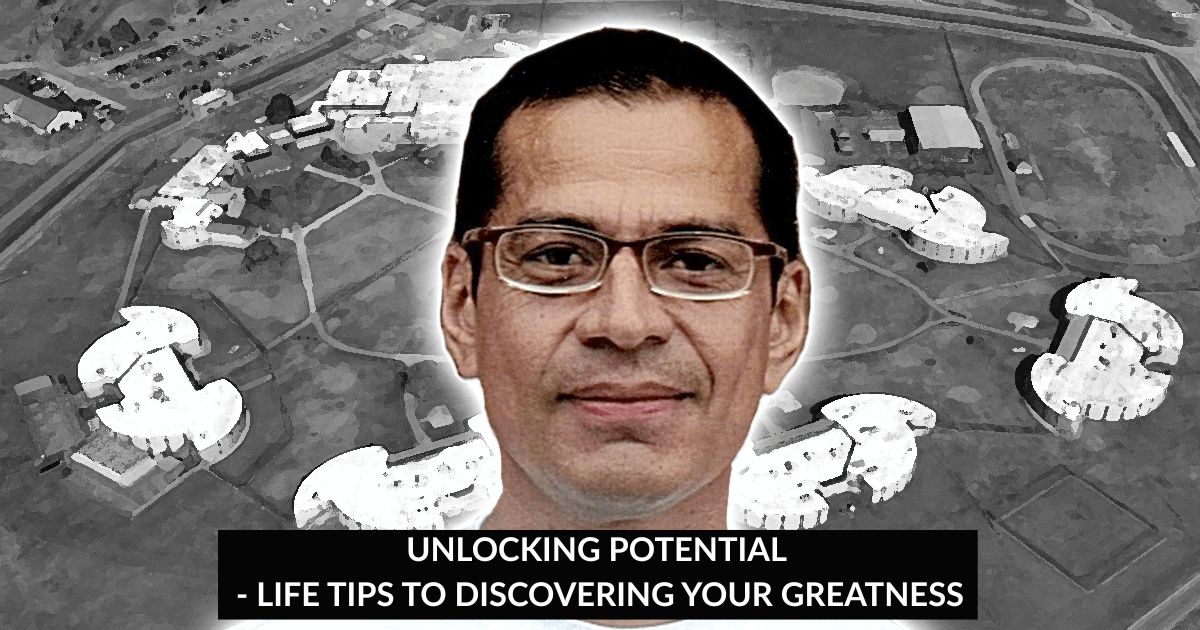
My life began in El Salvador, Central America, a country plagued by civil war during the 1970s. My early years were filled with difficulties. My family was dirt poor by economic standards. The meager salary from my father’s government job barely covered for the life necessities of my brother, sister, and I. As children we only owned two sets of clothes. I didn’t wear any shoes until I was four years old.
My attendance in elementary school was sporadic as I often had to help my mother with odd jobs such as ironing and washing clothes for other people in our neighborhood. When I did attend school, I was mainly taught nationalistic ideals alongside math and reading. My teacher never asked me, “What do you want to be when you grow up?” or “What are your dreams?” Most of us students, especially the boys, already knew our likely fate: becoming a soldier in the Salvadoran Army or a guerrilla fighter for the Marxist Revolutionary Movement. The armed conflict compelled everyone to choose a side; neutrality often meant becoming a casualty of one faction or the other.
In 1979, as the civil war intensified, my family decided to flee the country. With money borrowed from friends, we emigrated to the United States illegally, holding onto a glimmer of hope for a better life. I was twelve years old. But even in the United States, our financial struggles continued. My mother, father, brother, sister, and I lived in a one-bedroom apartment where we slept on the floor on blankets obtained from the Salvation Army. My father worked as an auto mechanic but only earned cents on the dollar due to his undocumented status. Meanwhile, my mother did her best to maintain our household.
At my new American elementary school, no one told me, “You have to set goals,” “Follow the American Dream,” or “Create a vision for your life.” If the teachers did, it just went over my head because I had yet to fully learn the English language.
Less than a year after we emigrated from El Salvador, my father left my mother for another woman. Without a father figure, my life took a nosedive.
In middle school, I skipped class and experimented with drugs and alcohol. My struggling mother, who now worked two jobs, housekeeping during the day and cleaning offices at night, tried to steer me in the right direction but it proved fruitless. My academic failure became so severe I repeated the sixth grade four times. Eventually, I was transferred to high school simply because I was too old for middle school. However, high school only added fuel to the fire. I experimented with harder drugs, drank more heavily, spent weekends at older friends’ houses, and rarely came home. One day, my mother finally said, “That’s it. Get out.” She kicked me out of the house and left me to fend for myself on the streets.
By the age of seventeen, I was living from one friend’s house to another, working odd jobs, and getting wasted any change I got. At nineteen, I was arrested by state authorities for auto theft and received a probated sentence. That sentence later turned into a three-year stint in a Texas state prison.
At age twenty-two, I was released from the state institution, but now armed with more criminal knowledge and skills; lessons I learned from other inmates. Now, I knew how to replace VIN registration numbers on stolen cars, clone credit cards, and cut cocaine and other illegal drugs with alternate substances to maximize profit.
For the next seven years, I lived a reckless life. I became, without a doubt, a successful criminal (or so I thought). At the same time, I struggled with severe alcoholism and heavy drug use. I fathered a son, Nick, with one woman. Later, I left her and married another with whom I had two more children, Keanu and Austin.
Then, the guillotine came down.
On May 27, 1998, at the age of twenty-nine, I was arrested by federal authorities and charged with conspiracy to possess and distribute marijuana. The charge stemmed from my frequent trips to the Texas/Mexico border to transport it back to Houston. Just over a year later, I was sentenced to forty years in the Bureau of Prisons without the possibility of parole.
Immediately after sentencing, I felt alone and broken. I could not process the reality that I would spend more than three decades in confinement; meaning my children would be in their mid-thirties by the time I would be released. I attempted to take my own life. As a result, jail officials placed me on suicide watch.
While in solitary confinement, I found a crumpled, dirty pamphlet titled, “How To Deal With Life’s Struggles.” I read it over and over. Then, something inside me changed in a brief moment of reflection; something like a spiritual epiphany. I began to see my incarceration from a different perspective. I thought on how, after my release from the state institution years earlier, I had taken newfound criminal knowledge and applied it on the streets, resulting in a federal sentence. Now, there was something inside me telling me, “You need to choose a different path.”
After being released from suicide watch, I began reading spiritual writings and every self-help book I could get my hands on. I attended Alcoholics Anonymous (AA) and Narcotics Anonymous (NA) meetings and enrolled in all available rehabilitation programs. I took psychology courses to learn about self-awareness and self-motivation, approaching them from both spiritual and psychological viewpoint. I participated in group settings to better understand human behavior. I even enrolled in college and earned three degrees: an Associates in Religious Studies, a Bachelor’s in Psychology and Counseling, and a Masters in Christian Counseling.
The past twenty-seven years of my incarceration have been a process of profound transformation and personal change. Through this journey, I discovered my life’s purpose: a life coach and spiritual mentor.
This is why I chose to write this book.
I know you may be thinking, “How can someone who is incarcerated teach me life lessons? How can a convicted drug dealer motivate me to be my best?” Let me say this: if anyone has experienced heartache, misery, loneliness, loss, setbacks, disappointments, curveballs, betrayals, and more, it is me. If anyone has been stripped of dignity and branded as a number instead of a name, it is also me. And if I have faced all of that with courage, determination, and a will to live, then maybe – just maybe – I can offer wisdom about a life worth living: your own.
Let me also say, I do not want to come across as superficial simply because I am confined in prison instead of being free in society. Emotional turmoil and mental anguish are the same whether one is living on the streets, stranded on an island, or incarcerated in a federal institution. The life advice I share comes from difficult life experiences. I carry the emotional and psychological scars to prove it; scars from pain and heartache endured in a place of darkness where I once saw no hope and no reason to keep living.
It is from this premise and perspective I offer the following life tips to motivate you to unearth your greatness; despite adversity, life challenges, living conditions, or any other obstacle standing in your way.
Are you ready? Then let’s get started.
This book includes self-affirmation statements at the end of each chapter. You may adopt these statements as your own and return to them whenever you need encouragement or motivation. In my life journey, I have placed my faith in the Judeo-Christian God of the Bible and I reference that faith throughout this book. You may not share that belief, and that is okay. If you follow another higher power, feel free to substitute your own reference wherever I mention God. If you are atheist or agnostic, that is also okay, too. The purpose of this book is to motivate, not convert.
EDWIN RUBIS #79282-079
FCI ASHLAND
P.O. BOX 6001
ASHLAND, KY 41105