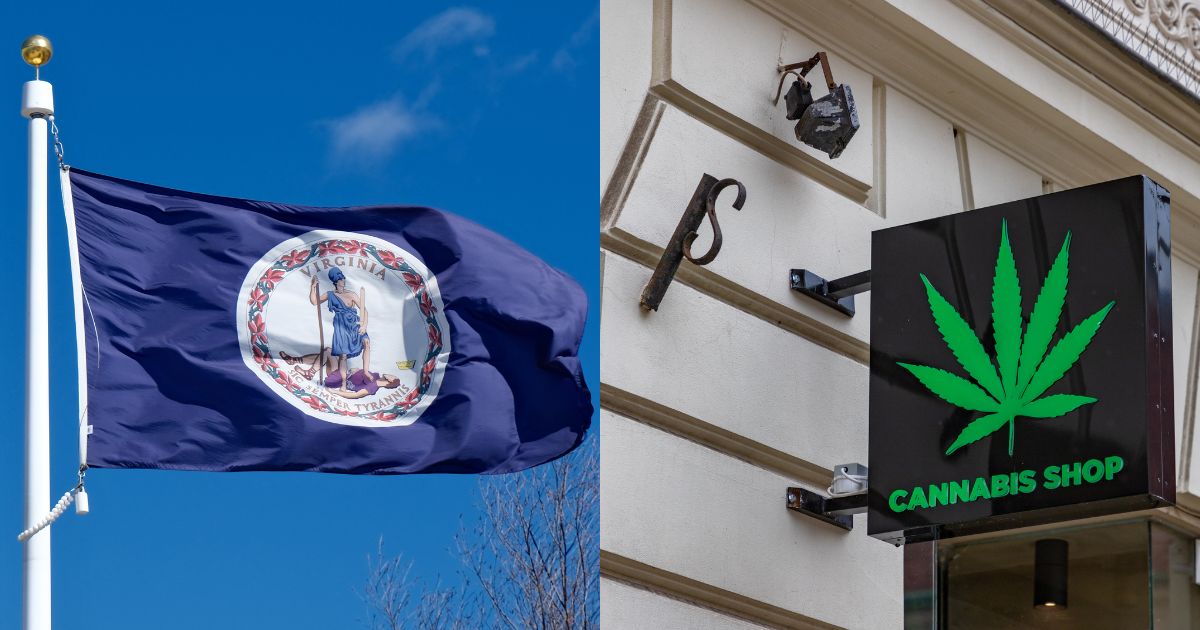
Virginia finds itself in a peculiar position. Since 2021, adults can legally possess marijuana and grow up to four plants at home. Yet buying cannabis remains illegal—unless you qualify for the state’s limited medical program. This disconnect has created a thriving gray market where consumers purchase untested products from unlicensed sellers, with no oversight on potency, purity, or safety.
That contradictory landscape may finally change. On February 17th, Virginia’s House and Senate each approved legislation to establish a regulated adult-use cannabis market. House Bill 642 passed the House 65-32, while Senate Bill 542 narrowly cleared the Senate 21-19. Both bills now cross over to the opposite chamber for consideration, setting up negotiations that could deliver retail cannabis to Virginians as early as November 2026.
The fact that two separate bills are advancing isn’t a legislative complication—it’s an opportunity. With dual pathways moving forward, lawmakers have multiple chances to craft workable compromises, address concerns from both chambers, and ultimately pass reform that’s eluded Virginia for years.
Virginia’s Legal Limbo Makes No Sense
Virginia legalized possession and home cultivation in 2021, but former Governor Glenn Youngkin vetoed retail sales legislation twice. The result? Adults can legally hold cannabis but have no legal way to acquire it beyond growing their own plants or receiving it as a gift (with no money exchanged)
This half-measure created exactly what prohibition was supposed to prevent: an unregulated market where product safety is a gamble and tax revenue flows nowhere.
Governor Abigail Spanberger, who took office in January 2026, has committed to signing cannabis retail legislation. “Right now we live in this gray space where there’s some legality to marijuana, there’s some illegality,” she noted before taking office. “There’s a lot of questions—a lot of confusion—and that creates real problems for Virginians.”
That confusion extends beyond consumers. Law enforcement struggles to distinguish legal possession from illegal sales. Businesses operate in regulatory twilight. And communities disproportionately harmed by past prohibition enforcement see no reinvestment from an industry that’s functionally already operating—just without any of the safeguards or benefits of regulation.
What Both Bills Would Accomplish
Despite their differences, HB 642 and SB 542 share substantial common ground. Both establish the Virginia Cannabis Control Authority as the primary regulator and create a licensing framework for cultivation, processing, retail sales, testing, transportation, and delivery operations.
Core provisions present in both bills include:
- Adults 21 and older could purchase up to 2.5 ounces of cannabis or equivalent products in a single transaction
- The Authority would begin accepting license applications by July 1, 2026
- A maximum of 350 retail licenses would be issued statewide, with just five Tier V (large-scale) cultivation licenses
- No single entity could hold more than five total licenses
- Home cultivation remains legal at four plants per household
- Localities cannot ban cannabis businesses outright, though they retain zoning authority and can regulate hours of operation
- Products must meet strict packaging and labeling requirements, with edibles capped at 10mg THC per serving and 100mg per package
- A qualified lottery system would allocate licenses when applications exceed availability
Both bills prioritize small business entry and equity. The Authority would issue up to 100 microbusiness licenses early in the process, giving smaller operators a foothold before the market matures. Labor peace agreements—ensuring workers’ rights to organize—would be mandatory for all licensees.
Neither bill allows localities to opt out through referendums, ensuring statewide market access. This prevents the patchwork implementation that’s complicated cannabis programs in other states.
Key Differences Between the Two Bills
The House and Senate versions diverge on timing, taxation, regulatory structure, and fees for existing medical operators.
Timeline: HB 642 targets retail sales beginning November 1, 2026. SB 542 sets January 1, 2027 as the start date. The three-month difference may seem minor, but it affects licensing timelines, regulatory preparation, and how quickly Virginia can redirect consumers from the illicit market to tested, regulated products.
Tax structure: The bills take notably different approaches to taxation. HB 642 proposes a 6% state cannabis tax plus a 5.3% general sales tax, with localities authorized to add between 1% and 3.5%. SB 542 sets a higher state cannabis tax of 12.875% plus a mandatory 3% local tax, but caps the general sales and use tax at 1.125%.
Regulatory authority: HB 642 establishes the Virginia Cannabis Control Authority as a standalone regulator. SB 542 initially does the same but requires that by January 1, 2028, the Cannabis Control Authority merge with the Virginia Alcoholic Beverage Control Authority to form a combined Virginia Alcoholic Beverage Cannabis Control Authority.
Conversion fees: Virginia’s five existing medical cannabis operators would pay conversion fees to enter the adult-use market. HB 642 sets this fee at $10 million per operator. SB 542 requires $15 million. These fees represent significant upfront capital but also acknowledge that medical operators gain first-mover advantages in an emerging market.
Revenue allocation: Both bills dedicate substantial revenue to early childhood education, substance use disorder treatment, public health programs, and a Cannabis Equity Reinvestment Fund that supports communities harmed by prohibition. The exact percentages differ—HB 642 allocates 60% to the equity fund and 10% to pre-K programs, while SB 542 splits 30% to equity and 40% to early childhood education.
Why Two Virginia Cannabis Retail Bills Improve the Odds of Success
Legislative negotiations can refine competing proposals into stronger final products. With both chambers advancing cannabis retail bills, Virginia lawmakers can cherry-pick effective provisions from each version.
Prefer the House’s November start date but the Senate’s approach to regulator consolidation? Blend them. Want the Senate’s higher conversion fees but the House’s more modest tax rates? Combine them. The existence of two viable bills creates flexibility that a single proposal lacks.
This matters particularly in a closely divided Senate, where SB 542 passed by just two votes. Compromise positions that address concerns from both chambers could secure broader support. The House’s more comfortable 65-32 margin suggests appetite for reform; now comes the work of crafting a version that can pass both bodies and land on Governor Spanberger’s desk.
What Comes Next For Virginia Retail Cannabis Sales Bills?
Both bills now head to the opposite chamber. The House will consider SB 542, and the Senate will review HB 642. From there, legislators can negotiate differences in conference committee, adopt one bill with amendments, or craft a third version that synthesizes the strongest elements of each.
Governor Spanberger’s support significantly improves passage prospects. After years of vetoes under the previous administration, Virginia finally has an executive willing to sign comprehensive cannabis retail legislation.
The path from here involves reconciling those key differences: selecting a launch date, finalizing tax rates, determining the conversion fee structure, and deciding whether to keep cannabis regulation separate or merge it with alcohol oversight. None of these disagreements are insurmountable. They’re policy choices that legislators can negotiate, adjust, and resolve.
Virginia has spent five years in cannabis limbo. Possession is legal. Cultivation is legal. Sales are illegal. The result is a gray market that serves no one well—not consumers who want tested products, not communities that should benefit from tax revenue, and not the state itself, which forgoes hundreds of millions in annual revenue while criminals profit from the regulatory vacuum.
After years of vetoes and delays, Virginia finally has the political will, executive support, and legislative momentum to end its cannabis contradiction. Two bills moving forward beats one more year of waiting.
- Could Virginia’s Long Wait For Cannabis Retail Finally Be Over?
- Virginia, West Virginia Announce New Adult-Use Cannabis Bills For 2024
- Virginia Looks to Expand Adult Use Marijuana Program to Include Sales
- Virginia Governor Continues To Stifle Adult-Use Marijuana Legalization
- New Virginia Governor Abigail Spanberger, Boosts Recreational Cannabis Sales Hopes