

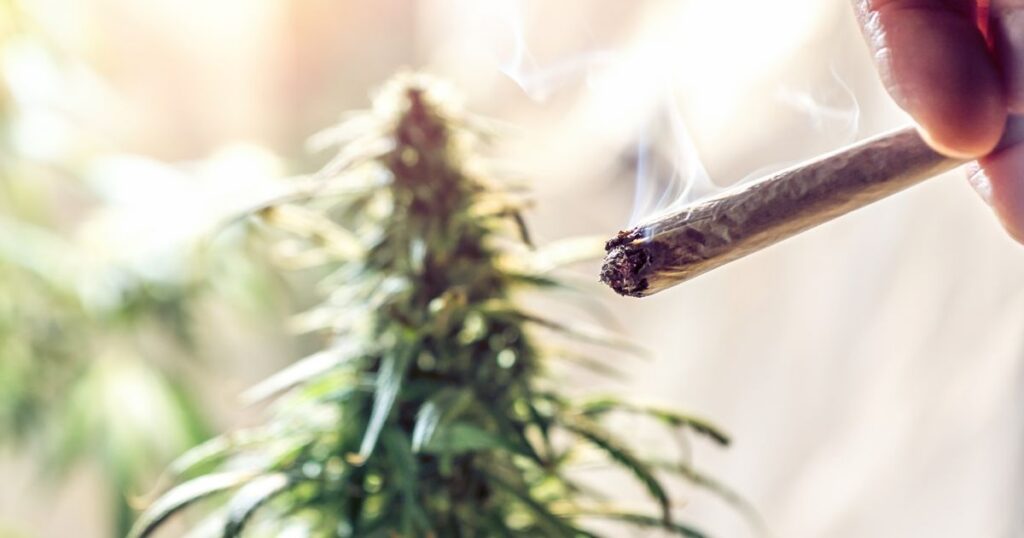
Arizona lawmakers are pushing legislation that would criminalize something they can’t even define. Senate Bill 1725 and its companion measure, Senate Concurrent Resolution 1048, threaten to undermine the will of 60% of voters who legalized cannabis in 2020—all because of vague complaints about “excessive” marijuana smoke and odor.
The proposals, sponsored by Republican Senator J.D. Mesnard, passed the Senate Judiciary and Elections Committee last Friday despite serious concerns about enforceability, selective targeting, and constitutional overreach. These bills don’t just represent bad policy—they’re a blueprint for arbitrary enforcement that could resurrect the failed War on Drugs in Arizona neighborhoods.
What These Bills Actually Do
Both measures would amend three sections of Arizona Revised Statutes to classify “excessive marijuana smoke and odor” as both a criminal and public nuisance. Under SB 1725, violations would constitute a class 3 misdemeanor carrying up to 30 days in jail, a $500 fine, and up to one year of probation. SCR 1048 would send the same provisions to voters in November 2026.
The bills create a legal presumption that creating excessive cannabis smoke or odor “endangers the safety or health of others” and is “injurious to health, indecent, offensive to the senses and an obstruction to the free use of property.” This shifts the burden of proof—instead of prosecutors proving harm, accused cannabis consumers would need to prove their use isn’t excessive.
Property owners could face civil actions from county attorneys, city attorneys, homeowner associations, or even neighbors. If found liable, they’d be forced to “abate the nuisance” or face liens on their property. Courts could order government agencies to step in and charge owners for the cost.
The bills were amended during committee hearings to define “excessive” as smoke or odor “capable of being detected by a person on the private property of another person.” Read that again. Any detectable cannabis odor—no matter how faint—could potentially trigger criminal prosecution.
The Enforcement Nightmare
How exactly would law enforcement determine what qualifies as “excessive”? The amended definition provides no measurable standard, no threshold, no scientific basis. It’s entirely subjective, relying on a neighbor’s perception and a police officer’s discretion.
This opens the door to wildly inconsistent enforcement. One officer might consider a faint whiff from a backyard sufficient for charges, while another might require visible smoke clouds. One neighbor might call the police after detecting odor once, while another might tolerate it for months. There’s no consistency, no fairness, no due process.
The ACLU of Arizona testified against these measures, noting that reliance on “subjective assessments like excessive marijuana odor opens the enforcement to exactly the type of discretionary judgment that bias research shows lead to disparities and outcomes.” Translation: these laws will be enforced selectively and unequally, likely targeting marginalized communities most impacted by cannabis prohibition.
Proving your innocence in court would be nearly impossible. How do you demonstrate that your cannabis use isn’t excessive when there’s no legal definition of what that means? How do you challenge a neighbor’s claim that they detected odor when perception varies wildly between individuals? The bills create a guilty-until-proven-innocent scenario where cannabis consumers have virtually no viable defense.
Singling Out Legal Cannabis
Perhaps most troubling is what these bills don’t criminalize. Tobacco smoke—proven to cause cancer, heart disease, and premature death in nonsmokers—gets a free pass. Backyard fire pits that send smoke wafting across property lines? Perfectly legal. BBQ smokers running for hours? No problem. Industrial emissions that impact entire neighborhoods? Not mentioned.
When asked why marijuana smoke deserves special criminalization, Senator Mesnard told Capitol Media Services, “I’m pretty sure that marijuana smoke has a different impact than, say, other smoke that might make you cough.” His reasoning? “I don’t want my kids to get high.”
This rationale ignores basic science. Secondhand cannabis smoke exposure at the levels described—occasional outdoor odor—does not cause intoxication in others. Research has consistently shown that meaningful secondhand cannabis exposure requires enclosed spaces and extended close-proximity exposure. A faint smell from houses away poses zero intoxication risk.
The bills also reveal a double standard about health concerns. If this were truly about protecting health, tobacco smoke—which kills 41,000 Americans annually from secondhand exposure according to the CDC—would be the obvious target. Instead, these bills focus exclusively on cannabis, a substance Arizona voters explicitly legalized for adult use.
Overriding the Will of Voters
Arizona voters approved Proposition 207 in 2020 by a 60% margin, legalizing adult-use cannabis and establishing clear rules about where consumption is permitted. The initiative made public consumption a civil violation with fines, not criminal penalties. It protected the right of adults to use cannabis in private spaces, including their homes.
These new bills attempt to criminalize what voters explicitly permitted. Morgan Fox, political director for NORML, called the legislation “a not-so-thinly veiled attempt to recriminalize cannabis, contrary to the will of the voters.” The Marijuana Policy Project echoed this concern, with director of state policies Karen O’Keefe noting the proposals “ignore Arizona voters’ mandate that their state stop incarcerating cannabis consumers.”
Senator Mesnard has filed both a statutory measure (SB 1725) and a ballot referral (SCR 1048) because the Arizona Constitution limits legislative changes to voter-approved initiatives. This suggests even the bill’s sponsor recognizes the anti-democratic nature of legislative override. Yet SB 1725 would take effect immediately upon passage and signing—no voter approval required.
The legislative record shows SCR 1048 passed committee on a 4-3 vote, while SB 1725 passed 5-2. These narrow margins suggest significant disagreement even among lawmakers about the wisdom and constitutionality of criminalizing legal cannabis use on private property.
Real-World Consequences
Beyond constitutional concerns, these bills would create real harm for real people. Medical cannabis patients managing chronic pain, PTSD, or cancer could face criminal charges for using their prescribed medication at home. Working-class Arizonans in apartments or townhomes with shared walls would be especially vulnerable to complaints from neighbors.
The property lien provisions could devastate homeowners. Imagine receiving a notice that your property faces a lien because a neighbor complained about cannabis odor. Even if you successfully challenge the allegation in court, you’d likely face thousands in legal fees. For many Arizona families, that financial burden could mean the difference between keeping or losing their home.
Renters would face eviction risks. Landlords, already cautious about cannabis use, would have additional legal justification for terminating leases. Given that cannabis consumption remains more common among younger adults and communities of color, these enforcement mechanisms would likely exacerbate existing housing inequities.
The bills would also create perverse incentives for harassment. Neighbors with personal grudges could weaponize these laws, filing complaints to pressure cannabis consumers regardless of actual impact. Without objective standards, law enforcement and courts would struggle to distinguish legitimate concerns from bad-faith harassment.
Where Other Nuisances Aren’t Criminalized
Arizona already has robust nuisance laws covering genuinely harmful activities—excessive noise, unsanitary conditions, criminal enterprises. These laws require actual harm and typically involve civil remedies first, with criminal penalties reserved for knowing, persistent violations after notice.
Cannabis odor doesn’t fit this framework. There is no documented health risk at outdoor ambient levels. It causes no property damage. Legal activity protected by voter-approved law is involved. Unlike truly harmful nuisances, it results from exercising a constitutional right that Arizonans explicitly endorsed through the ballot box.
Other states with legal cannabis haven’t found it necessary to criminalize odor. Colorado, Washington, Oregon, and California—which collectively represent decades of legalization experience—rely on existing nuisance frameworks without singling out cannabis. If odor were truly the crisis Senator Mesnard describes, these states would have addressed it years ago.
The better approach exists in current law. Arizona’s nuisance statutes already allow civil actions for conditions that substantially interfere with property enjoyment. Courts can issue injunctions, award damages, and order abatement—all without creating new criminal penalties that threaten jail time for exercising legal rights.
The Bigger Picture
These bills represent more than bad cannabis policy—they’re a case study in how not to regulate legal substances. Good regulations are clear, enforceable, and proportionate to actual harms. They respect voter decisions and constitutional rights. They don’t create arbitrary standards that invite discriminatory enforcement.
SB 1725 and SCR 1048 fail every test. They’re vague where they should be precise. They criminalize where civil remedies would suffice, unfairly singling out cannabis while ignoring more harmful activities. Legislative fiat overrides voter decisions, and burdens of proof are shifted in ways that undermine due process.
Most fundamentally, they treat legal cannabis consumers as second-class citizens whose rights matter less than others. Tobacco smokers can light up without fear of criminal prosecution. Homeowners can burn wood, run generators, or create other odors without risking jail time. But cannabis consumers—even those using a legal product on private property in compliance with voter-approved laws—would face criminal penalties for creating any detectable odor.
Arizona has a choice. It can respect the 60% of voters who legalized cannabis and develop reasonable regulations that balance competing interests. Or it can embrace vague, punitive measures that resurrect prohibition under the guise of nuisance law.
Cannabis consumers deserve the same consideration given to consumers of any legal product—clear rules, fair enforcement, and respect for rights. These bills deliver none of that. Arizona legislators should reject them decisively and focus instead on implementing the legalization law voters actually approved.
- Arizona’s Adult-Use Cannabis Legalization Threatened by Proposed Repeal Amendment
- Arizona Approves $5 Million For Psilocybin Research
- Supreme Court to Decide if Marijuana Users Can Own Guns
- Arizona Senate Reduces Medical Marijuana Card Cost, Makes It Free to All Veterans
- Hoodie’s State Spotlight: Arizona