

The battle for cannabis rights has moved beyond the ballot box and into the highest courts of the nation, specifically regarding the Second Amendment. In the case of United States v. Hemani, the Supreme Court is currently weighing whether the federal ban on gun ownership for cannabis consumers is constitutional.
While the legal arguments regarding historical precedent are complex, the rhetoric coming from the Department of Justice and prohibitionist groups has taken a turn that many advocates find baffling.
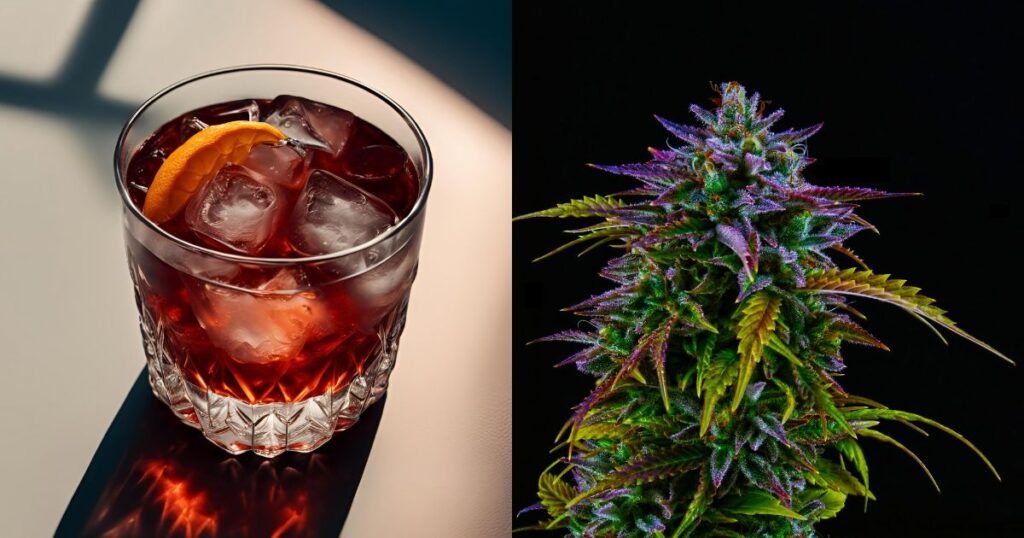
In recent briefs filed with the Court, federal attorneys and anti-legalization organizations have argued that marijuana users pose a greater danger to society than those who consume alcohol.
This assertion relies on a revival of outdated stereotypes rather than an honest assessment of public health data. The government’s strategy hinges on convincing the Justices that cannabis consumption is inherently linked to violence and severe mental illness, making it a unique threat that justifies stripping citizens of their constitutional rights.
However, a closer look at these claims reveals a reliance on fear-mongering rather than facts, highlighting an obvious double standard between how the law treats alcohol—a substance with a proven track record of inducing aggression—and cannabis.
Government’s Stance on Cannabis vs. Alcohol
The Department of Justice, led by U.S. Solicitor General D. John Sauer, has taken a firm stance in the Hemani case. Their primary argument is that the federal statute restricting marijuana consumers’ gun rights, known as Section 922(g)(3), is consistent with the Constitution.
To support this, the DOJ argues that unlawful drug users pose a greater danger than users of alcohol. They maintain that while alcohol was lawful at the founding of the nation and remained so for most of history, drug use presents a unique, modern threat that historical laws regarding “drunkards” can justify regulating today.
The government’s brief goes further by attempting to paint a physiological picture of the cannabis consumer. It asserts that drug users pose a danger of misusing firearms because of drug-induced changes in physiological functions, cognitive ability, and mood. The brief explicitly claims that the use of drugs can embolden individuals in aggression.
This characterization of cannabis users as aggressive and emboldened contradicts the lived experience of millions of Americans and the general cultural understanding of cannabis as a substance that promotes relaxation rather than hostility.
Why The Comparison to “Drunkard Laws” Misses the Mark
To justify the disarmament of cannabis users, the DOJ points to historical laws that restricted the rights of habitual drunkards. The argument suggests that if early American legislatures recognized that habitual drunkards presented heightened dangers of crime and violence, then modern laws can treat “habitual drug users” the same way.
The government argues that Section 922(g)(3) applies only to unlawfully used drugs and habitual users, putting it on even stronger footing than historical restrictions tied to alcohol abuse.
However, this legal analogy relies on the presumption that cannabis consumption carries the same, or greater, risks of public disorder as habitual drunkenness. By equating the two, the government ignores the distinct behavioral differences between alcohol intoxication and cannabis consumption.
While historical “drunkard laws” addressed individuals who were actively disturbing the peace or posing a clear threat, the current federal ban targets anyone who is a consumer of cannabis, regardless of their behavior or whether they are intoxicated while possessing a firearm.
The Return of “Reefer Madness” Rhetoric
Supporting the government’s position is a coalition of prohibitionist organizations, including Smart Approaches to Marijuana (SAM). These groups filed an amicus brief that doubles down on the idea that cannabis is a driver of societal violence.
They argue that marijuana has become increasingly known for its relationship with violence and that today’s highly potent marijuana causes psychosis, schizophrenia, other forms of severe mental illness, and violent behavior. This brief attempts to reframe the narrative around cannabis, moving away from the “chill” drug image and painting it as a catalyst for severe psychological breaks.
The claims made by these groups attempt to establish a causal link where scientific consensus sees complexity. The brief asserts that unlike alcohol use, marijuana use has a documented, causal relationship with schizophrenia and psychosis.
They claim that while alcohol’s relationship with mental distress typically ends when the user is no longer feeling its effects, marijuana’s relationship with mental illness endures.
Its evident by framing cannabis as a unique psychological poison, these groups hope to provide the Court with a public safety rationale for maintaining the ban on gun ownership.
Is High-Potency Cannabis Actually a Driver of Violence?
A core component of the prohibitionist argument centers on the potency of modern cannabis products. The amicus brief states that as marijuana has become a competitive, commercialized product, its potency has soared, leading to substantial harm to public health and safety.
They argue that regular users of today’s “new” forms of high-potency products are significantly more likely to develop psychosis or schizophrenia compared to users of lower potency cannabis from decades past.
The brief even cites a statistic claiming that states with legalized recreational marijuana have seen a 12% increase in cases of schizophrenia and psychosis at mental health facilities.
These arguments attempt to draw a straight line between high THC content and violent behavior. The brief alleges that marijuana use is associated with a ten-fold increase in the odds of violent behavior and that it is a common denominator in many instances of gun violence.
They explicitly state that regular users of marijuana are significantly more likely to commit acts of violence. This portrays the modern cannabis consumer not as a patient or a recreational user, but as a ticking time bomb of mental instability and potential aggression.
The Reality of Alcohol Versus Cannabis Dangers
Despite the aggressive framing in these legal briefs, the comparison between alcohol and cannabis regarding public safety often ignores the overwhelming medical and sociological evidence regarding alcohol.
Scientific and medical evidence overwhelmingly indicates that alcohol poses a far greater overall danger and public health burden than marijuana. Alcohol is a established leading cause of preventable death in the United States and is causally linked to a wide array of health, social, and violence-related harms that dwarf the statistics associated with cannabis.
When examining violence specifically, alcohol is a well-documented disinhibitor that fuels aggression, domestic violence, and assault. In contrast, cannabis is widely recognized for its sedative effects. The idea that cannabis users are “more dangerous” than alcohol drinkers requires ignoring the vast data on alcohol-related violent crime.
By focusing heavily on disputed links between cannabis and psychosis, the government and its allies distract from the reality that the substance currently protected by law—alcohol—is the one most frequently present in violent altercations.
Examining the Public Health Burden of Legal Substances
The inconsistency in the government’s argument becomes most apparent when looking at the public health burden at a large. If the goal of disarmament is to prevent violence and public harm, the strict focus on cannabis appears misplaced. The government’s brief argues that armed drug users endanger the police because they are more likely to have hostile run-ins with law enforcement.
Yet, this argument relies on circular logic; the hostility often stems from the criminalization of the cannabis itself rather than the pharmacological effects of the plant.
Furthermore, the argument that drug users commit crimes to obtain money to buy drugs is a relic of the drug war era that applies less to a regulated, legal market. As cannabis becomes cheaper and more available in legal states, the “economic crime” argument loses its weight.
The government essentially argues that it must disarm cannabis users to protect the public, while it simultaneously allows alcohol consumption—a substance statistically more likely to cause the very violence they claim to be preventing.
The briefs filed in U.S. v. Hemani offer a glimpse into the desperate tactics remaining in the prohibitionist playbook. By arguing that cannabis users are inherently more dangerous than those who drink alcohol, the Department of Justice and anti-legalization groups are asking the Supreme Court to codify stigma into constitutional law.
These arguments rely on cherry-picked data and fear-based rhetoric that crumbles when placed next to the established reality of alcohol’s impact on public safety.
- SCOTUS to Weigh Case on Federal Marijuana Ban
- Group Supporting Federal Rescheduling Of Psilocybin Continues To Grow
- New Jersey Continues To Use Marijuana Tax Money The Right Way
- 5th Circuit Appeals Court Declares Marijuana User Gun Ban Unconstitutional
- Federal Appeals Court Rules for Medical Marijuana Patients’ Gun Rights