

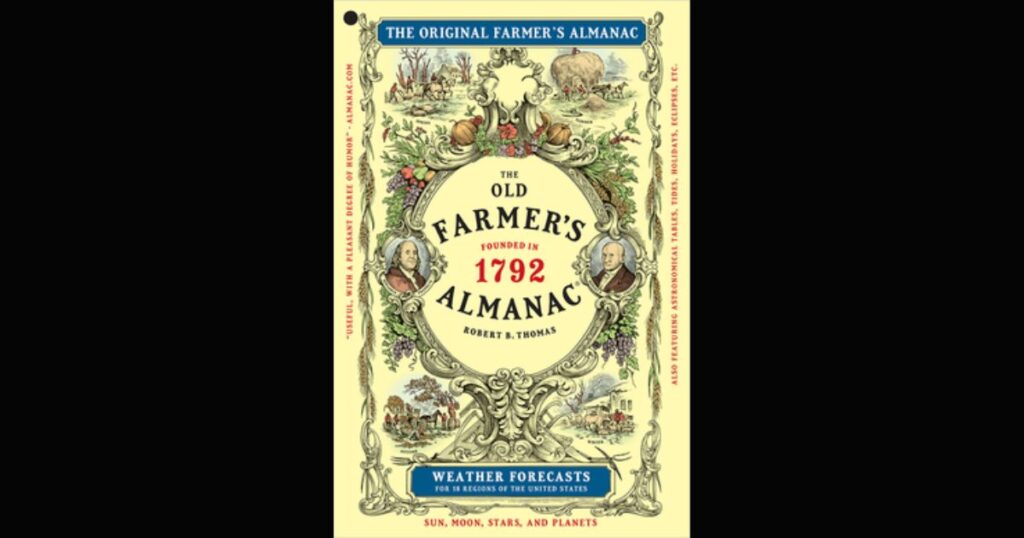
For more than two centuries, The Old Farmer’s Almanac has held a trusted place in American life.
Long before weather apps, search engines, or social media feeds, it was the guide people relied on to understand the seasons, plan their crops, and stay in rhythm with the natural world. It lived on kitchen counters, in barns, and in back pockets—a practical, steady presence rooted in lived experience rather than flashy political trends.
That long-standing reputation is exactly why the Almanac’s recent inclusion of cannabis in its official plant database matters far more than it might appear at first glance.
For the first time in its more than 230-year history, The Old Farmer’s Almanac has formally acknowledged cannabis as a plant worthy of the same straightforward, horticultural treatment as tomatoes, basil, or corn. No fanfare. No controversy-seeking headlines. Just cannabis, presented plainly as a plant that grows, responds to soil and light, and follows the same agricultural logic as everything else in the garden.
That quiet inclusion marks a cultural milestone—and one that reflects how deeply cannabis has become normalized over the past several decades.
A Publication Older Than the Country It Helped Feed
Founded in 1792 by Robert B. Thomas, The Old Farmer’s Almanac is the oldest continuously published periodical in North America. Its original mission was simple: help people survive and thrive by better understanding weather patterns, astronomical cycles, planting times, and seasonal rhythms. Thomas used solar activity, lunar cycles, and long-term observation to produce weather forecasts that farmers and sailors alike depended on.
Over time, the Almanac evolved into more than a forecasting tool. It became a cultural touchstone, blending practical guidance with folklore, humor, recipes, gardening advice, and reflections on rural life. Importantly, it earned trust not by chasing novelty, but by documenting what people actually did with their land and resources.
That trust is generational. Many readers today consult the same publication their grandparents did, often for the same reasons. The Almanac’s authority comes from continuity, restraint, and relevance.
Which makes its decision to include cannabis especially meaningful.
Plants First, Politics Never
Historically, The Old Farmer’s Almanac has steered clear of political crusades. Its editorial DNA is rooted in observation and practicality, not ideology. Whether covering staple crops, medicinal herbs, or home remedies, the Almanac has focused on usefulness rather than controversy.
For most of American history, cannabis—particularly hemp—was not controversial. It appeared routinely in agricultural texts, medical references, and household preparations. Hemp was grown for fiber and seed. Cannabis tinctures were part of early American medicine. The plant existed in plain sight.
Its disappearance from mainstream publications was not driven by agriculture or science, but by policy.
How Cannabis Was Erased From the Record
The criminalization of cannabis in the early 20th century, culminating in the Marihuana Tax Act of 1937, reshaped public discourse around the plant. Cannabis was no longer discussed as a crop or medicine, but framed as a social threat. As laws hardened, public institutions adjusted accordingly.
Cannabis did not stop being grown or used. Knowledge did not disappear. It simply moved out of polite conversation and into private networks. Publications with long-standing reputations, like the Almanac, existed in a cultural and legal environment where acknowledging cannabis openly carried risk.
For decades, the plant persisted without institutional recognition. Farmers remembered. Communities passed down knowledge quietly. The disconnect between lived reality and official acknowledgment grew wider.
That gap is what makes cannabis’ return to a legacy publication so significant.
A Quiet but Powerful First
When The Old Farmer’s Almanac added cannabis to its plant database, it did so without spectacle. Cannabis appears where normalization actually happens: alongside other plants, described in neutral, horticultural terms, without moral framing.
That approach matters. By treating cannabis as a plant rather than an exception, the Almanac reinforces a simple truth—cannabis follows the same biological rules as any other crop. It responds to soil conditions, light cycles, water, and climate. It grows or fails based on how it is cultivated, not how it is judged.
This framing quietly dismantles decades of stigma more effectively than any headline or protest ever could.
The Long Road to Normalization
Cannabis did not arrive in the Almanac overnight. Its inclusion reflects decades of gradual normalization across medicine, law, culture, and agriculture.
Medical cannabis initiatives in the 1990s played a critical role in reframing the plant. Patients and caregivers forced cannabis back into public discussion, grounded not in fear but in relief, care, and real-world outcomes. Scientific research followed, validating therapeutic uses that communities had long recognized.
As legalization expanded, cannabis cultivation moved from hidden spaces into regulated environments. Testing, labeling, licensing, and compliance transformed cannabis into a legitimate agricultural and commercial product. That shift made it increasingly difficult to sustain outdated narratives.
At the same time, cultural visibility changed. Cannabis began appearing in conversations about wellness, sustainability, farming, and business rather than solely in caricatures. Generational shifts accelerated the process. Younger adults grew up seeing cannabis used responsibly by parents, veterans, patients, and professionals. The moral panic simply didn’t hold.
Normalization does not mean universal use. It means societal recognition that cannabis exists, serves real purposes, and does not belong outside the boundaries of respectable discourse.
Why the Almanac’s Voice Carries Weight
Anyone can publish a cannabis grow guide online. What distinguishes the Almanac’s inclusion is not the information itself, but the institution presenting it.
The Old Farmer’s Almanac speaks to audiences modern cannabis narratives often leave out—rural communities, traditional gardeners, older generations, and people who value continuity over trends. When cannabis appears in this context, it signals acceptance beyond counterculture or niche media.
It places cannabis back where it historically belonged: in conversations about land, seasons, and cultivation.
That kind of normalization is durable. It does not rely on hype. It relies on integration.
Cannabis as Agriculture, Not Anomaly
By situating cannabis among other crops, the Almanac reinforces a reality that policy obscured for decades. Cannabis is agriculture. It is subject to the same environmental constraints and opportunities as any other plant.
This framing helps shift public perception away from moral debate and toward practical understanding. It allows farmers, gardeners, and communities to approach cannabis with the same curiosity and responsibility they apply to other plants.
In doing so, it reconnects cannabis with a deeper agricultural and cultural lineage—one that predates prohibition and extends well beyond modern legalization debates.
A Cultural Marker, Not a Media Moment
The inclusion of cannabis in The Old Farmer’s Almanac will not dominate headlines. And that is precisely why it matters.
True normalization is quiet. It happens when something once controversial becomes unremarkable. When it no longer needs defending. When it simply exists where it belongs.
For a publication that has documented American life since the 18th century, acknowledging cannabis signals that the plant has crossed a historic threshold. It has moved from the margins back into the mainstream of agricultural knowledge.
Meanwhile, as federal policy continues to evolve and research expands, more legacy institutions will follow the same path. They will not be making bold statements. They will be recording reality.
Cannabis is not new. What is new is the willingness of long-standing cultural institutions to say so plainly.
When The Old Farmer’s Almanac includes cannabis, it is not chasing relevance. It is doing what it has always done—documenting how people live, grow, and adapt.
Sometimes, history doesn’t announce itself loudly. Sometimes, it’s marked by a single seed placed quietly, exactly where it always belonged.
- Beard Bros Media Interviews Editor At Large of Fat Nugs Magazine, Dustin Hoxworth
- Cannabis-Themed Superhero Boasts Industry With Storytelling
- NIH Looks to Study Effects of Terpenes and Minor Cannabinoids
- New York Lawmakers Call On Governor To Pass Cannabis Crop Rescue Act
- USDA’s Hemp Valuation Methods Are Failing American Farmers