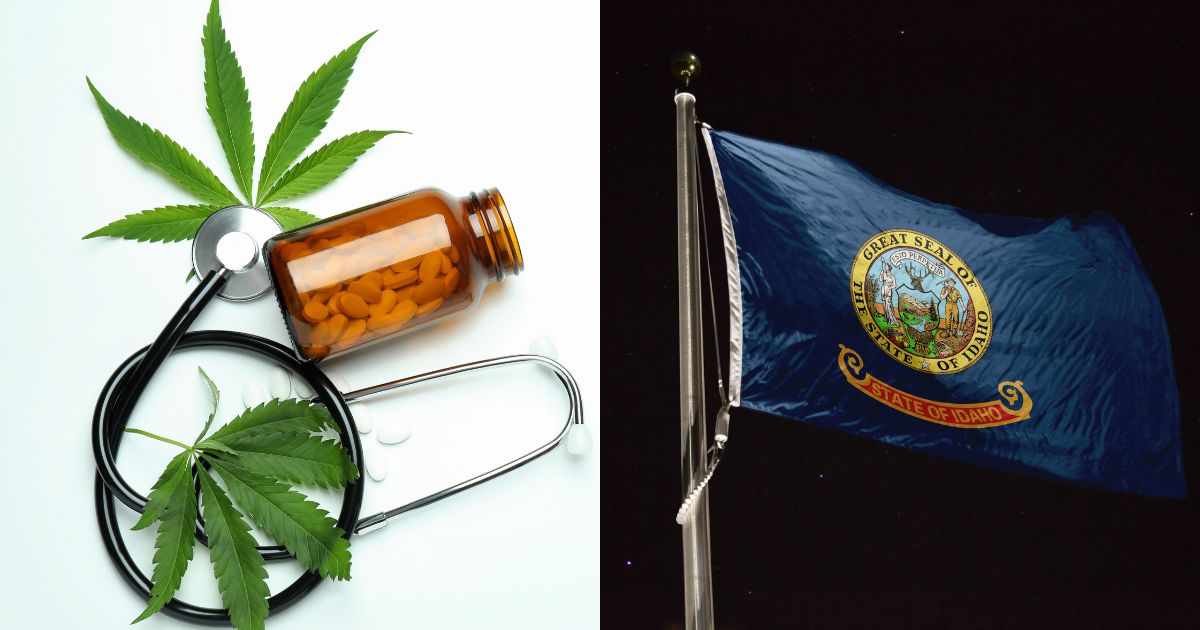
The push to legalize medical cannabis in Idaho has reached a significant new milestone. As of early February 2026, the Natural Medicine Alliance of Idaho reported that it has collected over 45,000 signatures in support of the Idaho Medical Cannabis Act, showing growing momentum for the campaign as it races toward the April 30 deadline to qualify for the November 2026 general election ballot.
Idaho remains one of the few states in the nation with a total prohibition on marijuana, banning it for both recreational and medical use. However, the strong support for this initiative suggests that voters may be ready to shift the state’s legal landscape.
The Push for the Ballot
Qualifying an initiative for the ballot in Idaho is a process involving strict numerical and geographic thresholds. To place the medical marijuana measure before voters, the campaign must collect approximately 70,725 valid signatures from registered voters. The current count of over 45,000 signatures puts the Natural Medicine Alliance of Idaho well over halfway toward that goal with several months of gathering time remaining.
The challenge extends beyond the raw number of signatures. State law mandates that the campaign must also demonstrate geographic support. They are required to gather signatures from at least 6 percent of registered voters in 18 of Idaho’s 35 legislative districts. This requirement ensures that any initiative appearing on the ballot has support from both urban centers and rural communities across the state.
Public opinion data suggests the campaign is operating in a favorable environment. A survey commissioned by the Natural Medicine Alliance of Idaho indicated that 83 percent of likely voters support the legalization of medical cannabis. This support appears to be bipartisan, with the survey showing 74 percent approval among Republican voters. These polling numbers suggest that if the measure successfully reaches the ballot, it stands a strong chance of passing.
What the Idaho Medical Cannabis Act Proposes
If approved by voters, the Idaho Medical Cannabis Act would establish a tightly regulated system designed to provide access to patients while maintaining strict controls. The proposed legislation focuses on patients diagnosed with debilitating medical conditions.
Qualifying diagnoses would include severe ailments such as cancer, post-traumatic stress disorder (PTSD), epilepsy, multiple sclerosis, and chronic pain that has not responded to conventional treatments.
Patients who qualify would need to obtain a medical cannabis card to participate in the program. The initiative sets specific limits on how much cannabis a patient can purchase and possess.
Under the proposed rules, a cardholder would be permitted to purchase up to 113 grams of smokeable cannabis or 20 grams of THC extract for vaping per month.
Importantly, the initiative does not include a provision for home cultivation, meaning patients would be required to purchase their medicine from licensed facilities rather than growing it themselves.
The business side of the proposed market is equally restrictive. The initiative outlines a vertically integrated licensing system where the state would initially issue only three production licenses. These licensees would be responsible for cultivating, processing, and dispensing the product.
The proposal does allow for the potential issuance of more licenses in the future, but the total cap would remain low, with a maximum of six licenses permitted as the state’s population grows.
Legal protections are another core component of the initiative. The measure aims to shield registered patients and caregivers from arrest and prosecution for activities authorized under the act. It includes anti-discrimination provisions related to housing, employment, and education, ensuring that patients are not penalized for their legal medical use.
Furthermore, the act would reclassify marijuana from a Schedule I to a Schedule II controlled substance under state law, a change intended to facilitate medical research.
The Current Legal Landscape in Idaho
While the initiative may seem restrictive compared to other states’ medical cannabis programs, it’s important to understand the significance of this proposal by looking at Idaho’s current stance on cannabis, which is among the strictest in the United States.
State law prohibits all forms of marijuana, and possession of even small amounts can result in misdemeanor charges, fines, and potential jail time. This initiative is a start and certainly better than the current system.
Idaho treats the possession of more than three ounces as a felony. The state also heavily restricts cannabidiol (CBD) products; unlike many other states, Idaho only considers CBD legal if it contains zero percent THC.
Voters in November 2026 may face a unique situation with dueling ballot measures. While the Natural Medicine Alliance of Idaho works to qualify their initiative, the Idaho Legislature has already placed a constitutional amendment, known as House Joint Resolution 4 (HJR 4), on the same ballot.
This amendment seeks to enshrine a prohibition on psychoactive substances in the state constitution. If passed, HJR 4 would grant the state legislature exclusive authority to legalize or regulate marijuana and other drugs, effectively banning future citizen-led initiatives on the subject.
This creates a high-stakes scenario for cannabis advocates. If the medical marijuana initiative passes and the constitutional amendment passes, the state will likely implement the medical program. However, future expansions or adjustments through citizen initiatives would no longer be allowed.
If the initiative fails and the amendment passes, the path to any future legalization would run entirely through the state legislature, which has historically opposed such measures.
Looking Toward November 2026
The coming months will be critical for the Natural Medicine Alliance of Idaho as they work to close the gap on the required signature count before the April 30 deadline.
With over 45,000 signatures collected and polling showing a supermajority of support, the campaign has significant momentum. However, the logistical hurdle of the geographic distribution requirement and the looming legislative counter-measures ensure that the debate over medical marijuana in Idaho is far from over.
- Idaho Introduces Bipartisan Bill to Legalize Medical Marijuana
- Medical Cannabis Legalization Bill Filed In Idaho
- Marijuana Legalization Initiatives Could Appear on the Ballot in Four States in 2024
- VA Continuing Forward Momentum on Psychedelics
- Oklahoma Legalization Measure Reaches Signature Threshold But Could Still Not Make Ballot