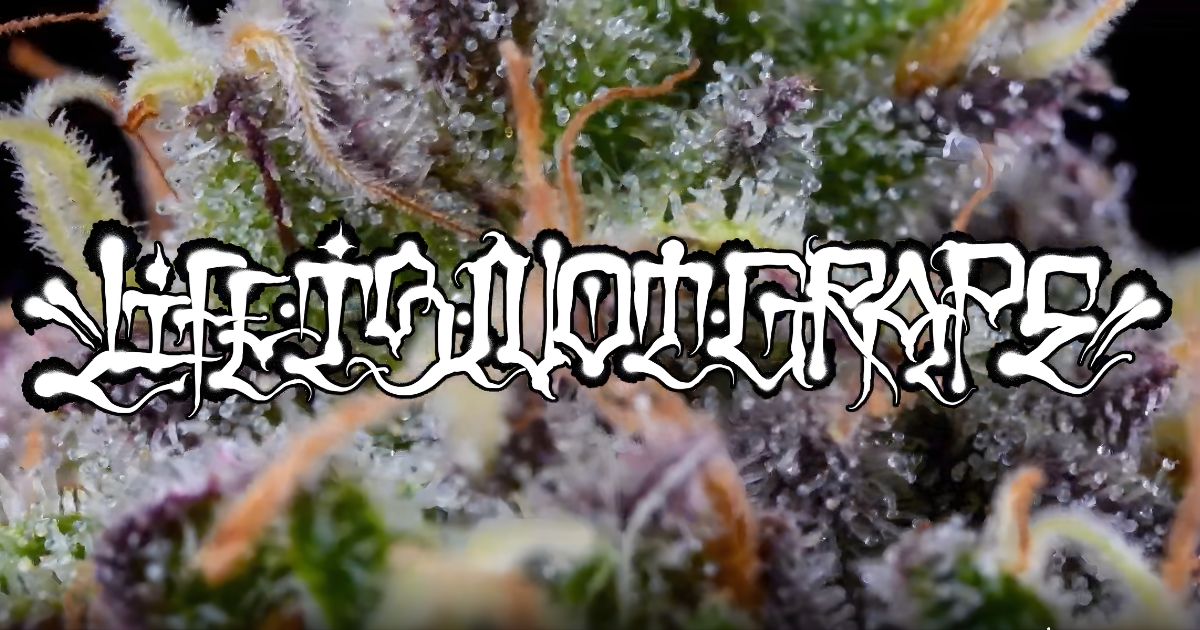
If you know even half the story behind Life Is Not Grape, you understand that the brand didn’t come gift-wrapped. It came wrapped in lawsuits, broken partnerships, public noise, regulatory whiplash, and more than a few moments where walking away would’ve been the easier move.
Life Is Not Grape is not some overnight success story. It’s a third swing.
And in California cannabis, a third swing means you either learned something or you’re out of your mind.
Third Time’s the Charm… or the Last Shot
The brand’s roots go back to 2016, when the first attempt at launching a licensed cannabis business kicked off in Greenfield, California. It was early. Pre-Prop 64 chaos. Pre-everyone-and-their-uncle-wants-a-license madness. Steve and his partners were positioned to be one of the first flower brands on shelves.
They had timing. They had product. They had opportunity.
They didn’t have aligned partners.
“Toxic partnerships” isn’t a throwaway phrase. It’s the kind of phrase you use when you’ve watched something with real potential implode because people couldn’t separate ego from execution. Contributions weren’t made. Contracts weren’t honored. Personal lives bled into professional commitments. The opportunity evaporated. Shameful was the word Steve used when he walked away.
The second attempt wasn’t much kinder. Another partnership. Another situation that drifted away from integrity. This time, Steve and his employee left not just to protect the business, but to protect their freedom, their mental health, their headspace. Anyone who has operated in licensed cannabis since 2018 knows exactly what that means.
By 2022, after regulatory overhauls, post-Covid market whiplash, and watching the “we’re saved!” optimism of 2020 dissolve back into 2019 realities, Steve made a decision:
No more big investor groups. No more messy cap tables. No more chasing consensus from people who don’t understand the plant.
He found a small license in Van Nuys. He bought it. And he started again.
That’s where Life Is Not Grape was born.
Born Under a Black Cloud
Here’s the irony.
You’d think starting fresh would feel exciting. But the vibe in that new office in 2022 wasn’t champagne and high-fives. It was heavy. The taste of the last four years hadn’t left anyone’s mouth. “We should have been stoked,” Steve says. “But the vibe was dismal.”
It wasn’t just personal. The entire owner-operator class in California felt it. Legislators, city councils, bankers, and real estate players had reshaped the landscape. The post-Covid bump had come and gone. Margins tightened. Competition intensified. The black cloud was back.
Somewhere in that atmosphere, the phrase landed: Life is not grape.
At first, Steve thought it was a slogan. A throwaway joke. One of his colleagues coined it, and it stuck. But the more they said it, the more it embodied everything they were feeling.
Life isn’t always sweet.
Business isn’t always smooth.
Cannabis isn’t always purple candy weed.
And that’s the other layer of the name.
Not Everything Has to Be Purple
Around the same time, the market was obsessed with one thing: purple candy strains. If it didn’t look like grape soda and smell like a Jolly Rancher factory, some buyers didn’t want to hear about it.
Life Is Not Grape pushed back on that narrative.
The LING team sees cannabis like dog breeds. Different structures. Different personalities. Different aesthetics. Just because a strain is green doesn’t mean it’s inferior. Just because it isn’t dripping in artificial dessert terps doesn’t mean it lacks character. The brand’s philosophy is simple: Let the weed speak for itself.
Yes, they still lean grape-heavy. They’re not pretending otherwise. But they refuse to disqualify a cultivar from the conversation just because it doesn’t fit the Instagram algorithm’s favorite shade of purple. That authenticity would become their anchor.
The Stall, The Noise, and the Reset
The first iteration of Life Is Not Grape had momentum. A trusted grower-ops employee was vesting ownership. The plan was to scale carefully and intentionally. But differences in character, business tempo, and operational philosophy surfaced. This wasn’t about creative disagreements. It was about how to build a business during turbulence.
When you bootstrap a cannabis company, every decision carries weight. There’s no endless war chest to absorb missteps. Sometimes the right move for the business isn’t the emotionally satisfying one. The split got messy. Public meddling followed. The brand’s image took hits it didn’t earn. And instead of jumping into online battles, the team did something rare:
They let time work.
They paused. They recalibrated. They focused inward. No grandstanding. No endless back-and-forth. Just plants, processes, and patience. “If it were up to the Internet, we’d be dead,” Steve says bluntly. “Focusing on maintaining our standard and having indisputable quality is what kept us alive.”
That’s not bravado. That’s survival.
Quality as the Only Argument
There’s a reason some operators make it through chaos while others disappear. It’s not always marketing budgets or flashy branding.
It’s depth of knowledge.
The LING team understands flower at a level that goes beyond trend-chasing. When everything else gets loud, you can return to what you actually control: cultivation, phenotype selection, consistency, cure. The team doubled down on plant health. Operational stability. Tight SOPs. Less noise. More work. “When things changed in-house, the answer to ‘what do we do now?’ was the same thing we did yesterday,” Steve says. “We just try to do it better.”
That mindset kept the core crew intact. They didn’t lose the people who actually knew them. They didn’t lose the relationships built around cannabis expertise. They simply rebuilt.
By late 2025 heading into 2026, the reset was visible.
- A strong distribution deal locked in.
- Strategic brand partnerships with respected peers.
- 56 retail stores across California.
- Bay Area rollout gaining traction in the last few months.
For a brand that’s only been pushing this current iteration hard for under a year, that’s not a fluke.
That’s disciplined execution.
12 to 14 New Strains: No, That’s Not a Gimmick
Here’s where things get fun for the weed nerds.
Life Is Not Grape is rolling out one new strain per month. They dropped two early to make some noise, but the sustainable pace is dialed in now.
Fourteen potential releases this year. Eight already fully dialed. LING is comfortable putting them in jars, passing them around, even taking “Pepsi challenges” with the breeders who created the original genetics. Half of the upcoming drops are gifted seeds from respected industry colleagues. The other half? Pheno hunted from seed.
And they didn’t stop there. An off-site pollen project is underway. Legacy strains are being reversed back to male. Pollen is being collected. Crosses are being made internally.
The 2027 vision?
Life Is Not Grape on Life Is Not Grape genetics. In-house breeding. Proprietary expressions. No reliance on hype cycles. No chasing whatever strain name is trending on social media this week.
That’s how brands transition from participant to originator.
Selective Growth in a 1,200-Store Market
California has roughly 1,200 licensed dispensaries. Life Is Not Grape is in 56. Some founders would look at that gap and panic. They look at it and shrugs. “We could never service 1,200 stores with what we produce anyway.” This is where maturity shows up. They don’t want to be in every store. They want to be in the right stores.
Mom-and-pop retailers with integrity. Buyers who respect brand positioning. Shops that don’t demand aesthetic compromises for the sake of a homepage banner.
When a request doesn’t fit the brand’s vibe, they say no. Not aggressively. Not arrogantly. Just professionally. In cannabis, the ability to say no is a superpower. It keeps your margins healthier. Your relationships are clearer. Your identity intact. “We’re comfortable saying and hearing the word no,” Steve says. “It’s a give and take world and it has to work.” That mindset protects capacity. It protects culture. It protects quality.
Beyond California: Demand Is Knocking
The DMs tell a different story.
New York. New Jersey. Massachusetts. Florida. Michigan. People are asking daily how to get their hands on Life Is Not Grape flower outside of California. Expansion isn’t about ego. It’s about access. “We have to get our weed to the people who want it,” Steve says. That means navigating new regulatory frameworks. Building aligned partnerships. Replicating cultivation standards in new markets without diluting quality.
It’s not a land grab. It’s an intentional rollout.
As they increase visibility and strengthen distribution in California, conversations in other states become easier. Strategic introductions. Brand collaborations. Licensing partnerships. Timing matters. Momentum matters. And Life Is Not Grape finally has both working in its favor at the same time.
Leadership, Ownership, and Hard Lessons
The LING team is candid about where he fell short.
During the internal turbulence, they focused heavily on plant health and operations. Creative brand growth lagged. Flavor development slowed. Phenotype hunting wasn’t moving at the pace it should have been. They owns that. But here’s the difference between a founder who evolves and one who repeats cycles: They corrected it. The pheno hunts are back. The pipeline is stacked. The pollen project is active. The distribution channels are expanding.
That’s leadership with scar tissue.
Life Is Not Grape. But It’s Getting Better.
There’s something poetic about a brand born under a black cloud now stepping into a new chapter with clarity.
Life Is Not Grape doesn’t pretend everything is easy. It doesn’t posture as flawless. It doesn’t claim universal appeal.
It stands on three pillars:
- Indisputable quality.
- Intentional partnerships.
- Long-term genetic ownership.
The destination is clear: controlled expansion, proprietary breeding, multi-state presence, and eventually, a retail footprint that reflects the culture they’ve built.
They’re not chasing 1,200 stores.
They’re chasing sustainability.
They’re not chasing viral moments.
They’re chasing better harvests.
They’re not trying to be everything to everyone.
They’re building something that lasts.
In an industry that chews up and spits out operators who mistake hype for foundation, Life Is Not Grape feels like something different.
It’s a brand that’s been tested.
And it’s still here.
That tells you more than any press release ever could.
Life may not be grape.
But when the weed is fire, the partnerships are aligned, and the next generation of genetics is already in motion, it’s hard not to feel like the dream is finally catching up to the work. Learn more about Life is not Grape by visiting their website!