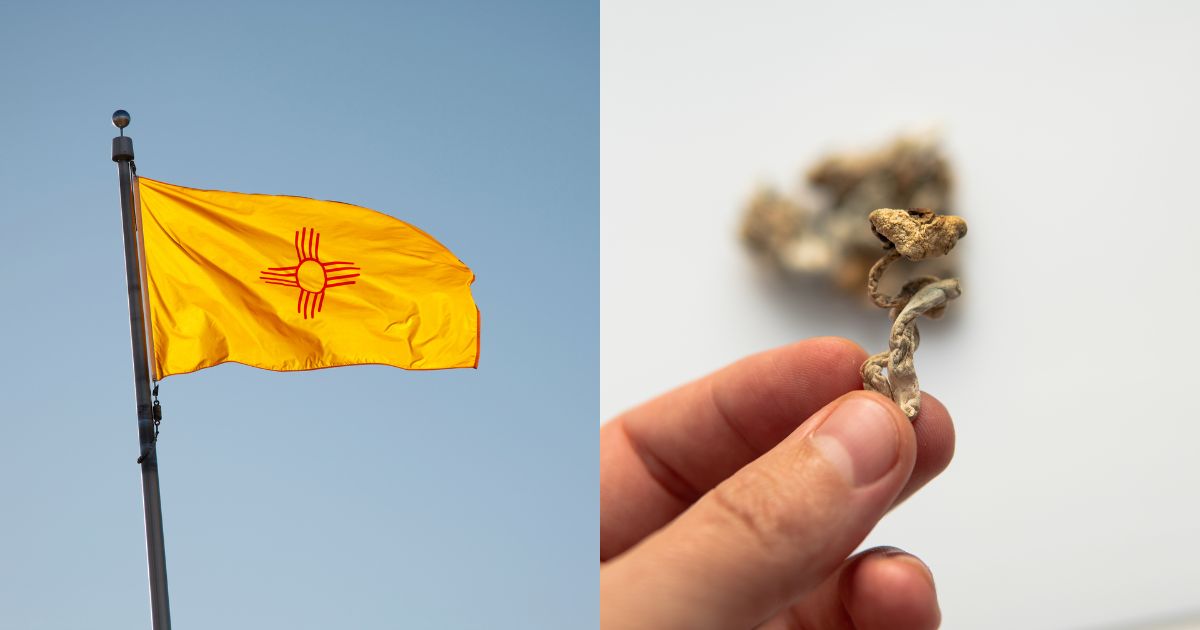
In a matter of months, New Mexico has taken two major steps forward on psychedelic therapy. First, Governor Michelle Lujan Grisham signed Senate Bill 219—the Medical Psilocybin Act—into law in April 2025, making New Mexico the third state in the country to legalize supervised psilocybin therapy for medical use. Then, just months later, state health officials announced plans to launch the program a full year ahead of schedule. Now, the Governor has signed the General Appropriation Act of 2026, a budget bill that directs close to $1 million toward making the state’s therapeutic psilocybin program a reality.
The funding signals more than just a line item in a budget. It reflects a genuine shift in how policymakers are approaching mental health—one that’s increasingly shaped by evidence, urgency, and a willingness to look beyond conventional treatment options.
What’s in the Budget Bill
The General Appropriation Act of 2026 includes several targeted allocations for psilocybin-related programs. The most notable is a $150,000 grant to the University of New Mexico for a psilocybin-assisted therapy research program, with funds split across two years—$75,000 in year one and $75,000 in year two. This investment builds on an earlier $500,000 appropriation from Laws 2025, the spending period for which has now been extended through fiscal year 2027.
Beyond research, the bill directs $150,000 to the medical psilocybin treatment equity fund “to support medical psilocybin efforts,” alongside $480,000 earmarked for the psychedelic access equity fund. This latter allocation specifically intends to expand access for low-income residents, a detail that highlights the state’s commitment to ensuring this emerging therapy remains accessible for those who may need it most.
Officials have also extended the timeline for a separate $1 million appropriation to the Department of Health, which will oversee the larger psilocybin program. This extension through fiscal year 2027 gives them an adequate runway to implement the program.
Together, these allocations make clear that New Mexico isn’t treating psychedelic therapy as an experiment to be quietly monitored from the sidelines. The state is actively funding both the research and the infrastructure needed to bring this care to patients.
A Program That’s Moving Faster Than Expected
When the Medical Psilocybin Act was first signed into law, the program wasn’t required to be fully operational until December 31, 2027. That timeline changed significantly at the first meeting of the Medical Psilocybin Advisory Board on December 5, 2025, when state health officials announced their intention to launch the program a full year ahead of schedule—targeting late 2026.
State Sen. Jeff Steinborn described the momentum as a “new renaissance of psychedelic medicine,” and the enthusiasm at the advisory board meeting reflected that sentiment. Attendees expressed genuine eagerness for the program’s launch, particularly given the potential for psilocybin therapy to offer relief where more conventional treatments have repeatedly fallen short.
The Department of Health has since committed to begin serving initial patients by the end of December 2026. For someone living with treatment-resistant depression or PTSD who has exhausted other options, that accelerated timeline could be genuinely life-changing.
What the Program Will Look Like
The Medical Psilocybin Act structures access to psilocybin therapy around three core stages: a preparation session, an administration session, and a follow-up integration session. A licensed clinician must conduct all treatment in an approved, supervised setting.
The qualifying conditions established by SB 219 include:
- Major treatment-resistant depression
- Post-traumatic stress disorder (PTSD)
- Substance use disorders
- End-of-life care
The Department of Health also holds authority to approve additional qualifying conditions over time, guided by recommendations from the nine-member Medical Psilocybin Advisory Board. That board will oversee everything from dosage guidelines and clinical training requirements to production standards and petitions for new qualifying conditions. Only naturally sourced psilocybin will be permitted under the law—synthetic psilocybin and synthetic analogs are explicitly excluded.
Producers will be licensed by the state to grow and process psilocybin mushrooms, creating a fully regulated supply chain from cultivation to clinical use.
The Science Behind the Optimism
The accelerated timeline and budget investment aren’t happening in a vacuum. A growing body of research supports psilocybin’s potential as a therapeutic tool, particularly for conditions that have proven resistant to traditional pharmacological approaches.
Studies have shown that psilocybin can produce rapid and lasting reductions in depressive symptoms, often after just one or two sessions. In controlled clinical settings, participants with PTSD have reported significant improvements in their capacity to process trauma. For patients in end-of-life care, psilocybin-assisted therapy has shown promise in reducing existential distress and improving quality of life during some of the most difficult months a person can face.
What makes psilocybin particularly compelling from a clinical standpoint is its mechanism—rather than requiring daily medication to maintain effect, psilocybin appears to facilitate a shift in how the brain processes experience, and those changes can persist long after the session ends.
The University of New Mexico’s funded research program will contribute to this growing evidence base, adding regional data and clinical insights that can inform not just New Mexico’s program, but similar initiatives forming across the country.
Setting a Standard for the Rest of the Country
New Mexico joins Oregon and Colorado as the only states to have legalized supervised psilocybin therapy at a state level. But what sets New Mexico’s approach apart is the structured emphasis on equity and research from the outset.
Directing funds specifically toward low-income access and university-level clinical research demonstrates a dual commitment—to both the science and the communities who stand to benefit most from it.
A successful, well-documented rollout in New Mexico could serve as a practical blueprint for other states weighing similar legislation. The combination of a regulated clinical framework, an active advisory board, dedicated research funding, and an equity-focused access fund represents a comprehensive model—one that takes seriously both the therapeutic potential and the responsibility that comes with bringing a new treatment into the mainstream.
A New Chapter for Mental Health Care in New Mexico
The Governor’s signature on the General Appropriation Act of 2026 marks a meaningful step forward. The funding secured through this legislation doesn’t just support a program—it supports people.
People for whom standard antidepressants haven’t worked. Veterans carrying the weight of combat trauma. Patients navigating the final chapter of their lives. New Mexico is choosing to meet them where they are, with treatments grounded in emerging science and administered under the careful guidance of licensed professionals.
The state’s program is now on track to launch by the end of 2026, positioning New Mexico to become a leading model in behavioral health innovation. Today’s research funding will shape policy, practice, and understanding for years to come. That’s not a small thing—and New Mexico clearly knows it.