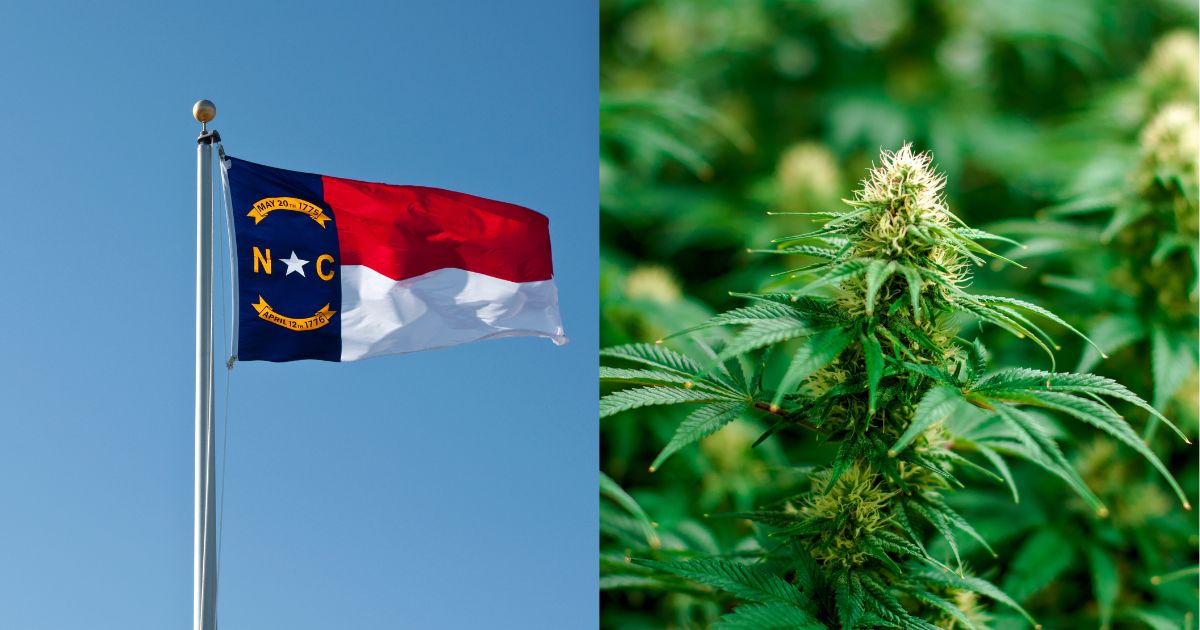
For years, residents of North Carolina have watched neighboring regions embrace modern marijuana policies while local progress stalled. Now, a fresh legislative push could finally hand the decision directly to the voters. Senate Bill 1072 is the latest, and possibly most significant, attempt to reshape North Carolina’s cannabis laws, offering a chance to bypass years of legislative gridlock and modernize the state’s approach to the plant.
The conversation around North Carolina cannabis laws has historically been defined by strict regulations and stalled proposals. While the federal hemp loophole has allowed some products to flourish, comprehensive reform for medical and personal use has remained elusive. This new bill looks to change that narrative entirely by placing two constitutional amendments on the November 2026 ballot.
What is Senate Bill 1072?
Introduced earlier this month by three state Senate Democrats, Senate Bill 1072 tackles two main objectives regarding cannabis reform in North Carolina. Instead of relying solely on the General Assembly to pass a comprehensive legalization framework—a strategy that has repeatedly failed—this legislation takes the question directly to the people.
If passed by the legislature, the bill would put two specific constitutional amendments on the November 2026 ballot. First, voters would decide whether to allow the possession of limited amounts of cannabis for personal use. This would effectively act as a qualified decriminalization measure. Second, voters would choose whether to establish the right to medical use of cannabis for patients with qualifying conditions.
Giving voters the final say is a smart approach. Recent polling shows that over 70% of North Carolinians support some form of cannabis legalization. If a majority votes in favor of these amendments, the state Constitution would be updated, and lawmakers would then be required to build the legal and regulatory framework necessary to govern possession limits, dispensary operations, and medical program specifics.
The Current State of North Carolina Cannabis Laws
As it stands, North Carolina cannabis law remains highly restrictive compared to much of the country. The state is one of the few remaining holdouts that bans both recreational and medical marijuana.
Possession of small amounts of marijuana—under half an ounce—is currently a misdemeanor that does not carry jail time, but larger amounts can lead to severe penalties. For patients suffering from chronic pain, PTSD, or other debilitating conditions, the lack of a medical program forces them to look for alternatives or risk criminal charges.
Interestingly, the state does have a booming, albeit loosely regulated, market for hemp-derived products. Following the 2018 federal farm bill, products containing less than 0.3% Delta-9 THC became legally accessible. This has led to an influx of hemp dispensaries across the state.
However, Governor Josh Stein’s Advisory Council on Cannabis recently noted that this unregulated market poses risks, estimating an illicit marijuana market of around $3 billion annually in the state. Regulating and taxing the actual cannabis plant would bring much-needed order, safety standards, and economic benefits.
The Cherokee Tribe Leads the Way
Despite the state’s strict overarching laws, progress is already happening within North Carolina’s borders. The Eastern Band of Cherokee Indians (EBCI) has successfully exercised its sovereignty to create a regulated cannabis market on the Qualla Boundary.
The Great Smoky Cannabis Company opened its doors as a medical dispensary and quickly transitioned to adult-use sales. By establishing their own Cannabis Control Board and passing measures to legalize recreational sales on tribal land, the EBCI created the very first legal adult-use cannabis dispensary in North Carolina.
Their program demonstrates that a well-regulated cannabis market is entirely possible in this region. Revenue from these sales is projected to be massive, funding education, healthcare, and social services for the community. The Cherokee Tribe’s initiative serves as a powerful working model for state lawmakers and voters alike.
Why Advancing Cannabis Legislation Makes Sense
Supporting legislation that moves the cannabis plant forward is a practical step for North Carolina. Continued prohibition drains law enforcement resources and pushes consumers toward unregulated, untested products.
By amending the constitution through Senate Bill 1072, North Carolina can:
- Generate significant tax revenue to fund state programs and infrastructure.
- Provide safe, tested medicine to patients struggling with severe illnesses or relying on highly addictive opiates.
- Reduce unnecessary arrests for simple possession, freeing up the justice system to focus on serious crimes.
- Create thousands of new jobs in agriculture, retail, and logistics.
The success of the Cherokee Tribe’s cannabis program proves that the demand is there. It is time for state laws to reflect the will of the people and the realities of modern society. Regulating cannabis brings it out of the shadows, ensuring products are pure, potent, and sold responsibly to adults.
Embracing a Modern Approach
The momentum behind North Carolina cannabis reform is growing stronger every day. Senate Bill 1072 offers a tangible, democratic solution to a policy issue that has been ignored for too long. By allowing voters to voice their opinions at the ballot box, the state has a real opportunity to implement fair, sensible North Carolina cannabis laws. Taking cues from the successful rollout by the Cherokee Tribe, the state can build a regulated market that prioritizes patient health, economic growth, and personal freedom.
Frequently Asked Questions (FAQ)
There is no exact date, but Senate Bill 1072 could place constitutional amendments for personal and medical use on the November 2026 ballot. If voters approve those amendments, the General Assembly would then need to draft and implement the specific regulations, meaning actual legal sales and possession protections would follow shortly after that legislative process is completed.
Currently, marijuana is not legal for medical or recreational use under state law. However, hemp-derived products with less than 0.3% Delta-9 THC are permitted. Additionally, the Eastern Band of Cherokee Indians has legalized both medical and adult-use cannabis on their tribal lands within the state.
If the bill passes the state legislature, it will allow citizens to vote on two constitutional amendments. A “yes” vote from the public would mandate that state lawmakers create a system to decriminalize limited personal use and establish a medical cannabis program.
Key Takeaways
- Senate Bill 1072 aims to allow North Carolina voters to decide on cannabis legalization through two amendments in November 2026.
- If passed, the bill would decriminalize limited personal use of cannabis and create a medical use program.
- Current cannabis laws in North Carolina are highly restrictive, but the Eastern Band of Cherokee Indians has created a regulated cannabis market.
- Advancing cannabis legislation can generate tax revenue, provide safe medicine, reduce unnecessary arrests, and create jobs.
- The bill reflects growing support for reform, providing a modern approach to cannabis laws in North Carolina.
- North Carolina Makes Another Push for Medical Marijuana Legalization with HB1011
- New North Carolina Cannabis Legalization Bill Filed in House of Representatives
- First Recreational Cannabis Sales Begin in North Carolina on Tribal Land
- North Carolina Recreational Cannabis Sales Greenlit by Eastern Band of Cherokee Indians
- North Carolina Gov. Stein Calls for a Regulated Cannabis Program