Key Takeaways
- North Carolina lawmakers negotiate House Bill 328 to regulate hemp-derived THC products under new total THC standards.
- The bill significantly restricts consumable hemp products, setting a 0.4 mg total THC limit and banning sales to anyone under 21 effective July 15, 2026.
- Manufacturers and retailers face serious penalties for exceeding the 0.4 mg cap, which can lead to fines and criminal liability.
- Federal regulations influence HB 328, aligning state law with new federal THC definitions that take effect November 12, 2026.
- North Carolina hemp businesses need to adapt quickly to avoid losing their market, with ongoing adjustments expected in the law.
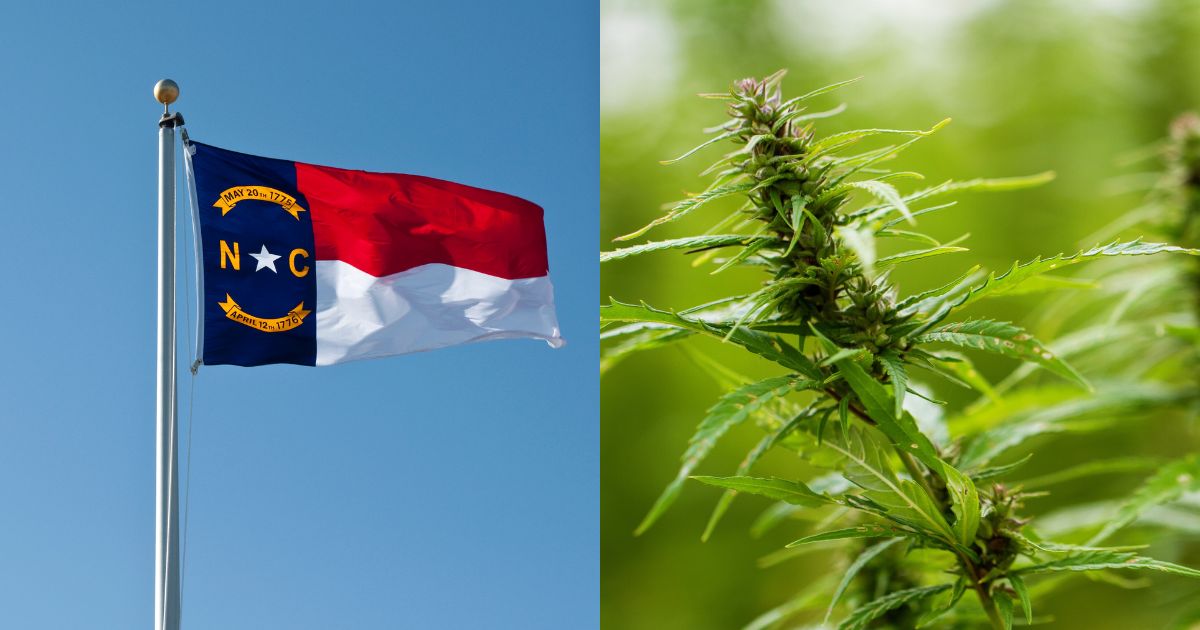
NORTH AMERICA, NORTH CAROLINA – North Carolina lawmakers are negotiating the final terms of House Bill 328, a bipartisan bill that would restrict hemp-derived THC beverages, gummies, vapes, and flower under a new total THC standard. The Senate adopted the conference report on July 2nd. The bill still needs House adoption and the Governor’s signature before becoming law, but two hard deadlines are now in sight: July 15 and November 12, 2026.
We covered the early version of House Bill 328 back in June 2025, when it was moving through committee with provisions that most industry observers considered strict but workable. A lot has changed since then. The bill has been through multiple revisions, a House-Senate standoff, a conference committee, and now lands that could wipe out the overwhelming majority of hemp consumable products currently on shelves across North Carolina.
This is not a hypothetical anymore. The Senate voted 37-6 to adopt the conference report on July 2, 2026. That vote, combined with looming federal restrictions set to take effect in November, puts North Carolina hemp businesses in a narrow window with very little margin for error.
What Does NC HB 328 Actually Say in Its Current Form?
The conference committee version of HB 328 is significantly more restrictive than the bill we analyzed in June 2025. The earlier version included a licensing framework, a 10mg delta-9 THC per-serving cap for non-liquid consumables, and civil penalties capped at $2,000 for noncompliance. That language is gone.
The conference report, titled the Proposed Conference Committee Substitute H328-PCCS30639-CE-1, does the following:
Redefines “Hemp” Using a Total THC Standard
North Carolina’s current definition of hemp is based on a delta-9 THC threshold of no more than 0.3% by dry weight. Under HB 328, that standard shifts to a total THC calculation that includes delta-9 THC, 87.7% of THCA (which converts to THC when heated), and all other THC variants including delta-7, delta-8, and delta-10. The bill also explicitly excludes synthetic and chemically converted cannabinoids from the legal definition of hemp. This change becomes effective November 12, 2026.
Sets a 0.4 mg Total THC Per Container Limit.
Any finished hemp-derived consumable product containing more than 0.4 milligrams of total THC per container becomes a “prohibited finished hemp-derived consumable product” and is classified as a Schedule VI controlled substance. This is the same threshold set by the federal spending bill passed in November 2025. To put that number in context: the typical hemp THC beverage on the market today contains anywhere from 2 to 10 milligrams of THC. Under this standard, nearly every intoxicating hemp product currently sold in North Carolina would be illegal.
Bans Sales to Anyone Under 21, Effective July 15, 2026
This provision kicks in first and applies to all hemp-derived consumable products, broadly defined as anything intended for human ingestion or inhalation that contains any concentration of any hemp-derived cannabinoid. Topical products and FDA-recognized seed-derived ingredients are excluded. Retailers who sell to minors face civil penalties starting at $2,500 for a first violation and climbing to $25,000 for a fourth or subsequent violation within three years.
Creates Serious Penalties for Prohibited Product Sales
Civil fines for selling products that exceed the 0.4 mg total THC cap start at $10,000 per violation, reach $25,000 for a second violation within three years, and hit $50,000 for a third or subsequent violation. Each individual sale counts as a separate violation. Criminal liability also applies for manufacturing, selling, or possessing prohibited products after November 12, 2026.
Does Not Create a Licensing Framework.
Despite the earlier version of the bill including licensing requirements for manufacturers and retailers, the conference report dropped that entirely. What remains is a direct enforcement mechanism with no licensing pathway to operate legally above the cap.
How Did the Federal Government Set This in Motion?
Understanding why HB 328 took the form it did requires a look at what happened at the federal level back in November of last year.
Congress passed Public Law 119-37 as part of a government spending agreement, and buried in Division B, Section 781 of that legislation was a revised federal definition of hemp. The prior framework, established by the 2018 Farm Bill, only measured delta-9 THC and set the threshold at 0.3% by dry weight. That single metric allowed the hemp industry to legally produce and sell products with significant concentrations of other THC variants, including THCA, delta-8, and delta-10, without running afoul of federal law.
The new federal standard applies a total THC calculation and imposes a ceiling of 0.4 milligrams of total THC per container on finished consumable products. It takes effect November 12, 2026. North Carolina’s HB 328, as written in the conference report, is designed to align state law with that federal standard and, notably, to survive any future federal rollback. The bill explicitly states that North Carolina’s law remains in effect even if Congress later weakens or repeals the federal total THC standard.
That’s worth sitting with. The White House sent a letter to Congress last month asking for a revision to the upcoming federal hemp regulation. If federal law changes before November 12, 2026, HB 328 would not automatically adjust. North Carolina could end up with stricter state-level hemp restrictions than federal law requires, with no automatic realignment until a new bill passes at the state level.
Which Hemp Products Would Be Affected Under NC HB 328?
The short answer: most of them.
The 0.4 mg total THC per container limit is not a serving limit. It applies to the entire container, measured at the innermost packaging in direct contact with the product at retail. That makes reformulating around the threshold extremely difficult for most product categories.
THC beverages: Hemp-derived THC seltzers, sangrias, sparkling waters, and infused teas sold in North Carolina today typically contain 2.5 to 10 milligrams of THC per can or bottle. Under the 0.4 mg per container limit, those products become prohibited.
Hemp gummies and edibles: A standard hemp gummy contains anywhere from 5 to 25 milligrams of THC per piece, let alone per package. Delta-9 gummies, delta-8 gummies, and THCA products would all fall under the prohibited threshold under the total THC standard.
Vapes and inhalables: Hemp vape cartridges typically contain significant concentrations of delta-8, delta-9, or THCA. The new definition explicitly includes delta-8 and delta-10 THC in the total THC calculation, which closes the gap that made these products federally legal under the 2018 Farm Bill’s delta-9-only measurement.
Hemp flower and THCA flower: Under bill HB 328, high-THCA hemp flower would be regulated under a revised “total THC” definition because THCA converts to intoxicating delta-9 THC when heated.
What stays legal: FDA-approved CBD isolate products, topical hemp products, and hemp seed ingredients would still be permitted. However, small hemp farmers who grow full-spectrum hemp may struggle to switch to CBD isolate production due to the high cost of the required processing equipment and infrastructure.
What Does This Mean for North Carolina Hemp Businesses Right Now?
For manufacturers, the compliance focus is reformulation and documentation. Every product must contain no more than 0.4 mg total THC per retail container and must contain no synthetic or chemically converted cannabinoids. Batch testing and certificates of analysis that reflect the total THC calculation, not just delta-9, will be essential.
For distributors, the obligation is verification before products move into commerce. Carrying inventory that exceeds the total THC cap after November 12, 2026, creates direct civil and criminal exposure.
For retailers, the urgency is highest. The age-21 restriction kicks in July 15th, which is the more immediate deadline. Retailers need age-verification procedures, staff training, and inventory controls in place before that date. After November 12, carrying prohibited products on shelves is a controlled-substance offense, and each individual sale constitutes a separate violation with fines starting at $10,000.
What’s the Bottom Line for the NC Hemp Industry?
The hemp beverage space, the THC gummy market, and the THCA flower category have all grown substantially in North Carolina since the 2018 Farm Bill opened the door. That growth happened largely without state-level regulation, and the industry has consistently called for sensible oversight to ensure responsible access and consumer safety.
The regulatory instinct is understandable. But a 0.4 mg per container total THC limit is not regulation of the hemp market. At that threshold, there is effectively no legal intoxicating hemp market left. That outcome pushes consumers toward the illicit market or out-of-state mail-order options, neither of which solves the public safety problems lawmakers say they are trying to address.
HB 328 still needs House adoption and the Governor’s signature. Those steps matter, and there is time for the legislation to evolve. But with the Senate voting 37-6 to adopt the conference report on July 2, 2026, the direction is clear.
NC hemp businesses have two dates to work toward now: July 15, 2026 for age restrictions, and November 12, 2026 for everything else. Getting ahead of both is the only viable path forward.
Frequently Asked Questions
North Carolina House Bill 328 is a bipartisan proposal to regulate hemp-derived consumables. If passed, it would align state law with federal THC standards, limit sales to adults 21 and older, and classify products containing more than 0.4 mg of total THC per container as Schedule VI controlled substances.
New THC regulations now measure total THC content—including delta-9 THC, THCA, delta-7, delta-8, and delta-10—instead of just delta-9 alone. Products exceeding 0.4 mg of total THC per container are now prohibited.
Hemp-derived THC beverages are currently legal in North Carolina as of July 2026. However, if HB 328 becomes law, most THC drinks on the market would be banned after November 12, 2026, due to a new 0.4 mg total THC per container limit.
Because THCA converts to delta-9 THC when heated, it is included in total THC calculations at 87.7% of its concentration. As a result, high-THCA hemp products are subject to the revised rules if their total THC exceeds 0.4 mg per container.
- From the Top Shelf at Dispensaries to Top Honors at Awards Shows, Calyx Containers Continue to Shine
- North Carolina House Bill 328 and the Growing Trend of Hemp Regulation in the U.S.
- DEA Letter Clarifies THCA Does Not Meet the Definition of Legal Hemp
- Florida Advances Strict Cannabis Container Bill That Targets Medical Users