Key Takeaways
- Square will stop supporting CBD and hemp sales due to a new federal law effective November 12, 2026, which redefines hemp.
- The U.S. Senate passed a bill to delay the ban’s effective date to December 11, 2026, but the House must approve it.
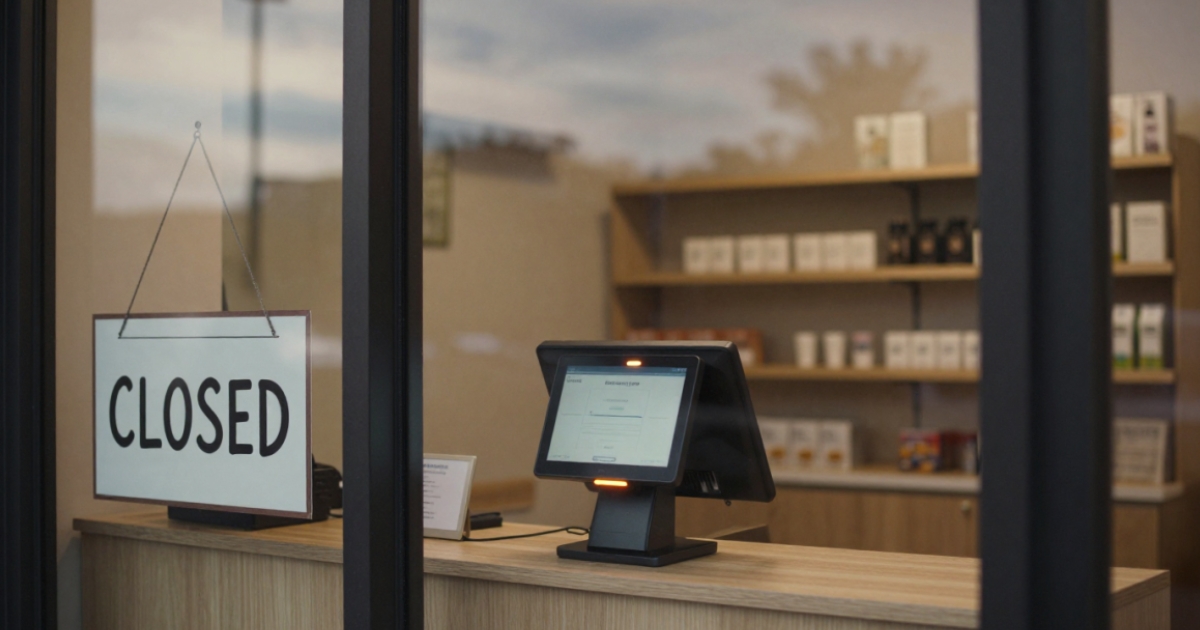
- Merchants must remove CBD products by October 15, 2026, or face account closures on November 5, 2026.
- The federal definition change affects the legality of 95% of existing hemp-derived products due to new THC limits.
- Hemp businesses should seek alternative payment processors and review their product catalogs to comply with upcoming regulations.
Hemp and CBD business owners across the country woke up recently to an unexpected email from Square. The message told them that the company will no longer support the sale of CBD and hemp-derived products through its platform, citing an upcoming change to federal law. For thousands of merchants who built their payment infrastructure around Square, it came as an unwelcome surprise.
This comes at a volatile moment for the hemp industry. A new federal law, Section 781 of the Appropriations Act for 2026 (Public Law 119-37), is set to dramatically narrow the federal definition of hemp starting November 12th. Just one day after Square’s notices began reaching merchants, the U.S. Senate passed a short-term funding bill on August 8, by a vote of 61-32, that included a provision to delay the ban’s effective date by roughly 30 days, moving it to December 11. That bill now heads to the House, where its passage remains uncertain.
What Square’s Email Actually Said
The email, first reported by Marijuana Moment after being obtained from an affected business, outlined three specific actions merchants need to take. Square confirmed the notice is going out to impacted sellers.
The full subject line read: [Action required] Important update about your Square account and CBD products.
The body of the message told merchants that “a new federal law takes effect on November 12, 2026 that redefines which hemp and hemp-derived products are legal” and that “selling CBD and hemp-derived products, online or in person, will no longer be permitted on Square’s platform.”
Square clarified that accounts themselves are not being closed for merchants who also sell non-CBD products. Only the hemp and CBD items are being removed from what Square will allow. However, merchants whose businesses are built entirely around hemp or CBD received notices indicating their accounts would close on November 5.
When asked whether Square might revise its policy if the federal ban is delayed or reversed, a company spokesperson told Marijuana Moment the company does not have anything specific to share at this time, but that it continues evaluating its policies and the broader compliance landscape.
A Platform That Once Welcomed Hemp Businesses
Square’s relationship with hemp merchants stretches back to 2019, when it opened its platform to these businesses following the passage of the 2018 Farm Bill. At that time, a page on Square’s website specifically targeted hemp retailers, promising that “no matter how you run your CBD business, Square makes sure every part of it is protected.”
That page has since been deleted.
The reversal illustrates just how quickly the regulatory ground has shifted beneath an industry that spent years building itself on the foundation of the 2018 Farm Bill, which legalized hemp derivatives with less than 0.3 percent delta-9 THC on a dry-weight basis.
What the Federal Hemp Ban Actually Changes
Section 781, signed into law by President Trump in November 2025, fundamentally rewrites how hemp is defined at the federal level. The change takes effect one year after passage.
Under the current 2018 Farm Bill standard, hemp is defined using delta-9 THC concentration alone. The new law shifts that standard to total THC, which includes THCA and delta-8 THC. The revised definition holds that hemp must contain no more than 0.3 percent total THC on a dry-weight basis.
Beyond that, final-form hemp-derived cannabinoid products face an additional restriction: they cannot contain more than 0.4 milligrams of total THC per container. According to estimates from the U.S. Hemp Roundtable, approximately 95 percent of existing hemp-derived cannabinoid products would fall outside the new federal definition.
It is worth noting, as Nationwide Payment Systems points out in its coverage of the Square situation, that not every CBD product automatically becomes illegal on November 12. The law changes which products qualify for the federal hemp exemption. Products that meet the new definition can still be treated as hemp. The Congressional Research Service has specifically noted that CBD is a non-psychoactive cannabinoid and that hemp meeting the federal definition is not a controlled substance.
The Senate Voted to Delay. Now It Goes to the House.
On Saturday, August 8th, the U.S. Senate passed a bipartisan temporary funding bill by a 61-32 margin. Embedded in that legislation is a provision championed by Senator Amy Klobuchar (D-MN) that would push the federal hemp ban’s effective date from November 12 to December 11, 2026.
That roughly 30-day delay does not resolve the underlying conflict, but it would give Congress additional time to consider longer-term solutions. Several bills are already in circulation aimed at either delaying or replacing the ban entirely. The Hemp Planting Predictability Act, introduced by Representative Jim Baird (R-IN) and its Senate companion bill by Senators Klobuchar, Rand Paul (R-KY), and Jeff Merkley (D-OR), would push the ban’s effective date two full years to November 2028. The HEMP Act introduced by Representative H. Morgan Griffith (R-VA) would go further by establishing a comprehensive federal regulatory framework for cannabinoid hemp products.
As of this writing, the Senate’s delay provision still needs House approval before it becomes law. If the House passes it and the president signs it, the November 12 deadline shifts to December 11. If not, Section 781 takes effect as scheduled.
What Hemp and CBD Businesses Should Do Now
Regardless of how the legislative timeline shifts, the practical reality for hemp and CBD merchants is that Square has already committed to its October 15 catalog-removal deadline. Waiting to see what the House decides is not a viable strategy for businesses that rely on Square for payment processing.
Merchants who have received a termination notice from Square should begin researching alternative payment processors immediately. CBD merchant accounts require more specialized underwriting than standard retail accounts, and the approval process can involve product reviews, Certificates of Analysis, website compliance checks, and documentation of business practices. Starting that process in October leaves very little margin for error.
Businesses should also review their full product catalogs carefully, paying particular attention to products containing delta-8 THC, THCA, HHC, or full-spectrum formulations. The 0.4 milligram per-container rule in the new federal law could affect products that have historically been marketed as federally compliant.
What Comes Next for the Hemp Industry
The House vote on the Senate’s delay provision is the immediate pressure point for the industry. Beyond that, the legislative fight over the hemp ban’s future will play out over the coming weeks and months.
State-level responses are also taking shape. Some state legislatures are moving to preserve their own hemp markets, while others are aligning with the incoming federal restrictions. The patchwork of state and federal rules is likely to create significant regional differences in how the hemp market functions heading into 2027.
For now, Square’s decision to exit the hemp payment space reflects a larger trend. Processors, acquiring banks, and compliance companies are all taking a harder look at hemp and CBD accounts, regardless of whether those products ultimately meet the new federal definition.
Hemp businesses that prepared for this regulatory environment early are in the best position. Those that did not now face a narrowing window to act.
Frequently Asked Questions
Square is closing hemp and CBD accounts because of a change to federal law. Section 781 of the Appropriations Act for 2026 takes effect November 12, 2026, and rewrites the federal definition of hemp. Square has determined that selling CBD and hemp-derived products will no longer be permitted on its platform under the new law.
Square has set October 15, 2026, as the deadline for merchants to remove all CBD, hemp, and hemp-derived items from their Square catalogs, both in-person and online. Accounts for businesses that sell only hemp or CBD products are set to close on November 5, 2026.
Yes. The U.S. Senate passed a bipartisan funding bill on August 8, 2026, by a 61-32 vote. The bill includes a provision to delay the federal hemp ban from November 12 to December 11, 2026. The bill must still pass the House and be signed by the president before the delay takes effect.
Not necessarily. The law changes which products qualify for the federal hemp exemption. Products that meet the new total THC standard of 0.3 percent on a dry-weight basis and contain no more than 0.4 milligrams of total THC per container may still qualify as hemp under federal law. Products that fall outside those limits could face a different legal status.
- Retail Spotlight – The Travel Agency Union Square
- Where Was the Declaration of Independence Read in Easton, Pennsylvania?
- Product Review: Cheeba Chews Fruit Taffy
- New York City’s Best Cannabis-Related Tourist Stops
- Massachusetts Freezes New Cannabis Cultivation Licenses While Retail Gets More Room to Run