





The federal government is once again trying to put toothpaste back in the tube.
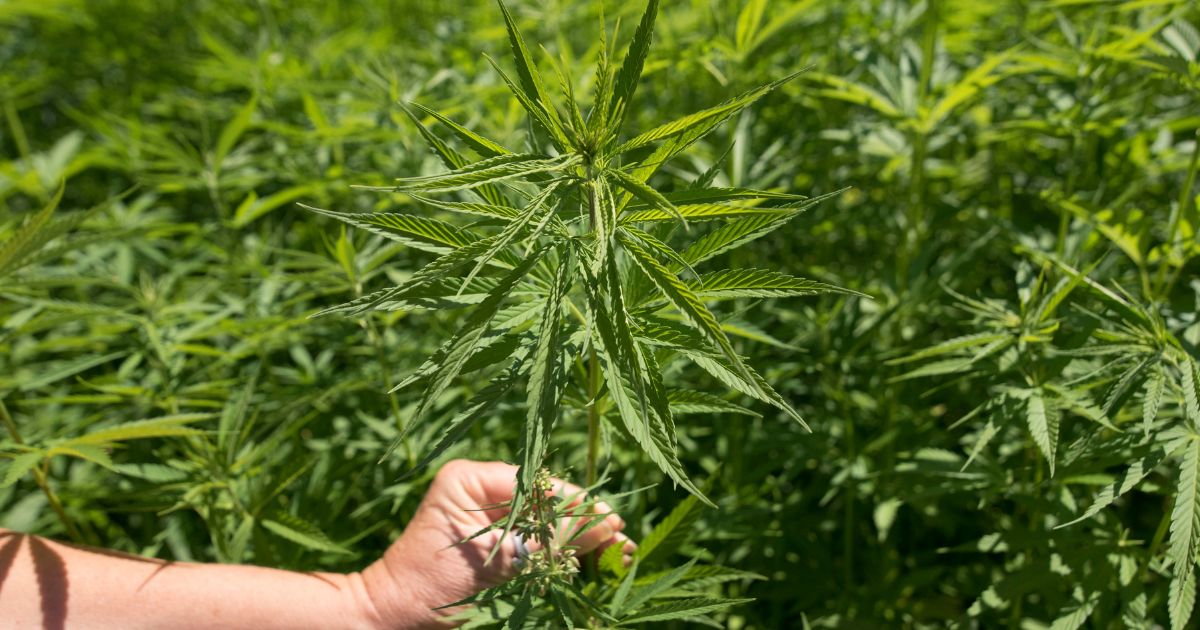
After years of intoxicating hemp-derived THC products flooding gas stations, smoke and wellness shops, and online stores, lawmakers have decided it’s time to tighten the reins. Delta-8 gummies. THCA flower. THC-infused beverages masquerading as hemp wellness products. What started as a narrow agricultural carveout under the 2018 Farm Bill has evolved into a massive gray market that lawmakers now openly admit they never intended.
The result is an impending federal crackdown, commonly referred to as the “hemp-derived THC ban”, embedded in recent federal agriculture and appropriations legislation. The goal is clear: rein in intoxicating hemp products without dismantling the broader hemp industry.
But here’s the uncomfortable truth for regulators and industry alike: writing a law is easy. Enforcing it at scale is not. And cannabis history makes that painfully clear.
How The Hemp Loophole Became a Nationwide THC Marketplace
The 2018 Farm Bill legalized hemp by defining it as cannabis containing no more than 0.3 percent delta-9 THC on a dry-weight basis. At the time, this distinction was meant to separate industrial hemp and CBD from marijuana, which remained illegal under federal law.
What lawmakers didn’t fully appreciate was how narrow, and exploitable, that definition was.
By focusing exclusively on delta-9 THC, the law left room for other intoxicating cannabinoids to flourish. Delta-8 THC, often produced through chemical conversion from CBD, exploded in popularity. THCA flower, legal on paper because THCA itself is non-psychoactive until heated, became a stand-in for high-THC cannabis. Drinks, edibles, vapes, and tinctures flooded mainstream retail shelves, all technically compliant, all functionally intoxicating.
For several years, enforcement was sporadic. States responded unevenly. Some banned intoxicating hemp outright. Others attempted half-measures. Many simply lacked the infrastructure or political appetite to intervene. Meanwhile, consumer demand surged and the market earned billions.
Now, Congress is attempting to close that door.
What The New Federal Restrictions Are Trying to Accomplish
Recent federal action seeks to tighten the definition of legal hemp by expanding how THC is calculated and by restricting synthetic or manufactured cannabinoids. In simple terms, lawmakers are trying to stop products that deliver a marijuana-like high from being sold outside regulated systems.
The intent is straightforward: if a product gets you high, it shouldn’t be sold under the hemp banner.
But intent and outcome don’t always align, especially in cannabis.
Why Enforcement Sounds Straightforward on Paper But is Nearly Impossible in Practice
The federal government has the authority to enforce a hemp-derived THC ban, and that has never been in question. What is in question is whether across the United States, consistent enforcement is realistically achievable.
History, logistics, and basic math all suggest it isn’t. To enforce any meaningful restriction on hemp-derived THC products, regulators would need to identify violations, prove them, and sustain action across a fragmented and expansive marketplace. However, this process immediately encounters significant practical barriers.
Testing Challenges
Enforcement relies heavily on testing, which is neither quick nor simple. Many proposed restrictions are based on extremely small THC thresholds, measured in milligrams per container or as “total THC,” which includes compounds like THCA that convert to delta-9 THC when heated. These are not standards that can be confirmed visually or through typical retail inspections.
Proper sampling, secure chain-of-custody, laboratory analysis, and validated testing methodologies are required. Regulated marijuana markets demonstrate how often labs disagree, how frequently results are contested, and how much time and money these processes consume. Scaling this level of scrutiny to thousands of hemp-derived products across the United States would be an enormous challenge.
Ambiguous Definitions
The definitions behind the restrictions also create challenges. Much of the enforcement focuses on cannabinoids that are “synthetically derived” or “manufactured.” In practice, there is no clear line between natural extraction, chemical conversion, and synthesis.
Common industry practices, such as isomerization or concentration of minor cannabinoids, sit in legal gray areas without universal agreement among regulators, courts, or scientists. These ambiguities slow enforcement, invite litigation, and allow operators to continue while rules are interpreted or challenged.
Fragmented Marketplace
The market for hemp-derived THC products is diffuse and digitally enabled. These products are sold online, shipped across state lines, and often stocked by retailers outside traditional marijuana regulatory systems.
Effective enforcement would require federal agencies to collaborate with state regulators, shipping carriers, payment processors, and local law enforcement.
Such coordination is rare, even in well-regulated industries, making it even harder for a politically charged and fast-moving sector like cannabis.
Resource Constraints
Federal agencies lack the capacity to pursue every violation, and their mandates often prioritize high-profile cases or situations involving youth access and safety.
Enforcement is typically selective, focusing on egregious offenders or broader concerns. This means that many products and sellers continue to operate simply because they fall outside immediate enforcement priorities.
Persistent Consumer Demand
Consumer demand for accessible THC remains strong. As long as legal marijuana access varies across states, products will continue to find ways to market.
Strong demand and flexible supply chains mean enforcement often drives activity underground rather than eliminating it altogether.
The Reality of Enforcement
These factors don’t negate the legal force behind the ban. Instead, they indicate that enforcement will likely be uneven, reactive, and slow rather than comprehensive and immediate. This pattern echoes other enforcement challenges seen in similarly complex regulatory landscapes.
The Medical Marijuana Era Already Proved This Model
For decades, marijuana was federally illegal under the Controlled Substances Act, no ambiguity, no loopholes. And yet, state medical marijuana programs not only existed, but they also grew larger.
They survived not because federal law didn’t apply, but because enforcement realities intervened.
Federal prosecutors had limited resources. Congress restricted how federal funds could be used to interfere with state medical programs. Courts acknowledged those funding limits. Public opinion shifted. States dug in. The result was a long period where marijuana was illegal on paper but regulated in practice at the state level.
Authority existed. Enforcement appetite did not.
That same tension is now emerging in the hemp-derived THC space.
What Actually Happens Next?
Despite dire headlines, the hemp-derived THC market is unlikely to disappear overnight. What’s far more likely is a period of contraction, consolidation, and adaptation.
Large national retailers and risk-averse brands will exit first. Smaller operators will test boundaries. Online sellers will continue to pivot formulations. States will diverge in how they enforce. Consumers will follow availability, not statutes.
This is not a clean shutdown. It’s a messy transition.
And just like in the early medical marijuana days, businesses built solely on regulatory gray areas will feel the pressure first.
Hard Truth For Operators: Loopholes Aren’t a Long-Term Strategy
The intoxicating hemp boom was never built on stable ground. It was built on narrow statutory language that failed to anticipate market behavior. Now that lawmakers are reacting, the industry faces a new beginning.
The operators who survive will be the ones who pivot early, toward compliant formulations, licensed cannabis markets, transparent testing, and sustainable distribution models. The ones who cling to loopholes will find themselves playing regulatory whack-a-mole until enforcement eventually catches up.
Cannabis history is unforgiving in this way.
Enforcement Isn’t About Power—It’s About Alignment
Federal agencies have authority. States have authority. Markets have momentum. When those forces align, enforcement is swift and decisive. When they don’t, enforcement becomes selective, political, and inconsistent.
The hemp-derived THC ban sits squarely in that misalignment zone.
The law is tightening. Demand remains strong. State responses differ. That doesn’t mean nothing will happen, but it does mean the outcome will be far messier than a simple ban suggests.
For businesses operating in this space, the worst move is denial. The next worst move is panic. The smart move is preparation, understanding how enforcement actually works, not how it’s described in press releases.
If you’ve lived through marijuana policy before, you’ve seen this movie. The names change. The cannabinoids change. The lesson doesn’t.
- Will Federal Agencies Actually Enforce the New Hemp Ban?
- Kentucky Hemp THC Beverages Survive Ban with 5mg Cap Regulation
- DEA Letter Clarifies THCA Does Not Meet the Definition of Legal Hemp
- California Extends Its Ban on Hemp-Derived THC Products
- New Government Funding Bill Bans Vast Majority of Hemp THC Products