From Declaration to Communication
The adoption of the Declaration of Independence on July 4, 1776 marked a turning point in American history. However, the significance of that moment depended on its communication to the broader population.
Without public readings, the document would have remained confined to political leaders. The Continental Congress recognized the need to deliver the message directly to the people and selected key locations where it could be read aloud.
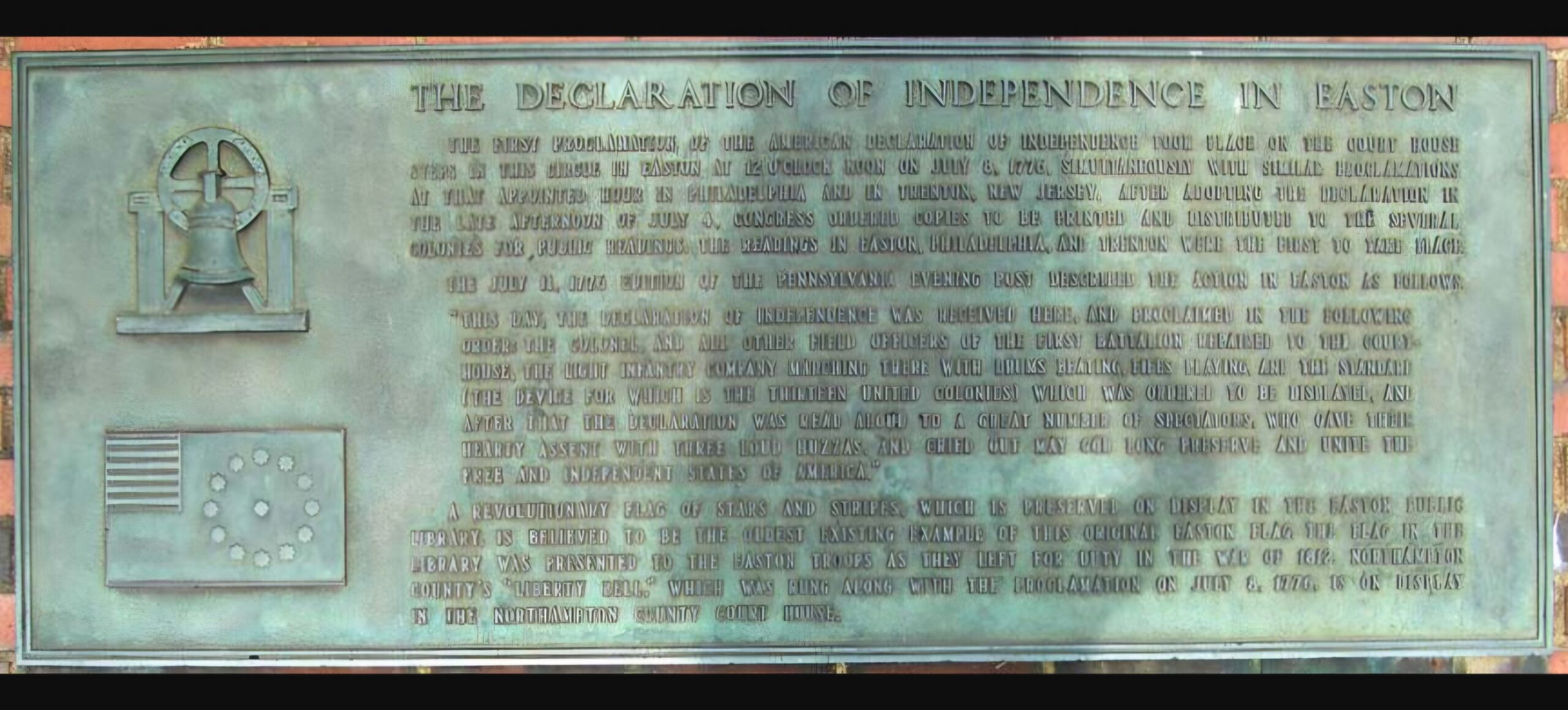
Among those locations were Philadelphia, Trenton, and Easton.
Philadelphia as the Political Center
Philadelphia was the birthplace of the Declaration. It was where the document was debated, written, and approved.
The reading in Philadelphia served as the formal introduction of independence to the city that had hosted the Continental Congress. It reinforced the legitimacy of the decision and established the foundation for its broader dissemination.
Trenton’s Strategic Importance
Trenton was chosen for its position along critical transportation routes and its military significance. As a key crossing point along the Delaware River, it played an important role in controlling movement between regions.
The reading in Trenton ensured that the message of independence reached an area that would later become central to military operations during the war.
Easton’s Role in Delivering the Message
Easton’s inclusion highlights the importance of regional centers in the spread of revolutionary ideas. Although smaller than Philadelphia, it was strategically positioned and supported by strong local leadership.
On July 8, 1776, Robert Levers read the Declaration in Centre Square, delivering the message to a community that was already engaged in the revolutionary effort.
The moment connected Easton directly to the broader narrative of independence.
Communication Networks of the 18th Century
In the eighteenth century, information traveled through physical distribution and public readings. Selecting locations like Easton ensured that the message would extend beyond urban centers and reach surrounding regions.
The town’s position within trade and communication networks allowed the Declaration to spread more effectively, reinforcing the collective understanding of independence.
Why Easton’s Role Still Matters
The connection between Philadelphia, Trenton, and Easton illustrates how independence was communicated across multiple regions. Each city played a role in ensuring that the Declaration was not only written, but also heard.
Today, Easton continues to honor that role through Heritage Day, preserving the memory of the moment when the words of independence were first spoken in the town.
The story of these three cities serves as a reminder that the American Revolution was not confined to a single place. It was a shared effort that depended on communication, leadership, and the willingness of communities to embrace change.
Public readings were critical because most people didn’t have direct access to printed documents. Reading the Declaration aloud ensured the message of independence reached everyday citizens, turning a political decision into a shared public movement.
Each city served a strategic purpose—Philadelphia as the political hub, Trenton as a key military and transportation point, and Easton as a regional center that helped spread the message beyond major urban areas.
Robert Levers delivered the Declaration in Easton’s Centre Square on July 8, 1776, bringing the message of independence directly to the local community.
In the 18th century, information traveled through physical copies and public readings. Strategic locations like Easton helped extend the reach of revolutionary ideas through existing trade and communication networks.
Easton honors its historical significance through Heritage Day, commemorating the moment the Declaration was publicly read there and recognizing its role in spreading the message of independence.
- Robert Levers: The Revolutionary Patriot Who Brought the Declaration of Independence to Easton, Pennsylvania
- Against All Odds Philadelphia Set to Open Its First MMJ Dispensary
- From 1776 to 1976: How the Levers Family Helped Shape Easton’s Heritage Day
- Easton Heritage Day: How a 1776 Declaration Reading Became a Living American Tradition
- Retail Spotlight – From The Earth Dispensary in Independence, MO
Key Takeaways
- The Declaration of Independence was significant because of its communication to the public, with key readings in Philadelphia, Trenton, and Easton.
- Philadelphia served as the political center, where the Declaration was approved and formally introduced to the people.
- Trenton’s strategic location allowed for effective military communication and the spread of independence.
- Easton played a crucial role by delivering the Declaration to a community engaged in the revolutionary cause on July 8, 1776.
- Today, Easton honors its historical role through Heritage Day, reflecting the collective effort in the American Revolution.