


For years, cannabis brands were told the same thing every other business was told. Win search, win traffic, win customers. Build the website. Write the blogs. Optimize the menu. Rank for the right keywords. Protect your Google Business Profile like it is a storefront because, in many ways, it is.
That advice was not wrong. In cannabis, it was survival. When paid ads were blocked, boosted posts disappeared, accounts got shadowbanned, and mainstream platforms treated legal operators like digital contraband, organic search became one of the only reliable lanes left. Cannabis brands got scrappy because they had to. The problem is that the game is changing again, and this time the shift is happening before many operators even realize they are already playing by new rules.
Search Has Changed, and Ranking Is No Longer the Same as Being Recommended
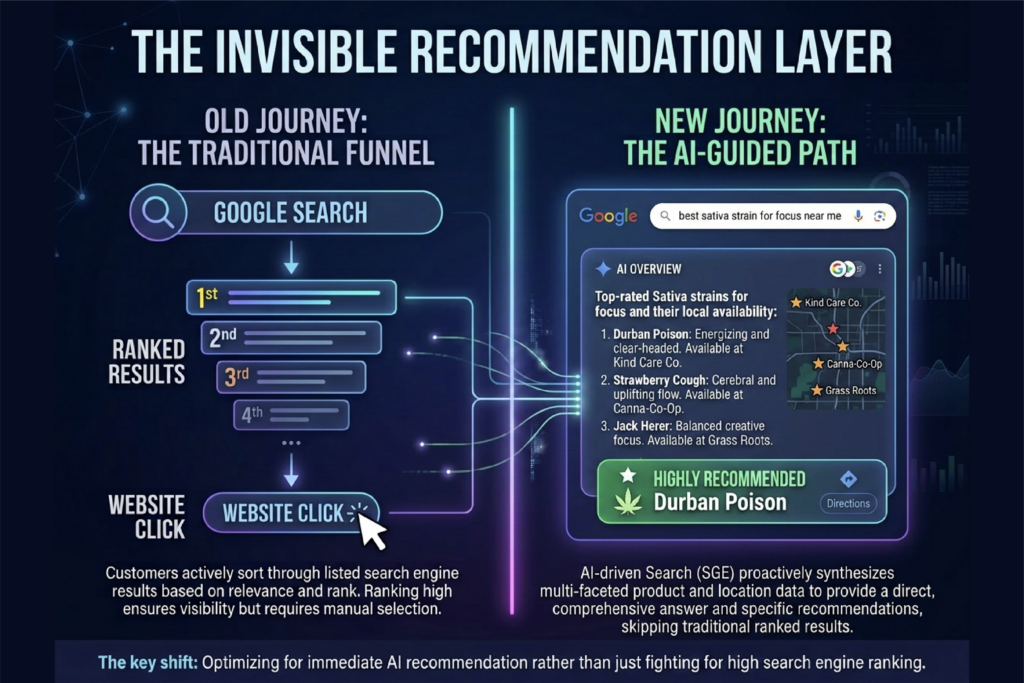
Your customers are not always clicking through ten blue links anymore. They are asking questions and getting answers. They are seeing AI overviews at the top of search results. They are using chatbots to compare products, dispensaries, brands, effects, prices, reviews, and local options. In some cases, they are getting recommendations before they ever land on a website. That matters because ranking is no longer the same thing as being recommended.
For a long time, cannabis brands treated SEO as the front door. If you ranked on page one, you were in the conversation. If your dispensary showed up for the right local terms, you had a shot at winning that customer. If your content answered the right questions, you could pull people into your ecosystem before your competitors even knew they were looking.
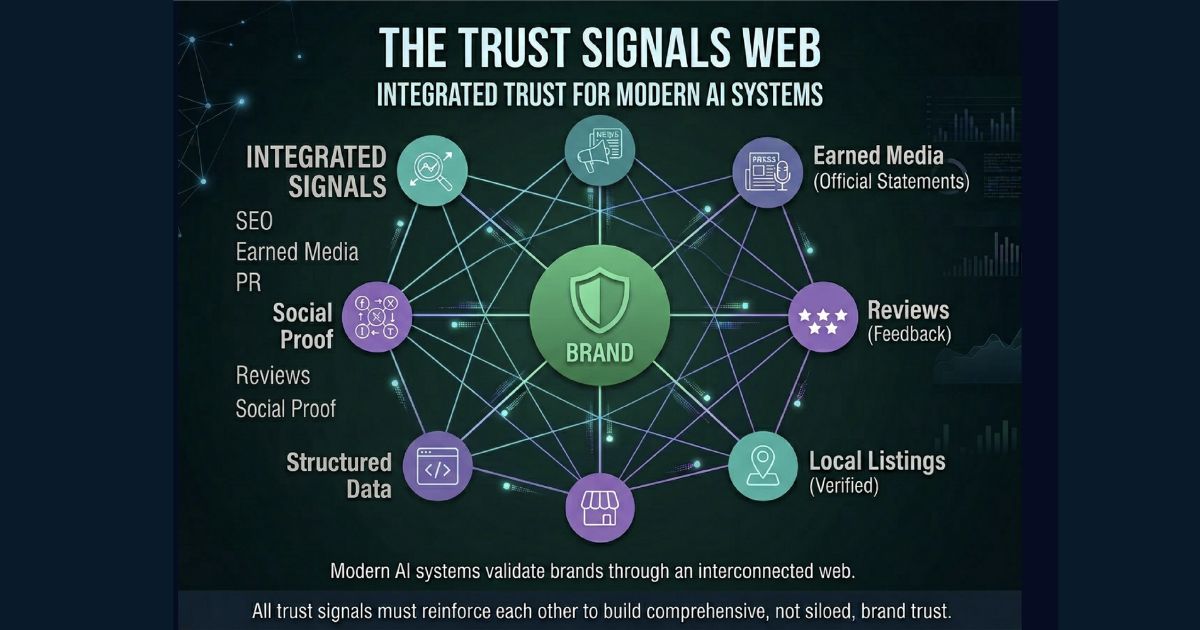
That still matters, but it is not enough anymore. AI powered search is pulling from a wider web of trust signals. It is not just looking at who stuffed the right keyword into the right page. It is looking for authority, consistency, relevance, structured information, local credibility, outside mentions, media coverage, reviews, brand clarity, and signals that show the internet actually knows who you are. That is the shift from SEO to GEO.
From SEO to GEO: What the Difference Actually Means
SEO helps people discover you. GEO, or generative engine optimization, helps AI systems recommend you. Those two things overlap, but they are not identical. Traditional search was built around ranking pages. AI search is built around generating answers. That means your brand does not just need to be visible. It needs to be understood.
Why Most Cannabis Brands Are Not Built for This Yet
Most cannabis brands are not built for that yet. That is not because cannabis marketers are lazy or behind the times. In a lot of ways, cannabis operators became better at organic search than brands in far less restricted industries because they had no other choice. They learned how to win local rankings, publish educational content, capture intent, build menus, and turn compliance limitations into creative workarounds.
But the same restrictions that forced cannabis into SEO also created blind spots. Many brands never built a real media footprint because the industry was too busy trying to keep websites live and ad accounts from getting flagged. Many never invested in PR beyond the occasional product launch. Many treated content as a blog obligation instead of brand infrastructure. Many never connected SEO, earned media, retention, local data, reviews, and brand storytelling into one system. Now that disconnect is starting to show.
How AI Tools Decide Who to Trust
AI tools do not trust a brand because the brand says it is great. They trust patterns. They look for repeated signals across credible places. They look for clear information that matches across platforms. They look for content that answers real questions. They look for mentions from media, community sources, directories, reviews, and other trusted entities. They look for structure.
If your brand only exists on your own website and a few inconsistent social profiles, that is a problem. If your dispensary pages are thin, your Google Business Profile is outdated, your location data is inconsistent, your content has not been touched in a year, and nobody outside your own channels is talking about you, AI does not have much to work with. That is where many cannabis brands are more exposed than they think.
What 420 Prep Taught Us About Showing Up Early
We saw this play out clearly during 420 prep. At PufCreativ, we did not wait until April to start thinking about the biggest cannabis retail moment of the year. We launched SEO optimized landing pages more than thirty days before the holiday. We supported those pages with evergreen content. We coordinated SEO, paid strategy, retention, site performance, email, and campaign timing so the system had time to build authority before the traffic spike hit.
That timing matters. You do not win 420 on 420. You win it in the weeks and months before, when your content is live, your pages are indexed, your technical issues are handled, your offers are clear, your audiences are warmed up, and your brand signals are already moving in the right direction.
When the spike came, the brands that had prepared were not just showing up in search. They were showing up in AI overviews too. That is the new proof point. The brands with strong content, clean structure, clear relevance, and coordinated acquisition channels were not waiting for customers to find them the old way. They were being surfaced earlier in the decision making process. That is where cannabis marketing is headed.
SEO Is Not Dead. It Is Becoming Part of a Bigger System.
This does not mean SEO is dead. That phrase gets thrown around every time search changes, and it is usually wrong. SEO is not dead. It is becoming part of a larger authority system. The brands that treat SEO as a checklist are going to struggle. The brands that treat search, content, media, PR, reviews, social, and retention as connected infrastructure are going to keep compounding.
High impact content is no longer optional. Earned media is no longer just a credibility play for investors and LinkedIn posts. PR is no longer something you tack on when you have extra budget. For cannabis operators that want to be visible in AI powered search, these are acquisition tools. That may sound like a big shift, but it is really a return to the basics. Be clear. Be credible. Be findable. Be consistent. Show up in the places your customers and the internet already trust.
For Dispensaries, It Starts Locally
If you are a dispensary, that starts locally. Local SEO remains one of the most protected lanes in cannabis because AI still leans heavily on proximity and Google Business Profile data for local intent. When someone asks for the best dispensary near them, a place to buy edibles nearby, or a cannabis store open now, local signals still carry serious weight.
That means the fundamentals still matter. Your Google Business Profile needs to be accurate, complete, active, and optimized. Your name, address, and phone number need to be consistent across the web. Your location pages need to be real pages with useful content, not copy and paste placeholders. Your reviews need attention. Your menu needs to work. Your site needs to load. Your content needs to answer the questions people are actually asking in your market.
That may not sound sexy, but neither is losing customers to a competitor because their digital foundation is cleaner than yours. Cannabis is full of brands chasing the next big tactic while ignoring the basics that actually convert. AI is not going to reward that. It is going to expose it.
For Brands, You Need an Identity the Internet Can Recognize
For brands, the path is slightly different but the principle is the same. You need content that explains what you do, who you serve, why you are different, and where you belong in the category. You need product education that does more than repeat packaging copy. You need media mentions that reinforce credibility. You need social proof. You need consistent language across platforms. You need structured data. You need people, publications, retailers, partners, and customers creating enough signal that AI systems can connect the dots. In other words, you need a brand that the internet can recognize.
That is the part many cannabis companies still underestimate. AI is not magic. It is pattern recognition at scale. If your brand story is scattered, your content is thin, your local footprint is messy, and your authority only exists inside your own pitch deck, the machines are not going to do you any favors. Garbage in, garbage out. Cannabis already has enough garbage inputs. No need to volunteer more.
The Window Is Still Open, but Not for Long
The good news is that the window is still open. We are early enough in this shift that cannabis brands can move now and build a real advantage. The operators who get serious about GEO before the rest of the market catches up will be the ones showing up when customers ask AI tools what to buy, where to shop, who to trust, and which brands are worth their time. That advantage will not come from one blog post. It will not come from stuffing keywords into a landing page and calling it strategy. It will not come from posting three times on Instagram and wondering why the phone is not ringing.
It comes from building a system. Strong technical SEO. Real content. Local authority. Earned media. PR. Review strategy. Retention. Site structure. Clear messaging. Consistent brand mentions. Campaigns planned early enough to work before the market gets loud.
The Difference Between Being Listed and Being Chosen
That is what cannabis marketing has to become. Not a collection of random tactics, but infrastructure that supports visibility wherever discovery is happening. The brands that understand this will not just rank. They will be recommended. That is the difference between being listed and being chosen.
At PufCreativ, we are already helping cannabis operators understand where they stand in this new search environment and what needs to be fixed before the next major traffic moment hits. If you are not sure whether your brand is showing up where AI sends customers, that is exactly where the conversation should start.
Reach out directly or visit pufcreativ.com to request a free audit. We will take a real look at your visibility, your content, your local presence, and the signals that determine whether your brand is being found, ignored, or recommended.
Frequently Asked Questions
SEO, or search engine optimization, helps people discover you by ranking your pages in traditional search results. GEO, or generative engine optimization, helps AI systems understand and recommend your brand when customers ask questions and get generated answers. SEO is built around ranking pages, while GEO is built around being surfaced inside AI-generated responses. The two overlap, but they are not identical.
No. SEO is not dead. It is becoming part of a larger authority system that includes content, media, PR, reviews, social, and retention. Brands that treat SEO as a standalone checklist will struggle, while brands that treat it as connected infrastructure will keep compounding their visibility.
For dispensaries, it starts locally. AI still leans heavily on proximity and Google Business Profile data for local intent. Keep your Google Business Profile accurate, complete, active, and optimized. Make sure your name, address, and phone number are consistent across the web. Build real location pages with useful content, stay on top of reviews, keep your menu working, ensure your site loads, and answer the questions people are actually asking in your market.